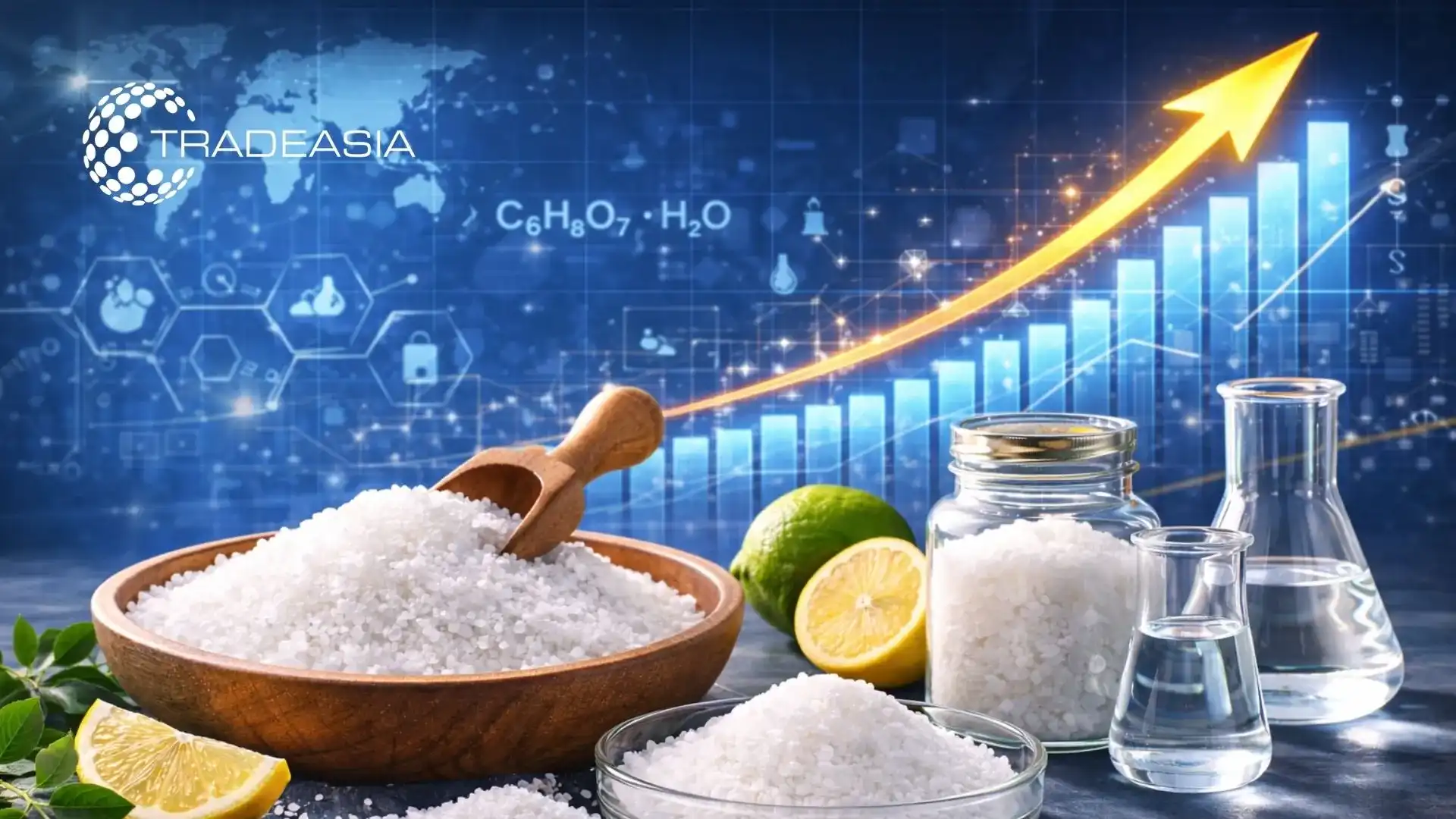

Citric acid is one of the world's most widely used food additives, serving as an acidulant, preservative and flavour enhancer across beverages, confectionery, dairy products, processed foods and pharmaceuticals. Despite its enormous commercial importance, many buyers still associate its pricing with crude oil or broader chemical market trends. In reality, citric acid follows a very different economic model.
Modern citric acid production relies almost entirely on microbial fermentation rather than petrochemical synthesis. Industrial manufacturers use carefully controlled fermentation processes in which selected strains of Aspergillus niger convert carbohydrate feedstocks into citric acid at commercial scale. For procurement professionals, understanding these production economics provides a more accurate framework for anticipating price movements and developing sourcing strategies.
Why Fermentation Dominates Citric Acid Production
Although citric acid occurs naturally in citrus fruits, extracting it directly from fruit is neither practical nor commercially viable for global demand.
Instead, manufacturers produce citric acid through large-scale industrial fermentation. In this process, microorganisms convert sugars into citric acid under carefully controlled conditions, delivering consistent quality and high production efficiency.
Modern fermentation offers several advantages:
Reliable year-round production.
Consistent product quality.
Efficient use of renewable carbohydrate feedstocks.
Scalable manufacturing capacity.
Competitive production costs.
High product purity.
These benefits have made fermentation the global standard for commercial citric acid manufacturing.
The Role of Aspergillus niger
The microorganism most commonly used for industrial citric acid production is Aspergillus niger.
Selected production strains efficiently convert glucose or sucrose into citric acid through carefully optimized fermentation conditions. Manufacturers control factors such as nutrient availability, temperature, aeration and pH to maximize production yields while maintaining product consistency.
Following fermentation, the citric acid undergoes purification, crystallization and drying before being supplied to food, beverage and pharmaceutical manufacturers.
This highly optimized process has been refined over decades to achieve large-scale commercial efficiency.
Glucose Feedstock Is the Largest Raw Material Cost
For procurement professionals, one of the most important pricing drivers is the carbohydrate feedstock entering the fermentation process.
Most commercial citric acid plants use glucose derived from corn starch as their primary carbon source. As a result, changes in agricultural commodity markets can directly influence manufacturing costs.
Key factors affecting glucose costs include:
Corn harvest volumes.
Regional agricultural yields.
Starch processing economics.
Weather conditions.
Export demand.
Government agricultural policies.
Because glucose represents a major production input, fluctuations in corn markets often have a greater influence on citric acid pricing than movements in petroleum markets.
China Plays a Central Role in Global Supply
China accounts for approximately 70% of global citric acid production, making it the dominant supplier to international markets.
This leadership reflects decades of investment in industrial fermentation infrastructure, integrated corn processing and large-scale manufacturing capacity.
Several competitive advantages support China's position:
Extensive fermentation facilities.
Large domestic corn processing industry.
Economies of scale.
Established export infrastructure.
Experienced biotechnology manufacturing expertise.
For international buyers, developments affecting Chinese production often influence global citric acid availability and pricing.
Energy Costs Influence Production Economics
Fermentation is an energy-intensive manufacturing process.
Industrial production requires continuous mixing, aeration, temperature control, downstream purification, evaporation, crystallization and drying. Each stage consumes significant amounts of electricity and thermal energy.
Important energy-dependent operations include:
Fermentation vessel operation.
Air compression and aeration.
Process heating and cooling.
Product concentration.
Crystallization.
Drying and packaging.
Consequently, changes in industrial energy costs can significantly affect manufacturing economics, particularly in regions with large fermentation capacity
Economies of Scale Shape Global Competitiveness
Citric acid production is a capital-intensive business where large manufacturing facilities enjoy significant economic advantages.
Industrial fermentation plants require substantial investment in bioreactors, purification systems, crystallization equipment, drying facilities and quality control laboratories. Once these assets are in operation, higher production volumes help reduce manufacturing costs on a per-ton basis by spreading fixed costs across larger output.
These scale advantages include:
Lower unit production costs.
Higher equipment utilization.
Improved energy efficiency.
Greater purchasing power for raw materials.
Integrated production and logistics.
More competitive export pricing.
For procurement teams, this explains why global citric acid supply remains concentrated among a relatively small number of large-scale producers.
Citric Acid Monohydrate (E330) CAS: 5949-29-1