Microencapsulation Enters Food Ingredient Design: Lessons From the Fragrance Industry
Givaudan’s investment in Microcaps highlights a growing trend: advanced microencapsulation technology, pioneered in the fragrance sector, is now poised to transform food ingredient design. The start-up’s alginate-based delivery system — featuring caviar-sized spheres — offers significant potential for the food and beverage industry.
Microencapsulation Enters Food Ingredient Design: Lessons From the Fragrance Industry
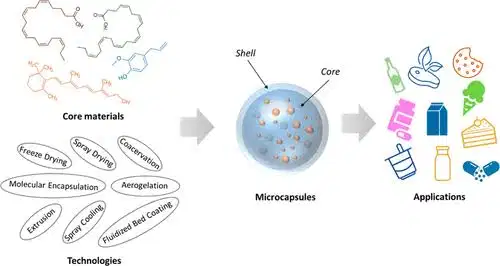
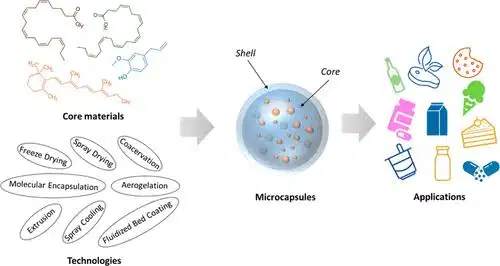
Microcaps’ technology encapsulates oil-phase ingredients in alginate spheres that release their contents upon mechanical pressure, moisture, or temperature triggers. Originally developed for fragrance applications, this innovation is now attracting strong interest from food formulators.
How the Technology Works
The alginate spheres protect sensitive ingredients until the moment of release, then break to create a homogenous mist or cream-like dispersion. This controlled delivery system provides several advantages over traditional ingredient addition.
Key Benefits for Food Applications
Flavor Burst Technology: Create products with intense, fresh flavor release (e.g., in chewing gum, beverages, snacks, or baked goods).
Protection of Sensitive Compounds: Better stability for vitamins, omega-3s, probiotics, and botanicals that degrade easily.
Improved Sensory Experience: Enable unique texture and taste profiles that enhance consumer appeal.
Controlled Release: Time or trigger the release of active ingredients for optimal performance.
Clean Label Potential: Reduce the need for certain additives by improving efficiency of natural ingredients.
Lessons From the Fragrance Industry
The fragrance sector has successfully used microencapsulation for years to deliver long-lasting scent, burst effects, and protection in challenging formulations. Food formulators can adapt several proven strategies:
Trigger Mechanisms: Mechanical (chewing, crushing) or environmental (moisture, heat) release systems
Encapsulation Efficiency: Optimizing sphere size, wall thickness, and material composition
Stability Testing: Rigorous protocols developed for fragrance stability translate well to food matrices
Consumer Perception: Understanding how burst or sustained release affects overall product experience
Potential Food & Beverage Applications
Functional beverages with delayed nutrient release
Confectionery with flavor burst centers
Savory snacks with enhanced aroma delivery
Fortified foods with protected bioactive compounds
Premium baked goods with improved flavor longevity
Industry Implications
Givaudan’s move signals confidence that microencapsulation will play a bigger role in next-generation food ingredient design. Companies that master these delivery technologies early may gain significant competitive advantages in innovation, product differentiation, and clean-label formulation.
The Road Ahead
As food brands push for more sophisticated sensory experiences and better functionality while maintaining clean labels, microencapsulation technologies like Microcaps’ are likely to move from niche to mainstream in the coming years. The cross-pollination of ideas from the fragrance industry could accelerate this adoption significantly.