
 The largest importer of vegetable oils in the world, India, canceled a duty-free import quota of 2 million tonnes of crude sunflower oil and soybean oil for the current fiscal year, which began on April 1.
However, the action delayed cargoes that were loaded before the government deadline of March 31—90,000 tonnes at Indian ports and 180,000 tonnes in route, according to dealers.
According to Sandeep Bajoria, CEO of Sunvin Group, a brokerage and consultancy firm for vegetable oils, after this explanation, a few shipments that had been delayed at ports for a few weeks would finally enter the country.
Following the misunderstanding over import regulations that caused hundreds of thousands of cargoes to become delayed at ports, early in May, India made it clear that imports of soy oil and sunflower oil that were delivered before March 31 will be allowed duty-free till the end of June.
However, the imports would lower local oilseed prices and reduce farmer income, according to B.V. Mehta, executive director of the Solvent Extractors' Association of India. The government notification would be a relief for importers.
Since the clarification would make more soy oil and sunflower oil available, India's imports of palm oil in May may decline, according to a New Delhi-based dealer with a multinational trade house.
Its imports of palm oil dropped 30% from the previous month to a 14-month low in April as price-conscious consumers switched to sunflower oil and soy oil due to palm oil's premium over competing soft oils, five dealers told Reuters last week.
While the global market for soybean oil is anticipated to reach $69.7 billion by 2030, expanding at a CAGR of 4.4% from 2023 to 2030. Soybean oil is the most common vegetable oil traded on international markets, right after palm oil. Geographically speaking, the Asia-Pacific Soybean Oil Market held a 32% share of the worldwide soybean oil market's revenue in 2022. This is a result of the rising demand for soybean oil in developing nations like India and China for domestic consumption as well as in the food service sector.
References:
Jadhav, Rajendra. 2023. Reuters: India to allow duty free imports of sunoil, soyoil until June. Retrieved from https://www.reuters.com/markets/commodities/india-allow-duty-free-imports-sunoil-soyoil-until-june-2023-05-11/
Industry Arc. 2023. Soybean Oil Market - Forecast(2023 - 2028). Retrieved from https://www.industryarc.com/Report/16642/soybean-oil-market.html
Image by jcomp via https://www.freepik.com/
Soybean Oil Imports Would be Permitted Duty-Free Into India Until June
 The largest importer of vegetable oils in the world, India, canceled a duty-free import quota of 2 million tonnes of crude sunflower oil and soybean oil for the current fiscal year, which began on April 1.
However, the action delayed cargoes that were loaded before the government deadline of March 31—90,000 tonnes at Indian ports and 180,000 tonnes in route, according to dealers.
According to Sandeep Bajoria, CEO of Sunvin Group, a brokerage and consultancy firm for vegetable oils, after this explanation, a few shipments that had been delayed at ports for a few weeks would finally enter the country.
Following the misunderstanding over import regulations that caused hundreds of thousands of cargoes to become delayed at ports, early in May, India made it clear that imports of soy oil and sunflower oil that were delivered before March 31 will be allowed duty-free till the end of June.
However, the imports would lower local oilseed prices and reduce farmer income, according to B.V. Mehta, executive director of the Solvent Extractors' Association of India. The government notification would be a relief for importers.
Since the clarification would make more soy oil and sunflower oil available, India's imports of palm oil in May may decline, according to a New Delhi-based dealer with a multinational trade house.
Its imports of palm oil dropped 30% from the previous month to a 14-month low in April as price-conscious consumers switched to sunflower oil and soy oil due to palm oil's premium over competing soft oils, five dealers told Reuters last week.
While the global market for soybean oil is anticipated to reach $69.7 billion by 2030, expanding at a CAGR of 4.4% from 2023 to 2030. Soybean oil is the most common vegetable oil traded on international markets, right after palm oil. Geographically speaking, the Asia-Pacific Soybean Oil Market held a 32% share of the worldwide soybean oil market's revenue in 2022. This is a result of the rising demand for soybean oil in developing nations like India and China for domestic consumption as well as in the food service sector.
References:
Jadhav, Rajendra. 2023. Reuters: India to allow duty free imports of sunoil, soyoil until June. Retrieved from https://www.reuters.com/markets/commodities/india-allow-duty-free-imports-sunoil-soyoil-until-june-2023-05-11/
Industry Arc. 2023. Soybean Oil Market - Forecast(2023 - 2028). Retrieved from https://www.industryarc.com/Report/16642/soybean-oil-market.html
Image by jcomp via https://www.freepik.com/
Related Insights
Why Some Regions Are Facing Tight Supply of Broken Rice
Explore the causes of the broken rice shortage in America and discover reliable sourcing solutions for food and industrial applications.
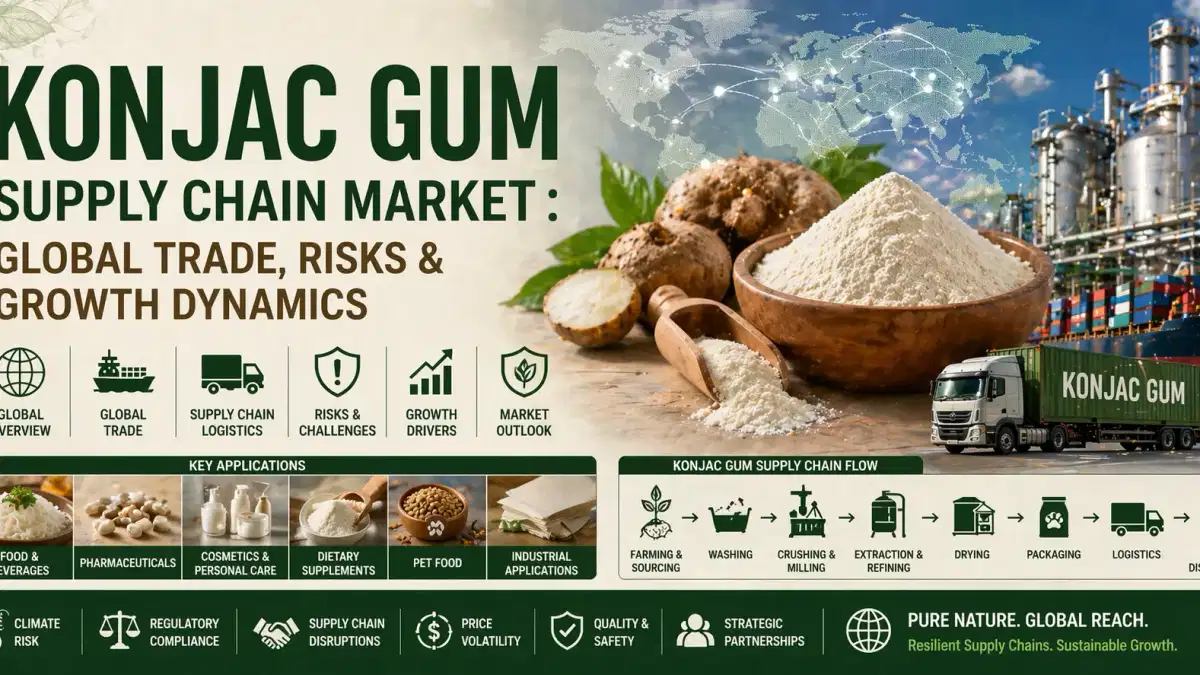
Konjac Gum Supply Chain Market : Global Trade, Risks & Growth Dynamics
2026 Konjac Gum market sees rising B2B demand, stricter regulations, and a growing focus on sustainability, with strong 20-year growth projected.

Reading Grocery Aisle Chemistry Through India's Currency Shock
A 14% rupee depreciation is reshaping costs for Indian food ingredients like guar gum, spice extracts, and natural preservatives in global grocery supply chains.

NovoNutrients' Loop Reactor Finds a Second Life in Bioindustrial Manufacturing
Biosphere's acquisition of a bioreactor previously used by NovoNutrients to produce edible proteins and carotenoids from carbon dioxide has been called one of the smartest bioindustrial manufacturing moves of the year by a leading synthetic biology executive. For procurement teams managing fermentation capacity and bioprocessing equipment, this transaction highlights emerging opportunities in secondary biotech asset markets.

EPA's New PFAS Guidance: Impact on Biosolids, Fertilizer, and the Food Chain
The EPA’s updated PFAS guidance reshapes how farmers use biosolids and fertilizers, influencing crop inputs and the broader food ingredient supply chain. Learn what it means for compliance, sourcing, and consumer safety.

India's Record Fertilizer Production and Food Ingredient Feedstock Costs: What Procurement Teams Should Watch
India's record fertilizer production marks an important development for agricultural supply chains. Lower dependence on imported fertilizers could improve corn production economics, supporting the cost competitiveness of starch, glucose and maltodextrin manufacturers in the months ahead.
Don't miss out on our updates! Subscribe to our newsletter now
We're committed to your privacy. Tradeasia uses the information you provide to us to contact you about our relevant content, products, and services. For more information, check out our privacy policy.