Butter Oil Replacer in the Global Food Supply Chain
Role in Modern Food Manufacturing
Butter Oil Replacer is a specialty fat ingredient positioned within the broader supply chain for functional food fats and dairy-fat alternatives. Its commercial relevance comes from its ability to provide selected characteristics associated with butterfat while giving manufacturers another option for formulation, cost management, and supply planning. Butter and butteroil are valued for properties including flavor, creaming, shortening, layering, gloss, and other functional characteristics, which explains why replacement systems must be assessed according to the finished product rather than simply by ingredient price.
For industrial buyers, the importance of Butter Oil Replacer therefore extends beyond substitution. Food manufacturers need ingredients that can integrate reliably into established production systems while delivering predictable processing and finished-product characteristics. Specialty fat suppliers can develop different systems for bakery, confectionery, dairy-related, and other food applications, making technical matching an important part of procurement.
Supply Chain Position
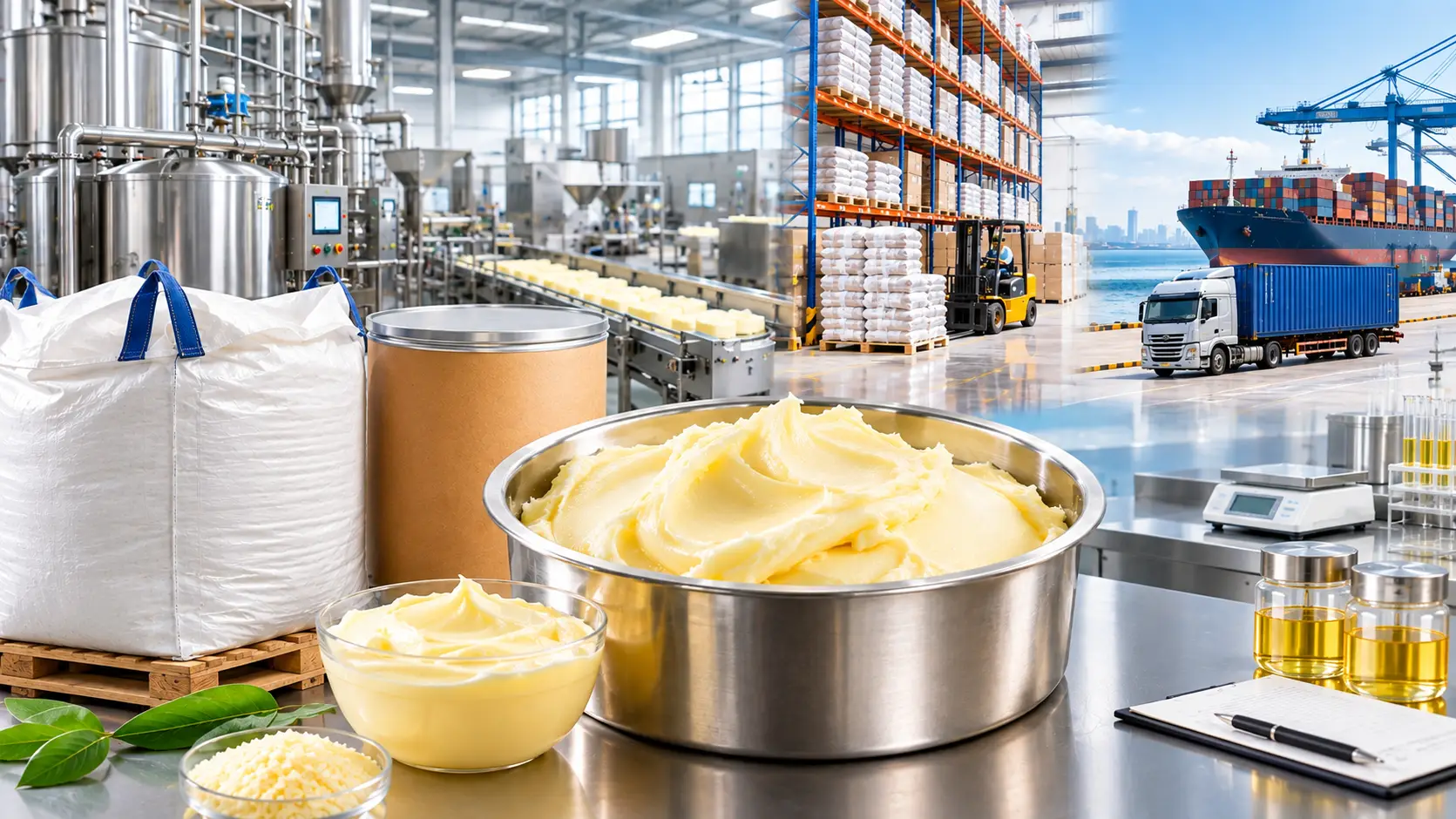
The Butter Oil Replacer supply chain connects specialty-fat manufacturers, vegetable-oil and fat feedstocks, formulation facilities, distributors, importers, food processors, and downstream brands. This structure means buyers should evaluate both the ingredient itself and the reliability of the upstream network supporting it. A competitive quotation has limited value if specification changes, inconsistent availability, or extended lead times disrupt production planning.
For international B2B procurement, the supply chain is particularly important because fat-based ingredients can be affected by raw-material availability, manufacturing schedules, freight conditions, documentation, and regional storage requirements. A sourcing strategy that combines technical qualification with supplier diversification can help food manufacturers maintain continuity while avoiding unnecessary dependence on a single supply channel.
Functional Role in Industrial Food Manufacturing
Texture and Processing Performance
Butter Oil Replacer is primarily valuable when fat functionality influences the processing behavior and sensory characteristics of a food product. In bakery, for example, fat can affect dough handling, shortening, aeration, texture, layering, and finished-product quality. Butteroil itself is recognized for functional characteristics such as air incorporation, creaming, shortening, flavor carrying, gloss, and layering, so replacement systems must be selected according to the specific functionality required by the formulation.
For manufacturers, this makes application testing essential before commercial conversion. A replacer that performs effectively in one recipe may not deliver identical results in another because processing temperature, mixing conditions, fat level, emulsification requirements, and desired melting behavior can differ substantially. Procurement teams should therefore work with technical and production departments to establish clear acceptance criteria before moving from trial quantities to contracted supply.
Formulation and Product Consistency
Consistency is a major commercial consideration in large-scale food production. Manufacturers need raw materials that behave predictably across repeated production batches, especially where automated processes operate continuously. Butter Oil Replacer can form part of a controlled fat system designed around the requirements of specific food categories, helping formulators manage texture and processing characteristics alongside broader cost and supply objectives.
The most effective sourcing programs consequently treat Butter Oil Replacer as a functional ingredient rather than a commodity purchased exclusively on a per-tonne basis. Specification, melting behavior, compatibility, sensory performance, packaging, shelf life, documentation, and supplier responsiveness should all contribute to the purchasing decision. This approach reduces the risk of selecting a nominally cheaper material that creates downstream formulation or production problems.
Key Applications Driving Commercial Demand
Bakery and Confectionery
Bakery is an important application area for butterfat and butterfat-replacement systems because fats contribute to product structure, texture, flavor, and processing. Industrial producers of biscuits, cakes, pastries, laminated products, and other baked foods can evaluate Butter Oil Replacer when they need a functional fat system compatible with their formulation and manufacturing process. Butteroil is also used in bakery applications for flavor enhancement and functional performance.
Confectionery provides another commercially relevant market because fat functionality influences fillings, coatings, centers, and texture. The Canadian Dairy Commission notes the role of butteroil in controlling fat bloom in chocolate products, illustrating why fat selection can affect both processing and finished-product appearance. For B2B buyers, the appropriate Butter Oil Replacer should therefore be evaluated against the precise requirements of the confectionery process rather than treated as a universal substitute.
Dairy Alternatives and Processed Foods
Dairy-related applications are also relevant to the commercial development of specialty fat replacers. Modern ingredient suppliers provide milk-fat replacement solutions for products including cheese analogues, ice cream, spreads, desserts, cream, dairy beverages, and dairy powders. These applications require careful control of mouthfeel, structure, flavor release, and processing performance.
Beyond dairy analogues, Butter Oil Replacer may be considered for processed foods and foodservice formulations where manufacturers require a stable fat system suited to their production environment. Its potential application range creates opportunities for buyers across several food categories, but it also increases the importance of product-specific qualification. The commercial question is not simply whether a replacer can replace butter oil, but whether it can deliver the required performance in the buyer's exact formulation.
Buyer Requirements and Product Qualification
Technical Specification
Procurement teams should begin qualification by establishing a detailed product specification. Relevant considerations can include physical form, appearance, odor, melting characteristics, fat profile, application suitability, storage requirements, packaging, shelf life, and applicable food-safety documentation. Where a manufacturer is replacing an existing fat, comparative testing against the incumbent material can provide a clearer basis for approval.
Regulatory suitability is equally important. Food ingredients must be selected according to the requirements of the destination market and intended application, including applicable food standards, labeling obligations, and permitted additives where relevant. Buyers should request current technical and regulatory documentation from suppliers rather than relying solely on general descriptions of the ingredient.
Commercial Qualification
Commercial qualification should assess more than the quoted purchase price. Procurement teams need to examine minimum order quantities, lead times, packaging formats, payment terms, shipment options, documentation, production capacity, and the supplier's ability to maintain consistent specifications. These factors determine the delivered cost and operational risk of Butter Oil Replacer.
A structured supplier comparison can also distinguish between manufacturers, distributors, and trading companies. Direct manufacturers may provide deeper technical support or formulation customization, while experienced distributors can offer regional inventory and logistical flexibility. For international buyers, the most appropriate partner is ultimately the one capable of combining product conformity, dependable supply, responsive communication, and commercially workable delivery terms.
Global Sourcing and Supplier Evaluation
Building a Reliable Supplier Network
A resilient Butter Oil Replacer sourcing strategy begins with a qualified supplier network. Buyers should identify suppliers with demonstrated experience in specialty fats and food ingredients, then assess their technical documentation, quality systems, manufacturing or distribution capabilities, and export experience. Supplier qualification should be completed before a supply interruption forces the procurement team to make a rushed substitution.
Multiple sourcing can also strengthen supply continuity where volumes justify it. Maintaining an approved secondary supplier can provide a contingency route if the primary supplier experiences production constraints, raw-material shortages, logistical disruptions, or unexpected demand increases. However, alternate sources should be technically qualified in advance so that emergency procurement does not automatically trigger a reformulation crisis.
B2B Marketplace Procurement
Digital B2B procurement platforms can simplify supplier discovery by allowing buyers to compare product information, commercial requirements, and sourcing options across markets. For specialty ingredients, this can shorten the initial supplier-screening process and help procurement teams identify potential partners beyond their established local network.
For Tradeasia, Chemtradeasia, and Tradechem Marketplace, the opportunity lies in connecting food manufacturers with commercially relevant ingredient supply while supporting the information required for informed purchasing decisions. The strongest B2B sourcing proposition is therefore not simply product availability; it is the combination of supplier access, market knowledge, documentation, logistics coordination, and responsive commercial support.
Logistics, Storage, and Supply Continuity
Shipment Planning
International shipment planning should account for the physical characteristics and packaging requirements of the selected Butter Oil Replacer. Buyers should confirm recommended storage and transportation conditions with the manufacturer because requirements can vary according to formulation and packaging. Butteroil products, for example, have established guidance around cool, dry storage and controlled handling.
Packaging also affects the economics of international procurement. Suitable drums, cartons, lined containers, or other approved formats must protect the product during handling and transit while fitting the buyer's warehouse and production systems. Shipment planning should therefore consider not only freight cost but also packaging efficiency, storage capacity, unloading requirements, and the risk of product deterioration caused by inappropriate conditions.
Supply Continuity Planning
Supply continuity becomes increasingly important when Butter Oil Replacer is incorporated into high-volume production. A disruption can affect multiple downstream products if the ingredient has been standardized across a product portfolio. Procurement teams should consequently establish realistic reorder points based on consumption, supplier lead time, shipment schedules, inventory capacity, and seasonal demand.
Long-term contracts can support greater visibility when supplier capacity and buyer demand are sufficiently stable. At the same time, buyers should avoid excessive inventory where storage conditions, working capital, or product shelf life make large stock positions inefficient. The objective is a balanced supply model that protects production without creating unnecessary inventory exposure.
Strategic Procurement Outlook and Conclusion
Market Direction
The commercial outlook for Butter Oil Replacer is closely connected to the continuing need for efficient specialty-fat systems across global food manufacturing. Producers are under pressure to maintain product consistency while managing ingredient costs, supply volatility, formulation requirements, and changing consumer expectations. This creates a sustained role for functional fat systems capable of addressing specific manufacturing requirements.
The market should therefore be viewed through the lens of application performance and supply-chain resilience rather than simple substitution. Buyers that understand their formulation requirements, qualify suppliers carefully, and monitor upstream risks are better positioned to convert Butter Oil Replacer from a tactical replacement into a dependable component of their ingredient strategy.
Strategic Role of Tradeasia
For international food manufacturers, distributors, and procurement teams, sourcing Butter Oil Replacer requires a balance between technical suitability, commercial competitiveness, and dependable logistics. A supplier relationship should provide confidence that specifications, documentation, communication, and shipment planning can support ongoing production rather than only a single transaction.
Tradeasia International, Chemtradeasia, and Tradechem Marketplace can serve as B2B sourcing channels for businesses evaluating specialty food ingredients and global supply opportunities. By combining product-oriented market knowledge with international procurement capabilities, they can help buyers approach Butter Oil Replacer sourcing with a more structured focus on application fit, supplier qualification, and long-term supply continuity.
Sources
www.adpi.org
www.cdc-ccl
www.cargill.com
Leave a Comment