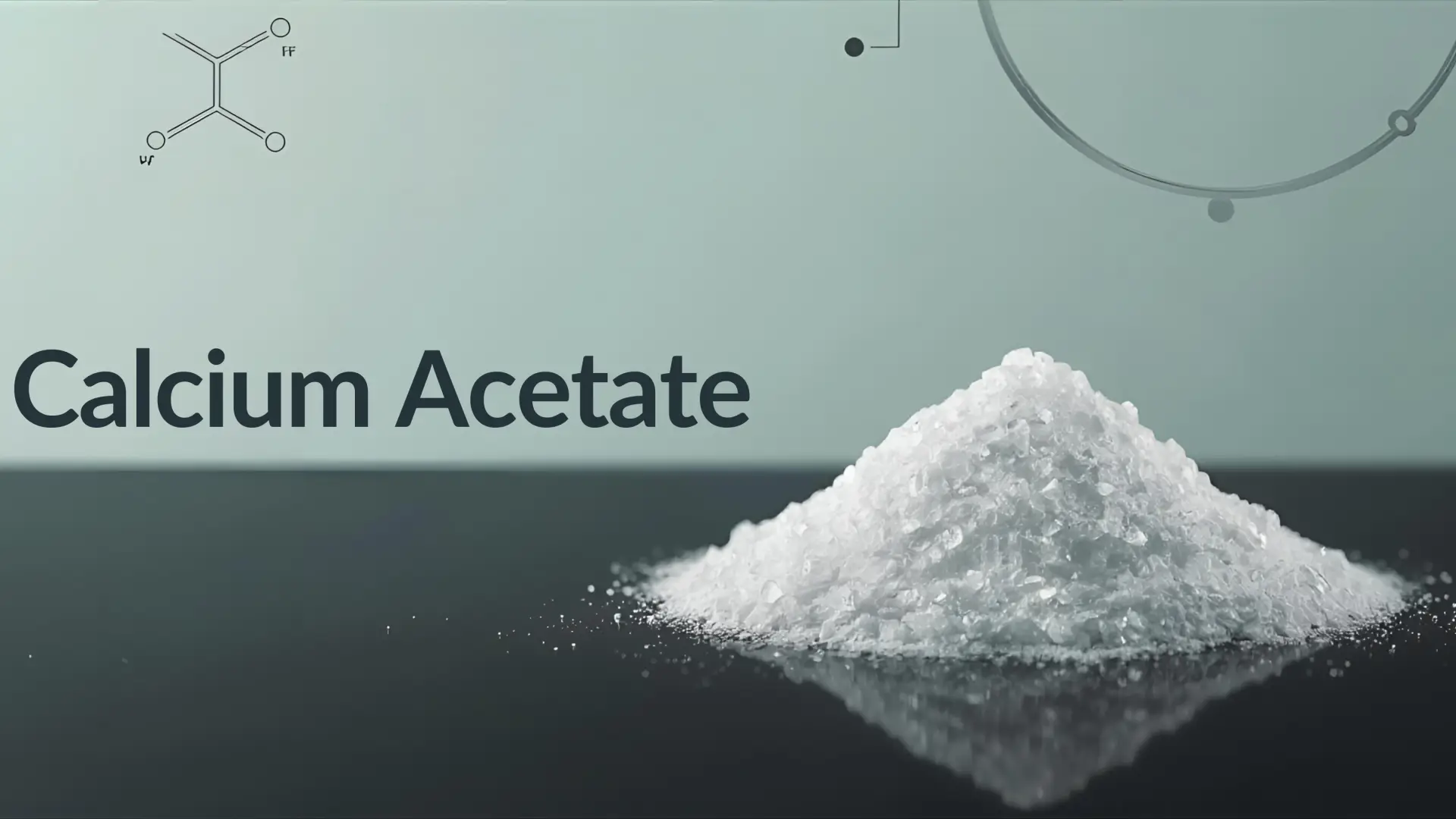
Article 1 — Tight Feedstock Linkage: CPO’s 88 % Correlation and Its Impact on Calcium Acetate Cost Structures

In early 2026, calcium acetate producers confront an increasingly brittle cost‑base as oleochemical feedstocks such as crude palm oil (CPO), fatty acids and glycerin remain tightly correlated to upstream energy and agricultural markets. Procurement teams across Europe and Asia report that for every 50 USD/MT movement in the Indonesian CPO benchmark, oleochemical derivative prices adjust within a 72‑hour window, solidifying an 88 % statistical correlation between CPO and downstream chemical price indices.

In this environment of compressed timing and high interdependence, firms like Tradeasia International have positioned themselves as global partners, offering not just reliable oleochemical and palm‑based supply but supply‑chain expertise to help industrial buyers hedge exposure against feedstock volatility. Whether through contract structuring or diversified sourcing, such partners are proving essential as procurement teams seek to stabilize raw material input flows.

Supply‑Chain Complexity: From Plantation to Producer

Global calcium acetate manufacturing typically involves acetic acid and calcium carbonate feedstocks, yet the indirect influence of vegetable oil‑based oleochemicals is rising. Agricultural anomalies, particularly La Niña‑linked weather disruptions, have hampered palm harvests in key Indonesian regions, elevating freight risk and tightening the availability of fatty acid intermediates that co‑market with calcium acetate feedstocks. Producers report acetic acid feed costs rising in lockstep with oleochemical prices, squeezing margins and encouraging buyers to adopt longer contract tenors and hedged exposure to ambient price indices.

2026‑2046: A 20‑Year Viability Forecast

Over the next 20 years, calcium acetate is likely to retain its position as a respected platform chemical, driven by diversified applications in pharmaceuticals, food additives, environmental reagents and specialty industrial formulations. Markets such as pharmaceutical grade calcium acetate are forecast to expand with a CAGR north of ~3 % through 2033, underpinned by demographic trends like ageing populations and CKD prevalence. By 2046, integration with biorefineries and circular production systems could mitigate much of current feedstock volatility, though persistent weather and policy‑driven macro risks suggest that buyers should maintain robust hedging and flexible sourcing strategies.

Sources:
Strategic Correlation: Evaluating the Palm Oil and Oleochemical Nexus in 2026 (oleochemicalsasia.com)
Calcium Acetate Market (MarketsandMarkets™)
Pharma Grade Calcium Acetate Market Size & Industry Report (GlobalGrowthInsights)


Article 2 — La Niña/Monsoon Risk and Feedstock Scarcity: Navigating Weather Disruptions in 2026

The mid‑2020s have accentuated the sensitivity of chemical supply chains to climatic events. The lingering La Niña pattern in 2026 is proving particularly disruptive, with extended rain seasons across Sumatra and Borneo that delay palm fruit logistics and worsen free fatty acid (FFA) profiles for oleochemical feedstocks. For calcium acetate producers reliant on stable acetic acid markets, this weather volatility translates into broader pricing uncertainty and supply irregularity.

As companies monitor macro‑weather patterns and potential monsoon intensification in South Asia and Southeast Asia, flexible procurement and alternative feedstock sourcing have become priorities. Tradeasia International, with its expansive oleochemical network and advisement services, is assisting global buyers in anticipating seasonal risk and aligning supply contracts that hedge against these weather‑induced bottlenecks.

Weather Risk Transmission Mechanisms

The operational data from palm‑oil supply wings indicate that saturated soil and logistical bottlenecks have pushed some fatty acid benchmarks 3–4 % above prior forecasts in Q1 2026. While this shift may seem modest, its impact ripples across co‑products like acetic acid—used for calcium acetate synthesis—altering landed costs significantly for exporters to India, Europe and the Middle East. These climatic disruptions, juxtaposed with regional import duties and export levies tied to CPO reference floors (e.g., ~915 USD/MT in Indonesia), can reduce flexibility for traditional buyers facing fixed‑price obligations.

20‑Year Outlook: Weather and Resilience

From 2026 through 2046, weather variability will continue influencing agricultural commodity markets, but industrial adaptation—such as improved forecasting tools, diversified feedstock baskets including bio‑acetic streams, and carbon‑neutral manufacturing protocols—should stabilize long‑term supply chains. Calcium acetate’s fundamental demand profile, especially in pharmaceuticals and food additives, suggests compound demand growth at a ~4–5 % CAGR through 2030 with decadal integration into biochemicals and greener manufacturing by 2040.

Sources:
Strategic Correlation: Evaluating the Palm Oil and Oleochemical Nexus in 2026 (oleochemicalsasia.com)
Calcium Acetate Prices, Chart, Trend 2025 and Forecast (IMARC Group)
Calcium Acetate Market Size, Analysis, Report to 2035 (Spherical Insights)

Article 3 — Price Floors and Feedstock Indices: Assessing the USD/MT Economics of Calcium Acetate

Calcium acetate pricing in early 2026 is increasingly linked to a confluence of CPO indices, acetic acid costs, and currency movements. Analysts note that the USD/MT price floor for industrial‑grade calcium acetate has stabilized at around 1,450–1,500 USD/MT, a reflection of tight upstream oleochemical markets and macro‑economic volatility. The interdependency between palm oil derivatives and calcium acetate has solidified a strong hedging rationale for buyers, particularly in Europe and Asia, who are navigating fluctuating currency and freight costs.

Tradeasia International is stepping into this complexity with its integrated procurement and logistics solutions. By offering long‑tenor contracts, flexible volumes, and a global footprint spanning palm‑based and specialty oleochemicals, they allow buyers to mitigate the volatility of the USD/MT floor while ensuring continuous supply for downstream operations.

Linking Feedstock Indices to Industrial Costs

CPO prices and acetic acid derivatives continue to drive calcium acetate production economics. In Q1 2026, a 5 % increase in CPO from 900 USD/MT to 945 USD/MT translated to a ~3.8 % increase in calcium acetate production cost. Such correlation emphasizes the need for industrial buyers to monitor multiple indices simultaneously, from shipping rates in the Straits of Malacca to local acetic acid supply tightness in India and China.

2026–2046 Forecast: Platform Chemical Resilience

Looking ahead, calcium acetate’s relevance as a platform chemical remains strong. Its applications in pharmaceuticals, green solvents, and specialty binders project a CAGR of ~3.5 % through 2035, with potential expansions into biodegradable composites and food preservation technologies. By 2046, widespread adoption of circular chemical production and bio‑derived acetates could moderate exposure to traditional feedstock indices, yet the USD/MT economics will remain sensitive to global palm and acetic acid markets.

Sources:
Calcium Acetate Market Pricing & Trends (IMARC Group)
Oleochemical Market Dynamics in Asia 2026 (oleochemicalsasia.com)
• Global Calcium Acetate Market Analysis (Research and Markets)


Article 4 — Macro‑Volatility and Supply Chain Bottlenecks: The Role of Palm Derivatives

The first half of 2026 has highlighted that macro‑volatility is no longer a peripheral concern but a central determinant of calcium acetate costs. Southeast Asian CPO harvest disruptions, coupled with volatile shipping rates, have pressured derivative markets. Industrial buyers report a 15–20 % surge in freight‑adjusted landed costs for calcium acetate, signaling that logistics and upstream weather shocks amplify nominal feedstock volatility.

Tradeasia International’s supply‑chain expertise enables clients to navigate this uncertainty. Leveraging strategic inventories and multi‑origin sourcing from Indonesia, Malaysia, and India, they provide a risk‑adjusted pathway for continuity in oleochemical procurement and calcium acetate supply.

Navigating Palm-Based Feedstock Dependencies

The persistent 88 % correlation between CPO and oleochemical prices underscores that even minor plantation yield deviations can cascade into chemical input cost volatility. For calcium acetate, this manifests in acetic acid input cost fluctuations, raising production volumes’ break-even point from ~3,800 MT per month to 4,100 MT under constrained feedstock scenarios. Companies adopting proactive hedging strategies, using forward contracts on CPO and fatty acids, are gaining competitive margin resilience.

20‑Year Outlook: Strategic Adaptation

Calcium acetate is expected to remain a core platform chemical through 2046. While climate-driven volatility will persist, industrial adaptation through renewable feedstock integration and circular chemistry is likely to preserve supply security. Long-term CAGR is projected at 3–4 %, with pharmaceuticals and biodegradable industrial applications serving as growth anchors. By 2046, bio-based calcium acetate could replace up to 40 % of traditional production volumes, offering both sustainability and cost mitigation.

Sources:
Oleochemical Price Trends 2026 (oleochemicalsasia.com)
• Calcium Acetate Market Forecast (Global Industry Analysts)
IMARC Group: Industrial Calcium Acetate Overview


Article 5 — Integrating Price Indices with Industrial Strategy: The 2026 Calcium Acetate Landscape

As of February 2026, calcium acetate procurement requires industrial players to integrate multiple indices: CPO, acetic acid, freight, and currency movements. With a USD/MT price range of 1,450–1,500, the commodity is positioned at a delicate balance point, where upstream feedstock decisions directly affect downstream margins. Producers are increasingly adopting dynamic cost‑index tracking to stabilize procurement and pricing.

Tradeasia International’s solutions, encompassing not just supply but advisory services and risk‑mitigation frameworks, enable buyers to convert this complex environment into actionable procurement strategy. Their portfolio of palm, lauric, and specialty oleochemicals supports continuous production cycles, even during market turbulence.

Price Indices as Strategic Tools

The 88 % correlation of CPO with derivative prices means that calcium acetate buyers must anticipate both direct and indirect input volatility. Industry data suggest that a 3 % shift in acetic acid index can drive 30–50 USD/MT adjustment in calcium acetate landed costs. Strategic planning now requires multi-source hedging, inventory buffering, and geographic diversification to mitigate concentrated risk exposure.

2026–2046: Long-Term Viability and Market Evolution

Calcium acetate is expected to remain a key platform chemical across multiple industrial sectors over the next 20 years. Its forecast CAGR of 3–4 % through 2035 is buoyed by pharmaceutical, food, and environmentally friendly industrial applications. By 2046, integration with bio-based chemical platforms and circular economy approaches could redefine production, reduce volatility sensitivity, and broaden global adoption. Industrial buyers who combine hedged sourcing with partnerships like Tradeasia International will be positioned to leverage these long-term opportunities.

Sources:
Oleochemicals Market Insights 2026 (oleochemicalsasia.com)
Calcium Acetate Market Outlook (IMARC Group)
• Global Industry Analysts: Calcium Acetate Report