Introduction
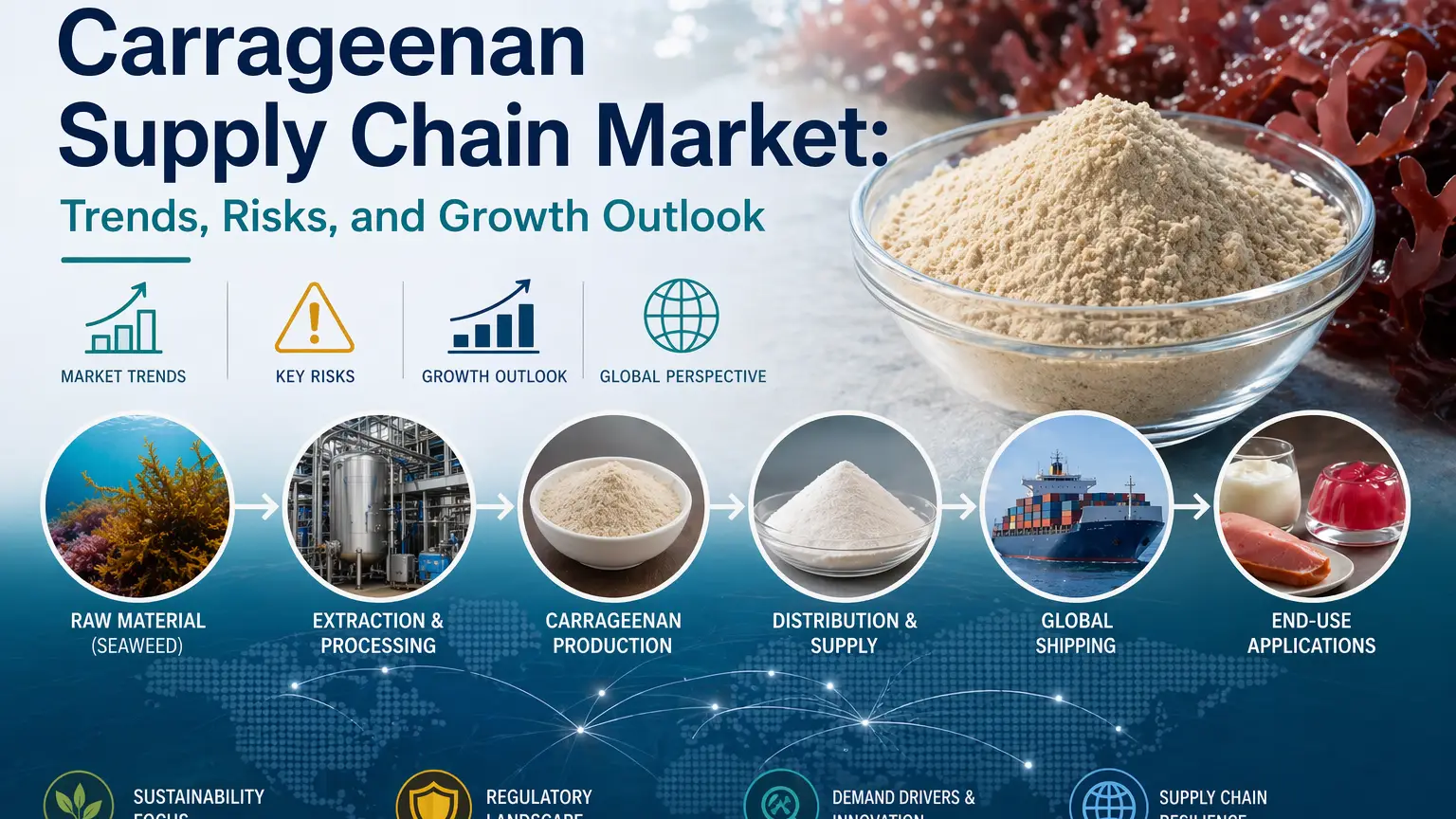
The global carrageenan market in 2026 is entering a phase of strategic recalibration, driven by supply chain disruptions, sustainability demands, and evolving end-user industries. Derived from red seaweed and widely used as a stabilizer and thickener, carrageenan plays a critical role in food, pharmaceutical, and industrial formulations. With the market projected to exceed USD 1.12 billion in 2026 and grow steadily toward 2034, supply chain resilience has become as important as product functionality.
Upstream Raw Material Sourcing Dynamics
At the core of the carrageenan supply chain lies red seaweed cultivation, concentrated in Southeast Asia. However, supply consistency remains vulnerable to climate variability, coastal ecosystem degradation, and farming limitations. In recent years, producers have faced constraints in accessing sufficient low-cost raw seaweed, tightening upstream supply conditions.
This has pushed manufacturers to invest in vertically integrated sourcing models and contract farming. The shift ensures quality traceability while mitigating risks tied to fragmented supplier networks. Increasingly, sustainability certifications are also influencing procurement decisions, particularly among multinational food producers.
Global Trade Flows and Regionalization
The carrageenan trade landscape in 2026 reflects a clear pivot toward regionalization. Geopolitical tensions, tariff adjustments, and logistics bottlenecks have encouraged producers to localize processing facilities closer to demand centers.
For instance, countries in the Middle East, including the United Arab Emirates, are witnessing fluctuating import prices—ranging between approximately USD 6.5/kg and USD 9/kg in early 2026—highlighting the volatility tied to global sourcing routes.
This decentralization trend is not merely defensive. It enables faster response times, reduced transportation costs, and improved compliance with regional food safety regulations, especially in high-growth markets across Asia-Pacific and the Middle East.
Demand-Side Industrial Expansion
On the demand side, carrageenan continues to benefit from strong growth across food, pharmaceutical, and emerging bio-material sectors. Food and beverage applications still dominate, accounting for roughly 75% of total usage, driven by processed dairy, plant-based alternatives, and convenience foods.
Beyond traditional uses, carrageenan is gaining traction in sustainable packaging innovations. Carrageenan-based films are emerging as viable biodegradable alternatives to single-use plastics, aligning with global regulatory pressure for eco-friendly materials.
Additionally, the rise of functional foods and nutraceuticals is further expanding demand, as carrageenan supports texture, stability, and nutrient delivery in fortified products.
Cost Pressures and Price Stability Trends
Despite demand growth, the supply chain remains under cost pressure. Rising energy prices, transportation costs, and inflationary factors continue to influence production economics. In 2025, increased input costs—including a 2.7% rise in consumer price indices—contributed to higher carrageenan production expenses.
However, the market has shown relative price stability overall, supported by balanced supply-demand dynamics. This equilibrium is fragile, as disruptions in logistics or raw material supply can quickly trigger price fluctuations.
Looking ahead, digital supply chain management tools and predictive analytics are being adopted to enhance forecasting accuracy and reduce volatility risks.
Conclusion
The carrageenan supply chain market in 2026 reflects a complex interplay of sustainability, regionalization, and industrial demand expansion. While upstream vulnerabilities and cost pressures persist, the industry is adapting through localized production, technological integration, and diversified sourcing strategies.
For businesses navigating this evolving landscape, partnering with an experienced global supplier can make a measurable difference. Tradeasia International positions itself as a reliable partner in sourcing high-quality carrageenan, supported by robust logistics networks and market intelligence across key regions.
For further insights, refer to:
Leave a Comment