Introduction
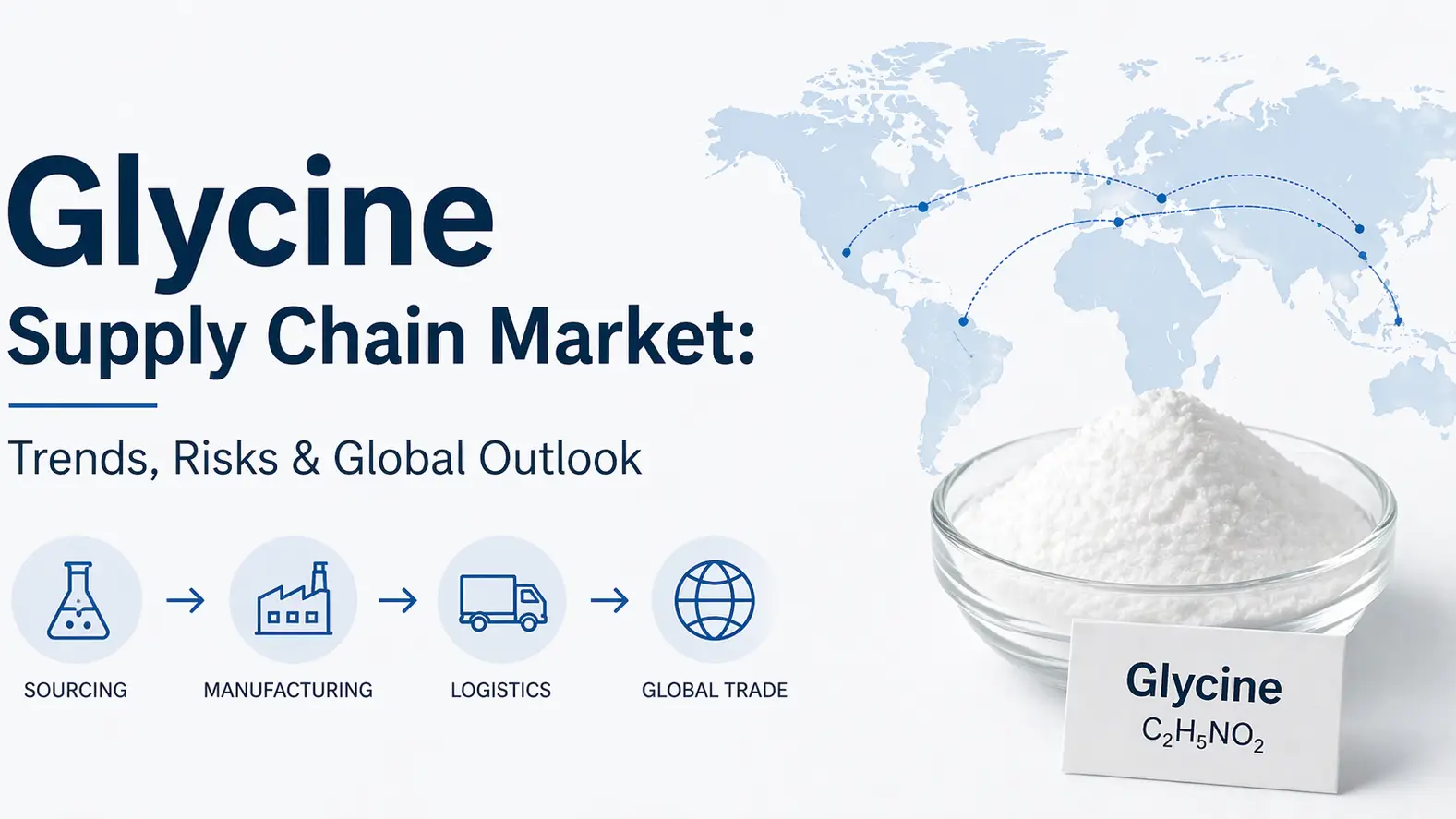
The global glycine market in 2026 is undergoing structural transformation as supply chain dynamics redefine pricing, sourcing strategies, and regional competitiveness. Valued at approximately USD 2.5 billion and expanding steadily at over 6% CAGR, glycine has evolved beyond a commodity amino acid into a strategic platform chemical used in pharmaceuticals, food processing, and agrochemicals.
Supply chain resilience has become the central theme shaping the industry. From upstream raw material volatility to downstream logistics disruptions, stakeholders are adapting procurement and distribution models to ensure stability in a highly concentrated global market.
Supply Concentration and Global Pricing Power
A defining characteristic of the glycine supply chain in 2026 is its heavy concentration in Asia, particularly China. The Asia-Pacific region accounts for nearly half of global production, giving exporters significant influence over pricing and availability.
This concentration has created a dual-market structure. Industrial-grade glycine remains price-sensitive, while pharmaceutical-grade glycine commands premium pricing due to stringent compliance and limited qualified suppliers. Buyers in Europe and North America increasingly rely on long-term contracts to mitigate exposure to price volatility and supply disruptions.
Feedstock Volatility and Cost Pressures
Upstream instability is another critical factor reshaping the glycine supply chain. Key raw materials such as ammonia and chloroacetic acid account for up to 70% of production costs, making glycine highly sensitive to petrochemical market fluctuations.
Price swings in these inputs directly impact contract pricing and margins, forcing manufacturers to adopt more defensive procurement strategies. Inventory buffers are increasing, and supplier diversification is becoming standard practice, particularly in high-purity segments where supply risks carry higher operational consequences.
Logistics Disruptions and Regionalization
Logistics inefficiencies continue to exert pressure on the glycine supply chain in 2026. Freight costs remain elevated, increasing total landed costs by up to 10–18% compared to pre-pandemic levels.
In response, companies are shifting toward regionalized supply chain models. Investments in local storage, warehousing, and distribution hubs—especially in Southeast Asia and the Middle East—are reducing dependency on long-distance shipping routes. This trend reflects a broader move toward supply chain decentralization, where proximity to end markets becomes a competitive advantage.
Shifting Production Hubs and Import Dependency
The gradual decline of glycine production capacity in Western markets has intensified global trade imbalances. North America and Europe are increasingly dependent on imports, exposing buyers to geopolitical risks, currency fluctuations, and regulatory uncertainties.
At the same time, emerging production hubs such as India and Southeast Asia are gaining traction. These regions are investing in capacity expansion and technological upgrades, aiming to reduce overreliance on a single geography and create a more balanced global supply network over the next two decades.
Conclusion
The glycine supply chain market in 2026 is defined by concentration, volatility, and strategic realignment. Companies that can effectively manage sourcing risks, optimize logistics, and diversify supplier networks will be better positioned to navigate ongoing disruptions while capturing long-term growth opportunities.
In this evolving landscape, partnering with experienced global distributors becomes increasingly valuable. Tradeasia International stands out as a reliable solution provider, offering integrated sourcing, diversified supply channels, and logistics expertise to help businesses secure stable glycine supply across regions. With a strong global footprint and deep market insight, Tradeasia supports industry players in building resilient and future-ready supply chains.
Sources
Leave a Comment