Understanding Isomalt and Its Role in Industrial Ingredient Markets
Isomalt has become an important functional ingredient in modern food manufacturing due to its role as a sugar substitute with technical properties suitable for various formulations. Produced from sucrose through enzymatic and hydrogenation processes, isomalt is a polyol widely used by manufacturers looking to develop reduced-sugar and sugar-free products while maintaining desirable texture, stability, and sweetness characteristics.
According to technical information from the Food and Agriculture Organization of the United Nations and international food safety evaluations, polyols such as isomalt are recognized as ingredients used in food applications because of their functional properties and reduced impact on blood glucose compared with traditional sugars. These characteristics have contributed to increasing interest among food producers developing healthier product categories.
What Is Isomalt?
Isomalt is a sugar alcohol derived from sucrose and consists mainly of two hydrogenated disaccharide components: glucosyl-mannitol and glucosyl-sorbitol. Unlike conventional sugar, it provides lower sweetness intensity while offering excellent stability under heat processing conditions, making it suitable for demanding manufacturing environments.
Its technical advantages include low hygroscopicity, resistance to crystallization, and compatibility with different food systems. These properties allow manufacturers to use isomalt in applications where appearance, shelf stability, and texture are critical factors.
Why Isomalt Matters in B2B Ingredient Supply Chains
For industrial buyers, isomalt represents more than a functional sweetener. It is a strategic ingredient that supports innovation in products targeting changing consumer preferences, including sugar-reduced confectionery, specialty foods, and pharmaceutical formulations.
Procurement teams evaluating isomalt suppliers typically consider consistency of quality, production capacity, regulatory documentation, packaging options, and supply reliability. Reliable sourcing channels are essential because ingredient availability directly affects production schedules and product development cycles.
Trade platforms such as the Isomalt product page help connect industrial buyers with supplier information, technical details, and sourcing opportunities needed for commercial decision-making.
Industrial Importance of Isomalt Supply
The global shift toward healthier food formulations has encouraged manufacturers to explore alternatives to traditional sugar without compromising product performance. Industry analysis from market research organizations has identified sugar reduction as a continuing innovation area within the global food ingredients sector.
For chemical traders, ingredient distributors, and manufacturers, understanding application-driven demand is essential. Isomalt suppliers that can support technical requirements and international procurement needs are better positioned to serve expanding markets across food, pharmaceutical, and specialty ingredient industries.
Isomalt Applications Across Food and Confectionery Industries
The food and confectionery sector represents one of the largest commercial application areas for isomalt due to its ability to replace sugar while maintaining important product characteristics. Manufacturers increasingly use isomalt in formulations where reduced sugar content, controlled sweetness, and improved product stability are key market requirements. According to the European Food Safety Authority, polyols including isomalt have undergone scientific safety evaluations supporting their regulated use in food applications within approved conditions.
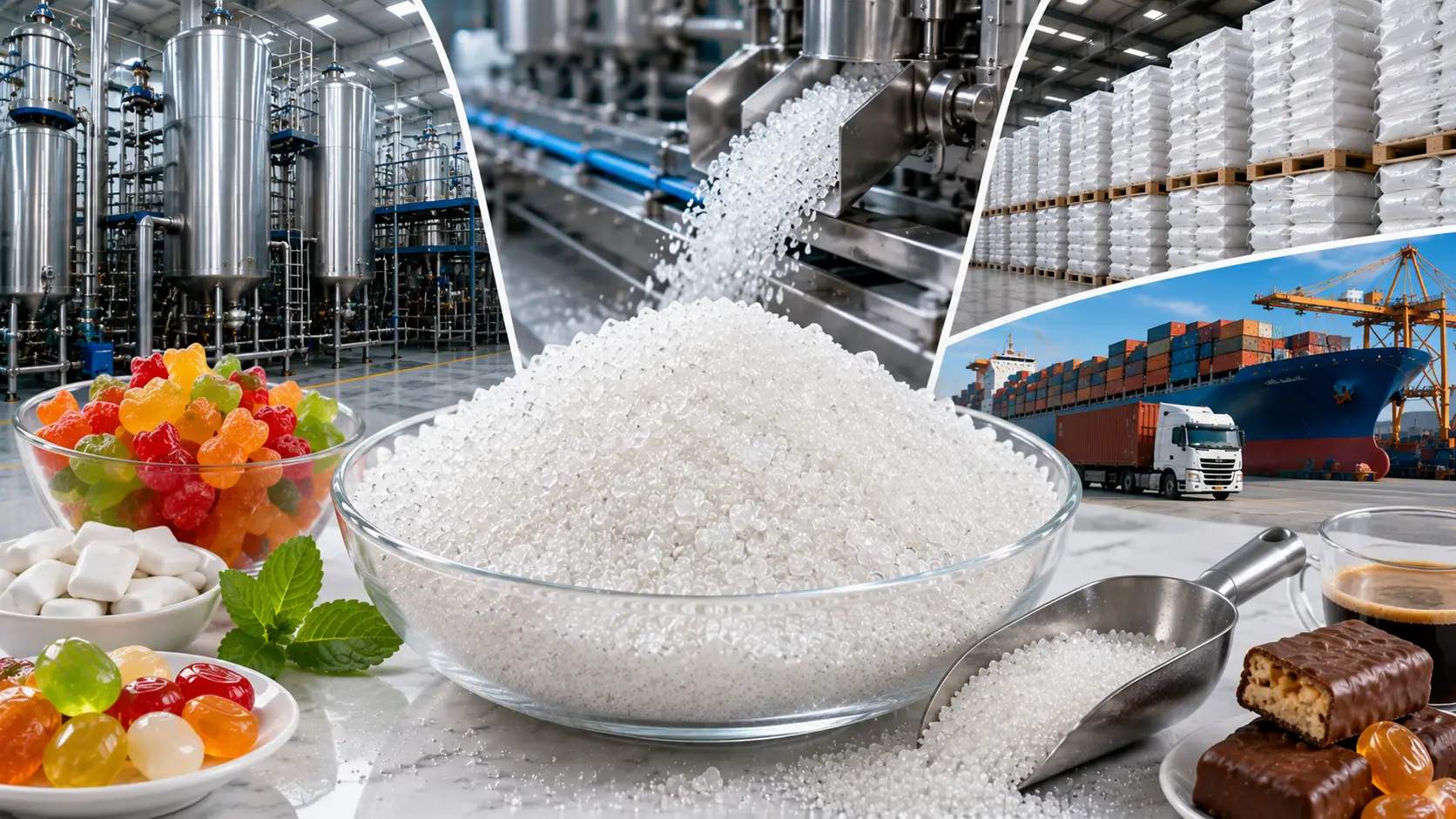
The growth of sugar-free and reduced-sugar product categories has encouraged confectionery manufacturers to evaluate alternative sweetening systems. Isomalt offers advantages for hard candies, lozenges, chewing gum, and decorative confectionery because it provides a clean appearance, low moisture absorption, and resistance to temperature changes during processing.
Isomalt Applications in Confectionery Manufacturing
Confectionery producers commonly use isomalt in sugar-free candies, premium chocolates, and decorative sugar art products. Its crystallization behavior allows manufacturers to create visually appealing products with stable structures, which is especially valuable in products requiring transparency, gloss, or long shelf life.
For industrial confectionery companies, selecting the right isomalt supplier involves evaluating consistency in particle size, purity levels, food safety compliance, and delivery capability. These factors influence production efficiency because variations in ingredient quality can affect processing performance and final product characteristics.
Isomalt Uses in Functional and Specialty Foods
Beyond traditional confectionery, isomalt is increasingly considered for specialty food applications, including products designed for consumers seeking lower sugar intake. Food developers use polyols to reformulate products while maintaining acceptable taste profiles and technical performance.
The demand for functional ingredients has expanded as food manufacturers respond to consumer interest in healthier product choices. Reports from organizations such as the International Food Information Council highlight continued consumer attention toward sugar reduction and ingredient transparency, influencing product development strategies across food categories.
Commercial Opportunities for Food Manufacturers and Suppliers
For B2B buyers, isomalt creates opportunities to develop differentiated product lines in competitive food markets. Manufacturers producing sugar-free confectionery, functional snacks, and specialty foods require dependable ingredient sourcing partnerships to support continuous production.
Companies searching for an isomalt supplier often compare suppliers based on technical support, documentation availability, logistics capability, and international trade experience. A marketplace approach enables buyers to evaluate sourcing options more efficiently while helping suppliers reach new industrial customers.
Pharmaceutical and Nutraceutical Uses Driving Isomalt Demand
Isomalt also plays an important role beyond conventional food applications, particularly in pharmaceutical and nutraceutical formulations. Its functional characteristics make it suitable for products requiring controlled sweetness, pleasant mouthfeel, and formulation stability. According to technical guidance from the United States Pharmacopeia, pharmaceutical excipients must meet strict quality standards to ensure suitability for medicinal applications.
The pharmaceutical industry continues to explore excipients that improve patient acceptance, especially in oral dosage forms. Isomalt’s taste profile and physical properties make it relevant for products where sugar replacement or improved formulation characteristics are required.
Isomalt as a Pharmaceutical Excipient
In pharmaceutical manufacturing, isomalt may be used as a carrier or bulking agent in certain oral formulations, including lozenges and chewable products. Its stability and compatibility with different ingredients allow formulators to create products with improved sensory properties.
Pharmaceutical buyers typically evaluate excipient suppliers based on compliance documentation, quality assurance systems, traceability, and regulatory suitability. Reliable supply is particularly important because pharmaceutical manufacturing requires consistent raw material specifications.
Nutraceutical Product Development Opportunities
The expansion of nutraceutical products has created additional demand for specialized ingredients. Supplement manufacturers developing functional tablets, oral products, and wellness formulations increasingly consider ingredients that support consumer-friendly product experiences.
Isomalt can support these formulations by contributing sweetness and texture while reducing dependence on conventional sugar. As wellness-focused products continue developing globally, ingredient suppliers with pharmaceutical and food-grade capabilities can access broader market opportunities.
Buyer Considerations in Pharmaceutical Supply Chains
Procurement teams purchasing isomalt for pharmaceutical-related applications require more detailed supplier evaluation compared with standard food ingredient purchasing. Documentation, quality certificates, manufacturing controls, and regulatory support become critical factors in supplier selection.
B2B chemical marketplaces can help connect buyers with suppliers capable of meeting technical requirements. Through structured supplier information and product specifications, platforms such as Tradeasia support companies searching for reliable ingredient sourcing channels.
Market Trends Influencing Global Isomalt Supply and Procurement
The global isomalt market is influenced by several major trends, including sugar reduction initiatives, changing consumer preferences, and increasing innovation in functional food production. Market research from organizations analyzing the global sweetener sector indicates that demand for alternative sweetening ingredients continues to expand as manufacturers reformulate products.
For suppliers, distributors, and traders, understanding these market drivers is essential for identifying opportunities. The most successful commercial strategies focus not only on product availability but also on supporting customers with technical knowledge and dependable supply chain solutions.
Sugar Reduction Trends and Ingredient Innovation
Governments, health organizations, and food manufacturers worldwide have increased attention toward reducing excessive sugar consumption. This has encouraged product developers to search for ingredients that provide functional benefits while supporting reformulation goals.
According to research and policy discussions from the World Health Organization, reducing free sugar intake remains an important public health objective. This environment continues to influence innovation in sweetener and sugar alternative markets.
Global Trade and Supply Chain Considerations
International trade conditions significantly affect the availability of specialty ingredients such as isomalt. Buyers must consider supplier location, transportation infrastructure, regulatory requirements, and inventory management when developing procurement strategies.
For distributors and manufacturers operating internationally, working with experienced supply partners reduces risks associated with inconsistent supply. Reliable sourcing networks are particularly important for companies serving multiple regional markets with different regulatory expectations.
Future Commercial Outlook for Isomalt
The future demand outlook for isomalt is closely connected to continued growth in reduced-sugar foods, premium confectionery, and functional nutrition products. Manufacturers that incorporate isomalt into innovative formulations can respond to evolving consumer expectations while maintaining product performance.
For suppliers and marketplace participants, this creates opportunities to serve buyers seeking specialized ingredients. The ability to provide transparent product information, dependable logistics, and technical support will remain important competitive factors in the global isomalt supply chain.
Sourcing Considerations for Isomalt Buyers and Distributors
For manufacturers, distributors, and procurement teams, sourcing isomalt requires careful evaluation of supplier capability, product quality, regulatory compliance, and logistics performance. Because isomalt is used in industries with strict formulation requirements, buyers need suppliers that can provide consistent specifications and dependable delivery performance.
Technical documentation, production standards, packaging formats, and export experience are among the primary factors considered during supplier selection. According to guidance from the International Organization for Standardization, effective quality management systems help organizations maintain consistent product quality and improve supply chain reliability.
Evaluating Isomalt Supplier Quality
Quality consistency is one of the most important factors when purchasing isomalt in bulk quantities. Food and pharmaceutical manufacturers require ingredients that meet defined specifications because variations in purity, moisture content, or physical properties may influence production outcomes.
Buyers commonly assess supplier documentation, including technical data sheets, certificates of analysis, food safety certifications, and manufacturing quality controls. These documents support internal approval processes and help procurement teams reduce sourcing risks.
Logistics and Supply Chain Reliability
Beyond product specifications, logistics capability plays a major role in international ingredient sourcing. Buyers must evaluate supplier ability to manage export documentation, shipping requirements, inventory availability, and regional delivery expectations.
A reliable supply chain allows manufacturers to maintain production schedules and respond quickly to market demand. This is particularly important for businesses operating in competitive food and pharmaceutical markets where delays in raw material availability can affect product launches and customer commitments.
How B2B Marketplaces Support Isomalt Procurement
Digital chemical marketplaces provide buyers with a more efficient way to identify potential suppliers and compare sourcing options. Instead of relying only on traditional supplier networks, procurement teams can access product information, application details, and supplier connections through specialized platforms.
The Isomalt sourcing page provides an entry point for businesses looking for ingredient information and supply chain opportunities. By presenting product details in a commercial marketplace environment, Tradeasia supports manufacturers, distributors, and traders during the supplier discovery process.
Commercial Opportunities for Isomalt Suppliers in Global Trade
Isomalt represents a commercially valuable ingredient category because its applications extend across multiple industries. Suppliers that understand customer requirements can serve a broad range of buyers, including confectionery producers, food manufacturers, pharmaceutical companies, and specialty ingredient distributors.
According to market analysis from industry research organizations, demand for functional ingredients continues to develop alongside trends in healthier food formulation and product innovation. These changes create opportunities for suppliers that can combine product availability with technical support.
Expanding Opportunities for Manufacturers
Manufacturers producing isomalt can access opportunities by supporting customers with reliable quality, flexible packaging options, and international distribution capabilities. Industrial buyers increasingly seek suppliers that understand application requirements rather than simply providing raw materials.
A supplier’s ability to support different industries can strengthen long-term business relationships. Food producers may require different technical information compared with pharmaceutical customers, making industry knowledge an important commercial advantage.
Opportunities for Traders and Distributors
Distributors and chemical traders play an important role in connecting producers with regional buyers. They help manufacturers access ingredients while managing local market requirements, inventory planning, and customer relationships.
For distributors, isomalt offers potential across markets where sugar reduction and specialty food development are expanding. Effective market positioning requires understanding customer industries and communicating the ingredient’s practical applications.
Building Long-Term Buyer Relationships
Successful B2B ingredient sourcing depends on trust, transparency, and consistent performance. Buyers prefer suppliers that can provide accurate product information, responsive communication, and dependable supply solutions.
Platforms such as Tradeasia / Chemtradeasia support this commercial ecosystem by connecting buyers and suppliers through structured product information and marketplace access. This approach helps businesses identify sourcing opportunities while improving visibility within international chemical and ingredient trade networks.
Buyer Intent Section
Who Buys Isomalt?
The primary buyers of isomalt are industrial companies involved in food production, confectionery manufacturing, pharmaceutical formulation, nutraceutical development, and ingredient distribution. These buyers typically purchase isomalt in commercial quantities for use as a functional ingredient rather than for direct consumer use.
Food manufacturers use isomalt for sugar-free candies, specialty foods, and reduced-sugar formulations. Pharmaceutical companies may evaluate isomalt for specific oral dosage applications, while distributors purchase the ingredient to supply regional manufacturers.
What Industries Use Isomalt?
Isomalt is relevant to several industrial sectors, including confectionery, bakery, functional foods, dietary supplements, and pharmaceutical manufacturing. Each industry evaluates the ingredient based on different technical requirements, such as processing behavior, stability, taste profile, and regulatory suitability.
The diversity of applications creates broader sourcing opportunities because demand is not limited to a single market segment. Suppliers that understand multiple industries can serve a wider customer base.
What Procurement Teams Evaluate Before Buying
Procurement teams typically assess several factors before selecting an isomalt supplier. These include product specifications, quality documentation, production capacity, pricing structure, logistics capability, and supplier reliability.
For international buyers, additional considerations may include export experience, regulatory documentation, packaging requirements, and delivery timelines. A supplier that provides complete product information can simplify internal approval and purchasing decisions.
Why Buyers Compare Multiple Suppliers
Comparing suppliers allows buyers to evaluate differences in quality, service, pricing, and supply reliability. In global ingredient markets, the lowest price is not always the primary consideration because inconsistent supply or quality issues may create higher operational costs.
B2B marketplaces help buyers compare available sourcing options more efficiently. Product pages containing technical information and supplier details support informed purchasing decisions and improve transparency between buyers and sellers.
Commercial Positioning
Isomalt is commercially important because it supports manufacturers responding to growing demand for reduced-sugar and specialty product development. Its applications across confectionery, food, pharmaceutical, and nutraceutical industries make it a strategic ingredient for companies seeking formulation flexibility.
Demand for isomalt is influenced by end-use innovation. As manufacturers introduce new sugar-free products and functional formulations, reliable access to high-quality ingredients becomes increasingly important. This creates opportunities for manufacturers, distributors, and traders that can provide dependable supply solutions.
For B2B buyers, sourcing reliability is a key purchasing factor. Companies need suppliers that can provide consistent quality, technical information, and efficient logistics support. Tradeasia’s marketplace positioning helps connect industrial buyers with sourcing opportunities through dedicated product information and supplier channels.
Businesses interested in exploring supply options can review the Isomalt product page for additional product and sourcing information. By combining application knowledge with supplier connectivity, Tradeasia supports companies involved in international ingredient procurement.
Conclusion
Isomalt continues to gain commercial relevance as industries explore alternatives to traditional sugar and develop innovative food, confectionery, pharmaceutical, and nutraceutical products. Its technical properties and broad application potential make it an important ingredient for manufacturers seeking improved formulation flexibility.
For suppliers, traders, and distributors, understanding application trends and buyer requirements is essential for capturing opportunities in the global isomalt market. Companies that provide reliable quality, transparent information, and efficient supply chain support can build stronger relationships with industrial customers.
As global manufacturers continue investing in specialty ingredients, sourcing platforms provide valuable connections between buyers and suppliers. Through marketplace solutions and product information access, Tradeasia helps businesses explore reliable isomalt sourcing opportunities across international markets.
Sources
Leave a Comment