Introduction to the Lecithin Supply Chain
Lecithin as a Strategic Ingredient
Lecithin is a versatile phospholipid-rich ingredient used across food, feed, nutraceutical, pharmaceutical, and industrial formulations. Its commercial value comes from its functional properties, particularly emulsification, dispersion, wetting, and formulation support. For B2B buyers, these characteristics make lecithin more than a commodity ingredient: it is a formulation input whose quality and consistency can influence manufacturing performance.
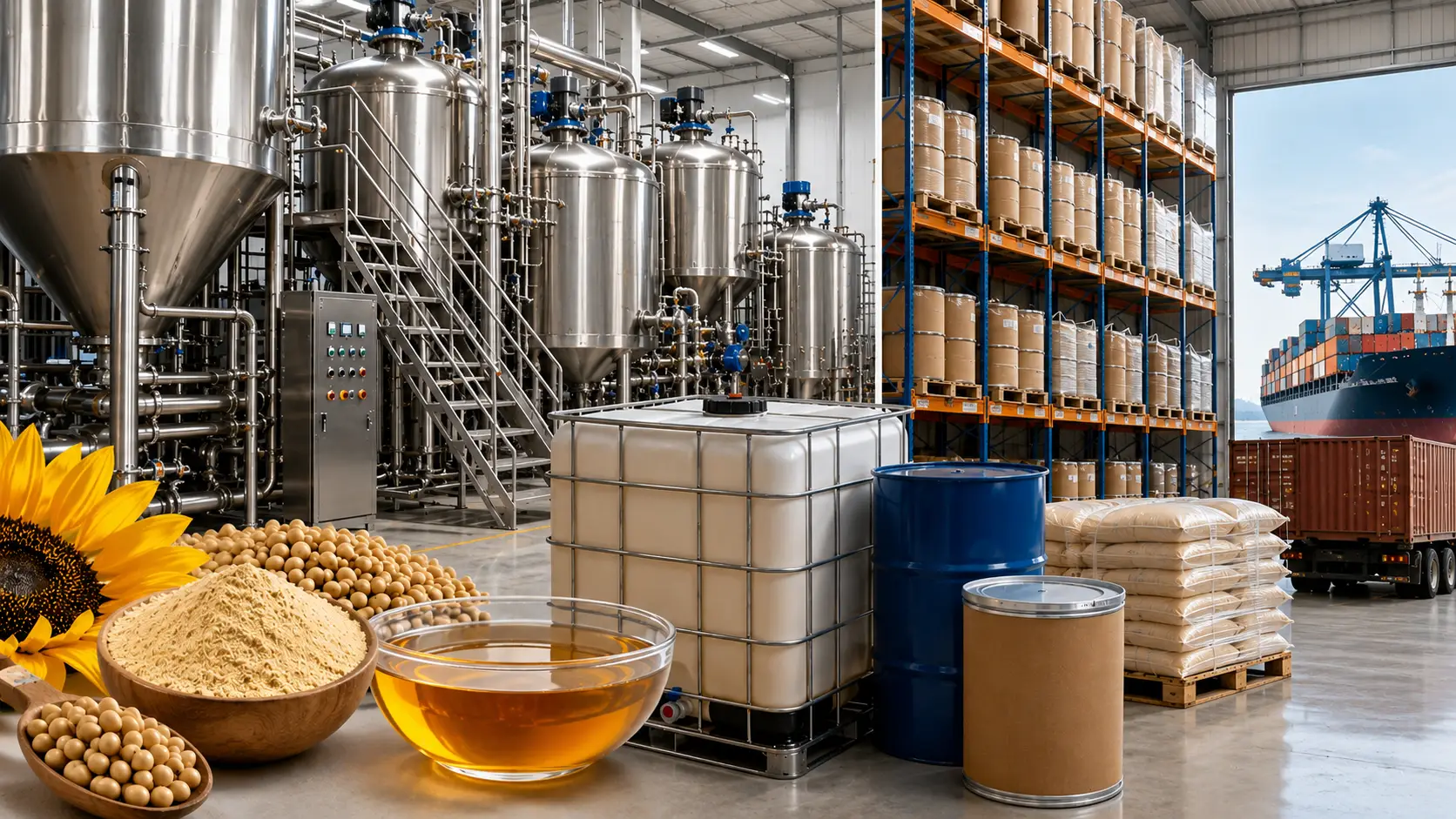
The lecithin supply chain begins with agricultural raw materials and extends through extraction, refining, modification where required, packaging, warehousing, international logistics, and distribution. Soybean and sunflower are among the major commercial sources, with the choice of raw material affecting characteristics such as allergen considerations, labeling requirements, color, and application suitability.
Why Supply Chain Management Matters
For manufacturers, dependable lecithin availability is closely connected to production continuity. Variations in crop availability, crushing activity, processing capacity, freight costs, and regional demand can influence procurement conditions. Consequently, buyers increasingly evaluate suppliers according to both product specifications and their ability to maintain consistent supply.
A structured B2B sourcing strategy therefore considers origin, grade, documentation, packaging, lead time, minimum order quantity, storage requirements, and logistics capability. Tradeasia / Chemtradeasia / Tradechem Marketplace can serve as a commercial channel for connecting qualified buyers with suppliers and supporting more efficient international sourcing.
Raw Materials and Lecithin Production
Agricultural Feedstock
The upstream supply of lecithin is closely connected with vegetable-oil processing. Soybean lecithin is generally associated with soybean processing, while sunflower lecithin is derived from sunflower oil processing. This means lecithin availability can be influenced by agricultural production, oilseed crushing volumes, regional processing infrastructure, and demand for the underlying oils.
For procurement teams, feedstock diversification is strategically important. Sourcing from more than one geographical or botanical origin can help reduce exposure to localized crop disruptions and improve flexibility when a particular grade becomes constrained. Buyers should nevertheless ensure that alternative sources meet the same technical and regulatory specifications before switching.
Processing and Quality Control
Commercial lecithin production involves separating phospholipid-rich material during vegetable-oil processing, followed by purification, standardization, drying or other processing steps depending on the required form. Liquid and powdered lecithin can therefore have different handling and formulation characteristics, making specification control essential.
Quality documentation is a critical part of the B2B transaction. Buyers may evaluate parameters such as appearance, viscosity, moisture, phospholipid profile, acidity, microbiological characteristics, allergen status, and compliance documentation depending on the intended application. Consistent certificates of analysis and traceability can reduce technical and regulatory uncertainty during procurement.
Global Lecithin Market and Trade Dynamics
Regional Supply Considerations
The global lecithin trade is influenced by the geographic distribution of oilseed cultivation and crushing capacity. Major agricultural and food-processing regions can play important roles in supply, while importing regions rely on international logistics and distributors to connect manufacturers with appropriate grades.
International buyers must therefore evaluate more than the quoted product price. Freight rates, container availability, port conditions, insurance, customs procedures, currency movements, and delivery terms can materially affect the landed cost of lecithin. Comparing suppliers on a landed-cost basis provides a more useful procurement benchmark than comparing ex-works or FOB quotations alone.
Pricing and Market Conditions
Lecithin pricing can vary according to source, grade, purity, physical form, processing requirements, order volume, and destination. Agricultural commodity prices and vegetable-oil market conditions can also influence the underlying economics of production. As a result, buyers should avoid treating a single spot quotation as a permanent market benchmark.
A stronger procurement process monitors supplier quotations alongside raw-material trends, freight conditions, currency movements, and inventory requirements. Rather than pursuing the lowest nominal price, industrial buyers can improve purchasing outcomes by evaluating total cost, quality consistency, payment terms, lead time, and supply reliability together.
Industrial Applications and Demand Drivers
Food and Beverage Manufacturing
Food manufacturing represents one of the most established commercial applications for lecithin. Its emulsifying and dispersing properties make it useful in products such as bakery formulations, confectionery, chocolate, instant foods, spreads, and other processed food systems. Application requirements vary considerably, so buyers need to match lecithin grade and physical form with the formulation.
Demand is also influenced by manufacturers seeking efficient processing and consistent product texture. In large-scale production, a functional ingredient that improves dispersion or emulsification can contribute to process efficiency and formulation stability. This supports recurring B2B demand from food ingredient manufacturers and processors.
Feed and Specialized Formulations
Lecithin is also relevant to animal nutrition, where its functional lipid and phospholipid characteristics can support feed formulations. Feed manufacturers may purchase lecithin in bulk according to nutritional specifications, physical handling requirements, and formulation economics.
Beyond conventional food and feed applications, lecithin can appear in nutraceutical, pharmaceutical, cosmetic, and industrial formulations. These markets may impose more specific quality, documentation, and regulatory requirements. Suppliers serving these segments therefore need to communicate technical specifications clearly rather than treating all lecithin demand as interchangeable.
Key Lecithin Buyers and Procurement Requirements
Food Manufacturers and Ingredient Distributors
Food processors, bakery manufacturers, confectionery companies, chocolate producers, and ingredient distributors are important B2B buyer groups. Their purchasing decisions commonly depend on consistent quality, reliable delivery schedules, regulatory documentation, and compatibility with existing formulations.
Distributors may have additional requirements because they serve multiple downstream customers. They can prioritize standardized packaging, predictable supply, shelf-life information, technical documentation, and flexible order quantities. A supplier able to provide consistent documentation across shipments can therefore become more commercially attractive than one offering only a lower initial quotation.
Procurement Specifications
Industrial buyers should establish a clear technical specification before requesting quotations. This can include source, grade, physical form, packaging, quality parameters, country of origin, required certifications, shelf life, and intended application. Establishing these criteria early reduces the risk of comparing technically different products on price alone.
For international procurement, buyers should also clarify Incoterms, port of loading, destination port, payment terms, minimum order quantities, lead times, and documentation requirements. A complete purchasing specification allows suppliers to provide comparable offers and helps procurement teams assess the true commercial value of each proposal.
Supplier Selection and B2B Sourcing Strategy
Evaluating Supplier Capability
Selecting a lecithin supplier requires assessment of production capability, sourcing network, quality systems, documentation, export experience, and logistical reliability. Buyers should request representative technical documentation and verify whether the supplier can consistently provide the required grade at the expected commercial volume.
Supplier diversification can also strengthen procurement resilience. Maintaining qualified alternatives gives manufacturers greater flexibility if a preferred supplier experiences production constraints, shipping delays, or unexpected price changes. However, alternative suppliers should be technically validated before they are incorporated into routine purchasing.
Digital B2B Procurement
B2B marketplaces can simplify supplier discovery by bringing product information, sourcing requirements, and commercial communication into a more structured purchasing environment. For buyers looking for bulk lecithin, digital sourcing can reduce the time required to identify potential suppliers across international markets.
Tradeasia / Chemtradeasia / Tradechem Marketplace can support this sourcing process by connecting industrial buyers with international chemical and ingredient supply opportunities. The commercial objective is not simply to identify a quotation, but to establish a dependable supply relationship based on specifications, communication, logistics, and long-term purchasing requirements.
Supply Chain Risks and Procurement Resilience
Managing Supply Disruptions
Lecithin buyers can face supply-chain exposure from crop variability, oilseed processing disruptions, transportation bottlenecks, port congestion, regulatory changes, and sudden changes in downstream demand. Concentrating procurement in a single source or geography can increase vulnerability when disruptions occur.
A resilient purchasing strategy combines supplier qualification with inventory planning and alternative sourcing. Buyers can establish approved secondary suppliers, monitor expected lead times, and determine appropriate safety-stock levels according to consumption patterns. These measures can help reduce the operational consequences of short-term supply interruptions.
Long-Term Procurement Planning
Long-term contracts or structured purchasing arrangements can be useful when consumption is predictable and supply continuity is strategically important. At the same time, buyers should retain flexibility where market conditions or formulation requirements are changing rapidly.
The most effective approach balances price competitiveness with quality assurance, supply reliability, logistics performance, and commercial transparency. For lecithin procurement, this broader perspective helps manufacturers move from transactional purchasing toward a more resilient and strategically managed supply chain.
Conclusion: Building a Reliable Lecithin Supply Network
Commercial Outlook
Lecithin remains an important functional ingredient across food, feed, nutraceutical, pharmaceutical, and other formulation-driven industries. Its diverse applications create recurring B2B demand, while its upstream connection to agricultural commodities makes sourcing and supply-chain management important considerations for industrial buyers.
As international procurement becomes increasingly focused on reliability and total landed cost, buyers need suppliers capable of meeting defined technical specifications while maintaining consistent documentation, logistics performance, and communication. Multi-source strategies and disciplined supplier qualification can further strengthen procurement resilience.
Tradeasia as a B2B Sourcing Partner
For manufacturers, distributors, and procurement teams, the next step is to evaluate lecithin suppliers according to application suitability, quality requirements, commercial terms, and supply capability. Tradeasia / Chemtradeasia / Tradechem Marketplace can provide a practical B2B channel for exploring international sourcing opportunities and building supplier relationships suited to ongoing industrial requirements.
Ultimately, successful lecithin procurement is about creating a supply network that combines product consistency with dependable logistics and commercially viable purchasing terms. A structured sourcing approach allows buyers to manage supply risks while supporting uninterrupted manufacturing and long-term business growth.
Sources
www.ecfr.gov
www.fao.org
www.fas.usda.gov
Leave a Comment