Introduction — Understanding the Global Backbone of Soy-Based Ingredients
The global food and feed industries increasingly depend on plant-derived proteins, with Soy Protein Concentrate playing a central role in livestock nutrition, aquafeed, and processed foods. Behind its growing demand lies a highly interconnected supply chain that spans agricultural production, crushing facilities, extraction plants, logistics hubs, and international buyers. As sustainability expectations and price volatility intensify, understanding how traceability, risk exposure, and pricing mechanisms interact has become essential for manufacturers and procurement leaders. This article explores the structural dynamics shaping soy protein concentrate supply chains and their implications for global trade competitiveness.
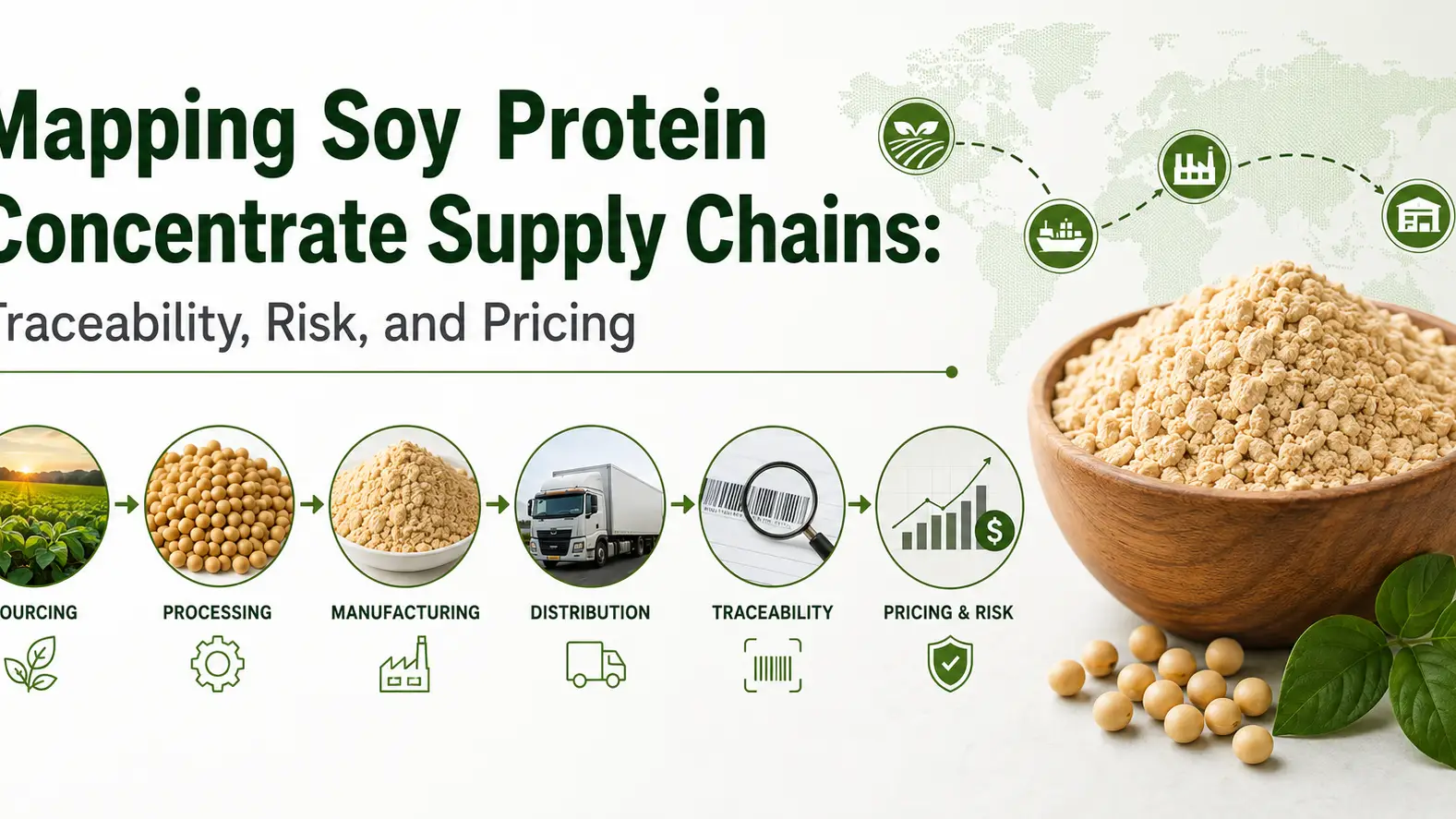
Global Soybean Sourcing Networks
The supply chain begins with soybean cultivation concentrated in major producers such as the United States, Brazil, and Argentina. These regions dominate global exports due to scale efficiency and advanced agricultural infrastructure. However, yield fluctuations driven by climate variability significantly impact downstream availability. Buyers of soy-based inputs increasingly monitor crop reports and weather cycles to anticipate supply tightening or surplus conditions across international markets.
Processing and Concentration Hubs
Once harvested, soybeans are transported to crushing facilities where oil is extracted and meal is processed into high-protein derivatives. The transformation into Soy Protein Concentrate typically occurs in specialized processing hubs located near export ports. These facilities are capital intensive and sensitive to energy costs, making operational efficiency a key determinant of global competitiveness and long-term supply stability.
Traceability and Transparency Systems
Modern buyers demand greater visibility across the value chain, pushing suppliers to adopt digital traceability tools. Certification systems and blockchain-enabled tracking are increasingly used to validate origin, sustainability compliance, and non-deforestation commitments. This transparency not only strengthens consumer trust but also reduces procurement risk for food manufacturers operating under strict regulatory frameworks.
Logistics and Cross-Border Trade Flows
Global trade routes for soy derivatives rely heavily on maritime shipping networks, with bulk carriers transporting products from South America and North America to Asia and Europe. Port congestion, freight volatility, and container shortages can significantly disrupt delivery schedules. As a result, companies are diversifying logistics partners and building regional storage buffers to maintain continuity in supply.
Risk Drivers in Supply Chain Disruption
Multiple risk factors influence stability, including geopolitical tensions, export restrictions, and currency fluctuations. Environmental risks such as droughts and floods further compound uncertainty. Additionally, dependency on a limited number of exporting countries creates structural vulnerabilities. Firms are increasingly adopting multi-origin sourcing strategies to mitigate exposure to localized disruptions.
Pricing Structures and Market Sensitivity
Pricing of soy protein concentrate is closely tied to soybean futures, energy costs, and freight indices. Market sentiment and speculative trading also influence short-term volatility. Buyers must navigate these fluctuations while balancing contract stability with spot market opportunities. The interplay between agricultural commodity cycles and industrial demand creates a continuously shifting pricing environment.
Conclusion
As global demand for plant-based and sustainable proteins expands, supply chain resilience becomes a strategic priority rather than a logistical concern. Companies that can integrate traceability, risk management, and adaptive sourcing strategies are better positioned to secure long-term competitiveness in volatile markets. In this evolving landscape, working with experienced partners such as Tradeasia International can help businesses streamline procurement, ensure consistent product quality, and navigate complex global sourcing networks with greater confidence.
Sources
Leave a Comment