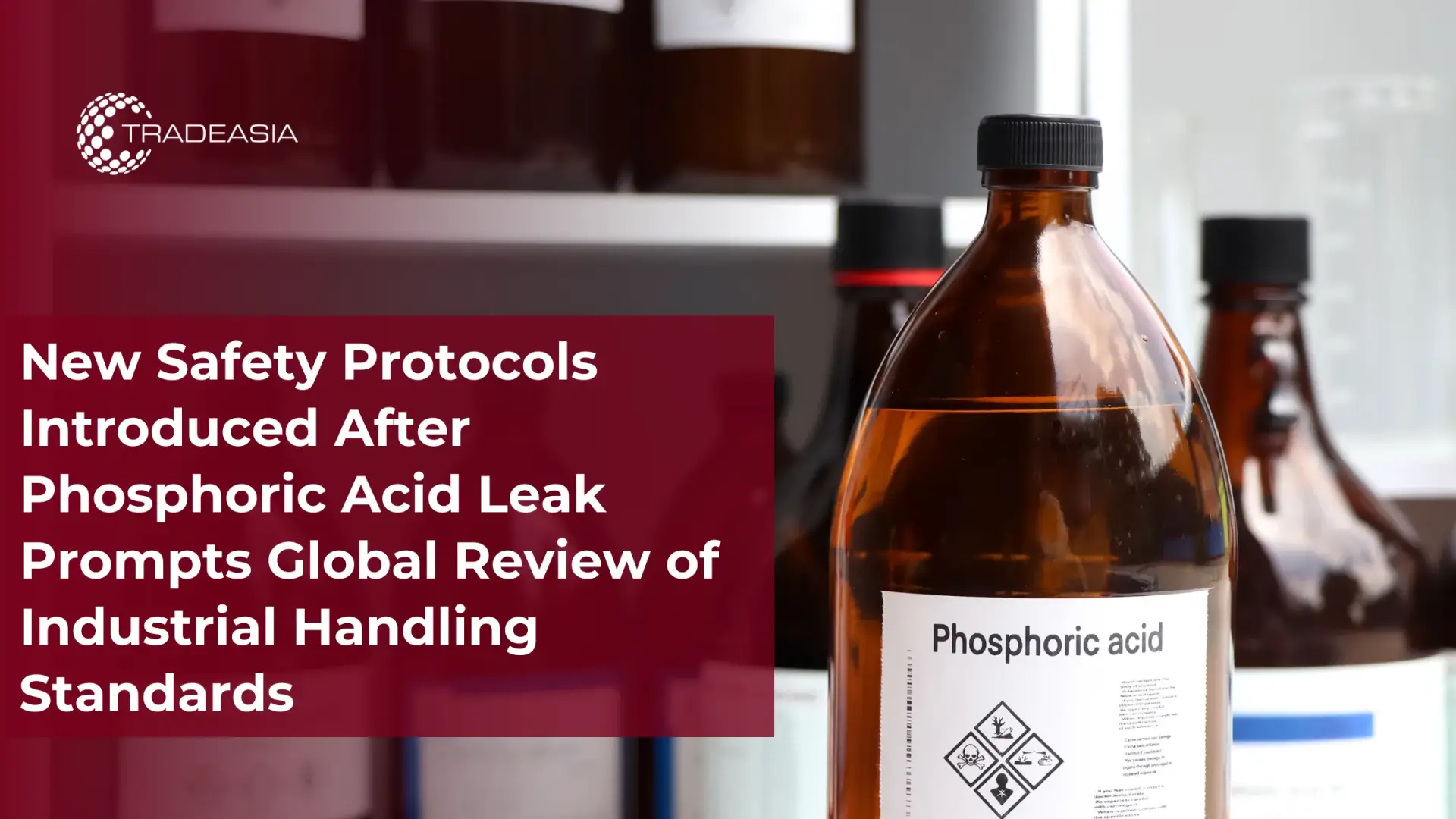
A recent phosphoric acid leak at a European fertilizer blending facility has triggered an international reassessment of industrial safety standards surrounding the storage and handling of the widely used chemical. The incident, which resulted in minor injuries but no fatalities, has pushed regulators and chemical manufacturers to fast-track new monitoring technologies and updated emergency-response guidelines.
Authorities Call for Modernized Containment Systems
Following the leak, Dutch authorities completed a comprehensive inspection and concluded that aging containment systems and outdated corrosion protection were key factors. The report urged chemical plants worldwide to adopt real-time corrosion sensors, double-lined storage tanks, and automated spill-shutdown mechanisms when handling high-purity or technical-grade phosphoric acid.
Several European chemical associations echoed the findings, stating that rapid modernization is essential as production volumes increase and facilities face harsher operational environments. Plants in Germany, Belgium, and France have already begun upgrading infrastructure ahead of new compliance deadlines expected in 2026.
Chemical Industry Accelerates Development of AI-Based Monitoring Tools
In response to the incident, multiple engineering companies have announced accelerated development of AI-powered detection systems capable of predicting corrosion events before they occur. Early prototypes use machine-learning algorithms trained on decades of industrial corrosion data to identify micro-structural weaknesses in storage tanks and pipelines.
The new technology promises to reduce the likelihood of leaks by offering predictive alerts weeks—or even months—before structural integrity is compromised. Industry experts believe that integration of AI monitoring could become mandatory for large-scale phosphoric acid handling sites within the next few years.
Global Regulators Push for Unified Safety Framework by 2027
Regulatory bodies in the EU, North America, and parts of Asia have begun discussions on creating a unified international safety standard for phosphoric acid. The framework aims to harmonize inspection protocols, emergency-response procedures, and worker protection requirements across major manufacturing hubs.
Environmental groups have welcomed this move, stressing that tighter global guidelines will not only reduce industrial hazards but also minimize risks of soil and water contamination. If adopted, the unified standard would represent the most significant update to phosphoric acid regulations since the early 2000s, signaling a long-awaited shift toward safer and more sustainable chemical processing practices.
Sources:
Leave a Comment