Introduction: The Strategic Rise of Potato Starch in 2026
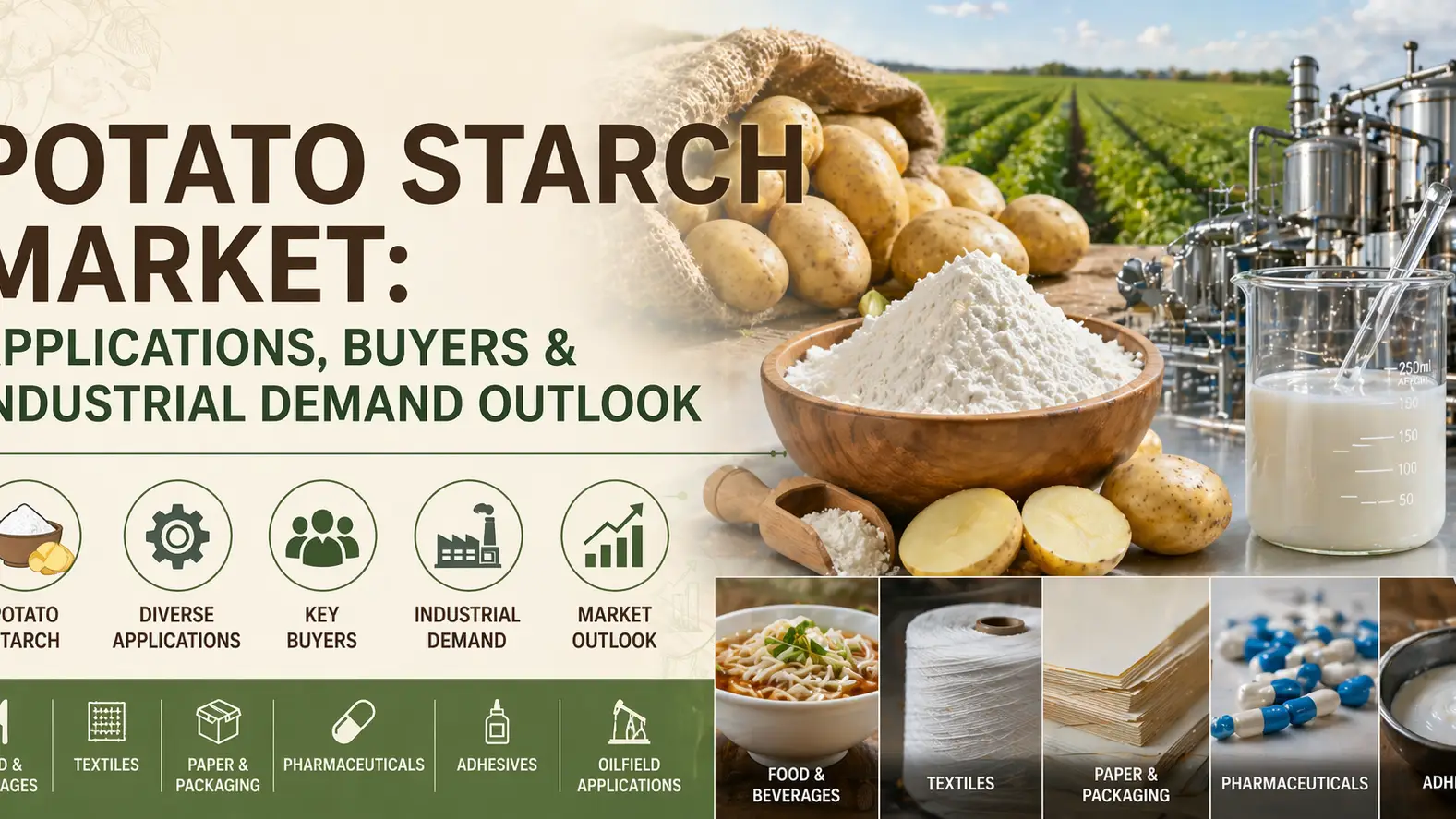
In 2026, potato starch has evolved from a commodity food ingredient into a strategically positioned industrial input across global supply chains. Its functional versatility—ranging from thickening and binding to film formation—has expanded its relevance far beyond traditional food manufacturing. The market is being shaped by a convergence of clean-label food trends, industrial sustainability mandates, and rising demand for biodegradable alternatives in non-food sectors. According to recent industry analysis, the potato starch market continues to grow steadily, driven by both food-grade and industrial applications across developed and emerging economies.
Food & Beverage Manufacturing as the Core Demand Engine
The most dominant application remains the food and beverage sector, where potato starch is widely used as a stabilizer, thickener, and texture enhancer. In 2026, buyers in bakery, dairy, sauces, and ready-meal segments are prioritizing starches that align with clean-label and gluten-free positioning. This shift is not merely consumer-driven; it is deeply embedded in procurement policies of global food processors seeking transparency and ingredient simplicity. Market studies confirm that food applications continue to hold the largest share of global demand, reinforcing potato starch as a foundational ingredient in modern food systems.
Industrial Applications Reshaping Procurement Strategies
Beyond food manufacturing, industrial buyers are increasingly redefining demand patterns. Paper, textile, and adhesive industries are adopting potato starch as a biodegradable alternative to synthetic polymers. In 2026, procurement teams are prioritizing modified starch grades that offer improved viscosity control and film-forming capabilities. This transition is closely tied to sustainability commitments, where starch-based materials are replacing petroleum-derived inputs in packaging coatings and textile finishing. Industrial adoption is now a key driver of long-term market expansion, supported by regulatory pressure toward eco-friendly production systems.
Buyer Dynamics, Pricing Pressure & Supply Chain Realignment
The buyer landscape in 2026 is characterized by strategic sourcing rather than transactional purchasing. Large-scale food processors and industrial manufacturers are increasingly engaging in hybrid procurement models—balancing long-term contracts with spot market purchases to manage price volatility. Supply chain disruptions in agricultural raw materials have also reinforced the importance of supplier diversification. European producers continue to dominate global supply capacity, creating a concentrated yet highly competitive export environment. These dynamics are pushing buyers toward more integrated supply agreements and predictive procurement strategies to ensure stability.
Pharmaceutical & Specialty Applications Expanding Value Capture
A significant growth frontier lies in pharmaceutical and specialty applications. Potato starch is increasingly used as a binding agent in tablet formulations and as a functional excipient in drug delivery systems. At the same time, cosmetics and nutraceutical industries are integrating starch-based ingredients for their natural and hypoallergenic properties. This diversification is elevating potato starch from a bulk ingredient to a value-added functional material. As healthcare and wellness industries continue to expand, pharmaceutical-grade starch demand is expected to grow faster than traditional segments.
Conclusion
The 2026 potato starch market reflects a structural transformation driven by multi-industry convergence. What was once a food-centric ingredient has become a cross-sector material influencing food systems, industrial manufacturing, and pharmaceutical innovation. For global buyers, the challenge is no longer access alone but securing consistent quality, functional specification, and supply reliability in an increasingly complex market environment.
Against this backdrop, Tradeasia International positions itself as a global solution provider supporting industrial and food manufacturers with integrated sourcing, reliable supply chains, and technical-grade starch solutions. Its network-driven procurement model helps buyers navigate volatility while maintaining continuity across diverse application needs.
Sources
Leave a Comment