Refined Soybean Oil: Building a Reliable Global Supply Chain
Refined Soybean Oil and Its Role in Global Supply Chains
Understanding the Product’s B2B Position
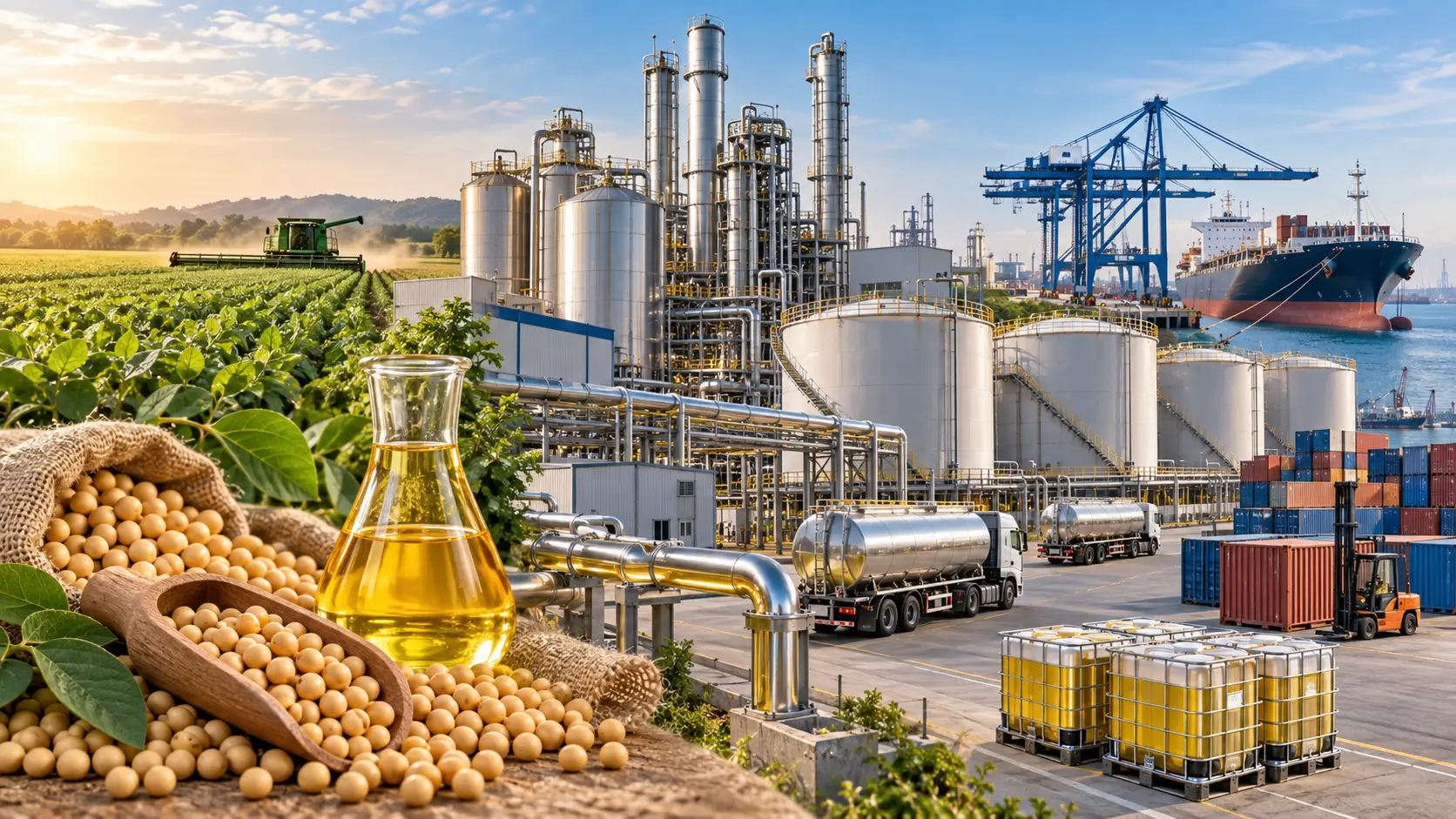
Refined Soybean Oil is an important edible vegetable oil used across food manufacturing and related industrial supply chains. For B2B buyers, its commercial importance extends beyond the oil itself because procurement depends on consistent raw-material availability, refining capacity, quality management, storage infrastructure, transportation, and supplier reliability. A well-structured supply chain therefore plays a central role in maintaining continuity for manufacturers that purchase vegetable oils in commercial quantities.
The international trade environment for soybean oil is closely connected to soybean production and crushing activity. Soybeans generate both soybean oil and soybean meal, meaning changes in crushing economics, agricultural production, domestic consumption, exports, and competing uses can influence the availability of soybean oil. The U.S. Department of Agriculture notes that soybean crushing creates soybean oil and soybean meal for domestic and international markets, illustrating the interconnected nature of the soybean value chain.
Why Supply Chain Visibility Matters
For procurement teams, supply chain visibility helps connect upstream agricultural production with downstream food manufacturing requirements. Buyers need to understand where the product originates, how it is processed, how quality is controlled, how it is stored, and how it will reach the destination market. These factors become particularly important when purchasing bulk volumes or establishing recurring supply agreements.
International trade also places greater emphasis on documentation and conformity. Codex Alimentarius maintains international standards and related texts intended to facilitate fair food trade and support food safety, while national regulations determine how applicable standards are implemented in individual markets.
From Soybean Production to Refined Oil Supply
Soybean Production and Raw-Material Availability
The supply chain begins with soybean cultivation, harvesting, collection, and movement into processing facilities. Agricultural yields, growing conditions, crop availability, transportation infrastructure, and regional production patterns can all influence the quantity and cost of soybeans entering the crushing system. Because refined oil ultimately depends on this upstream feedstock, procurement planning benefits from visibility into the broader soybean supply environment.
The relationship between soybean availability and oil supply is especially important because soybean processing produces multiple commercial outputs. The USDA describes soybean crushing as a source of both soybean meal and soybean oil, with market demand for each product influencing the economics of the overall crushing sector.
Crushing and Oil Extraction
Once soybeans reach processing facilities, they undergo preparation and crushing to separate oil from the other components of the seed. The extracted crude soybean oil then enters additional processing stages before it can become refined soybean oil suitable for intended food applications. The efficiency and capacity of these facilities influence the ability of suppliers to respond to commercial demand.
For B2B sourcing, the crushing stage is therefore an important part of supply-chain assessment. A supplier's access to dependable raw materials and processing infrastructure can influence lead times, availability, shipment planning, and the ability to support recurring customer requirements. Buyers evaluating long-term supply should consider the complete chain rather than focusing only on the final product.
Refining and Quality Management in the Supply Chain
Refining as a Quality-Control Stage
Refining converts crude soybean oil into a more suitable commercial ingredient by managing components that affect appearance, taste, stability, and usability. Industrial refining commonly involves controlled processing stages designed to improve the oil's suitability for food manufacturing. The precise processing configuration and resulting specifications depend on the product and intended market.
For buyers, refinement is not simply a technical manufacturing step; it is part of commercial quality assurance. Consistency between shipments is important when the oil is incorporated into standardized recipes or large-scale production processes. A dependable supply chain should therefore connect processing controls with product specifications, testing, documentation, and shipment release procedures.
Standards, Specifications, and Documentation
International buyers often evaluate edible oils against agreed specifications and applicable food regulations. Codex lists CXS 210-1999, the Standard for Named Vegetable Oils, among the standards overseen by the Codex Committee on Fats and Oils. Such international references can provide useful context when buyers and suppliers establish technical and commercial requirements.
Documentation is equally important for B2B transactions. Product specifications, certificates of analysis, batch information, shipping documentation, traceability records, and other required compliance documents can help procurement teams evaluate incoming material. Requirements should always be confirmed against the regulations and contractual specifications applicable to the destination market.
Storage, Bulk Handling, and Transportation
Bulk Storage Requirements
After refining, effective storage helps preserve product quality until the oil reaches the customer. Storage systems for edible fats and oils must be designed around appropriate handling practices, cleanliness, product protection, and controlled operating conditions. Codex specifically maintains a code of practice for the storage and transport of edible fats and oils in bulk, demonstrating the importance of downstream handling within the overall supply chain.
For commercial buyers, storage capacity can also affect supply continuity. Adequate terminal and warehouse infrastructure can provide greater flexibility between production and final delivery, particularly where shipments move internationally. Suppliers with well-organized bulk-handling capabilities can therefore support more predictable procurement planning.
Transportation and International Logistics
Refined soybean oil can move through different logistics networks depending on shipment size, destination, infrastructure, and commercial terms. Bulk transportation requires appropriate equipment and procedures to protect product integrity throughout loading, transit, unloading, and storage. Coordination between processing facilities, storage terminals, freight providers, ports, and receiving plants is consequently essential.
International logistics can introduce additional variables such as port congestion, vessel schedules, container availability, customs procedures, freight costs, and regional infrastructure. A resilient sourcing strategy should account for these factors before purchase orders are finalized. Buyers can reduce operational uncertainty by working with suppliers capable of coordinating documentation, shipment planning, and delivery requirements.
Applications Driving Refined Soybean Oil Demand
Food Manufacturing Applications
Refined Soybean Oil is widely relevant to food manufacturing because vegetable oils serve functional roles in numerous formulations. Depending on the formulation and specification, soybean oil can be incorporated into cooking oils, processed foods, sauces, dressings, bakery products, and other food categories. This broad application base creates recurring demand from manufacturers that require consistent edible oil inputs.
For industrial buyers, application suitability must be evaluated against the technical requirements of the finished product. Factors such as formulation, processing conditions, sensory requirements, stability, and applicable food regulations can influence purchasing decisions. Consequently, buyers should match supplier specifications with the needs of their individual production processes.
Industrial Procurement Across Food Categories
The breadth of food applications makes refined soybean oil relevant to manufacturers, distributors, ingredient traders, foodservice suppliers, and other commercial purchasers. Large-scale processors may prioritize dependable bulk supply, while distributors may place greater emphasis on packaging formats, shipment flexibility, inventory availability, and regional market coverage.
Demand can also vary according to downstream market conditions. Changes in food production, consumer demand, competing vegetable oils, and relative input costs can influence purchasing patterns. For suppliers and procurement teams, understanding these downstream relationships can support better inventory planning and more informed sourcing decisions.
Market and Procurement Factors for Buyers
Supply and Demand Conditions
Soybean oil markets are influenced by a combination of agricultural production, soybean crushing, food demand, industrial demand, inventories, exports, and competing uses. The USDA has highlighted how changes in soybean crushing and domestic soybean-oil utilization can affect the share of production available for export and other markets. This illustrates why buyers should monitor the wider soybean complex rather than evaluating refined soybean oil in isolation.
Market conditions can also vary between regions. A buyer may encounter different availability, freight economics, regulatory requirements, and supplier structures depending on the destination market. B2B procurement therefore benefits from a market-aware approach that considers both product requirements and the geography of supply.
Procurement Cost and Commercial Planning
Price is an important procurement consideration, but it should not be treated as the only measure of supply value. Freight, storage, handling, payment terms, shipment size, quality requirements, documentation, and delivery reliability can all influence the total procurement cost. A supplier offering a competitive nominal price may not necessarily provide the lowest overall landed cost if logistics or quality-related risks are higher.
Long-term procurement planning can help manufacturers manage these variables more effectively. Buyers can compare supplier capabilities, establish clear specifications, assess shipment schedules, and evaluate alternative sourcing channels. This approach helps procurement teams balance price competitiveness with continuity and operational reliability.
Building Reliable Refined Soybean Oil Sourcing Strategies
Supplier Evaluation and Sourcing
Supplier selection should begin with an assessment of product specifications, production capabilities, quality systems, supply capacity, documentation, logistics infrastructure, and commercial reliability. For buyers purchasing refined soybean oil on a recurring basis, the ability to maintain consistent supply can be as important as the initial quoted price.
A B2B marketplace can help connect buyers with suppliers and provide a structured environment for commercial sourcing. Platforms such as Tradeasia / Chemtradeasia / Tradechem Marketplace can support the broader process of supplier discovery, product evaluation, and international procurement. Buyers should nevertheless conduct their own technical, regulatory, commercial, and supplier due diligence before finalizing transactions.
Supply Chain Risk Management
Risk management is particularly important for agricultural products because upstream availability can be influenced by production cycles, weather, transportation conditions, market demand, and geopolitical or logistical disruptions. A resilient refined soybean oil procurement strategy can therefore include supplier diversification, realistic inventory planning, clear specifications, and proactive shipment coordination.
Buyers can also improve resilience by establishing transparent communication with suppliers. Sharing demand forecasts, confirming shipment windows, defining quality expectations, and coordinating documentation early can reduce avoidable disruptions. In competitive food manufacturing environments, these supply-chain practices can contribute directly to production continuity.
Conclusion: Strengthening Refined Soybean Oil Supply Networks
Connecting Production With Global Demand
The commercial value of Refined Soybean Oil depends on a supply chain that connects soybean production, crushing, refining, quality management, storage, logistics, and food manufacturing. Each stage contributes to the ability of suppliers to deliver consistent material to international buyers. A supply-chain perspective therefore provides a more useful framework for procurement than considering the finished oil as an isolated commodity.
International standards and food-trade frameworks also support greater consistency across markets. Codex identifies standards for named vegetable oils and maintains guidance covering storage and transportation of edible fats and oils in bulk. Buyers should use these references alongside the regulations and specifications applicable in their target markets.
A Strategic Approach to B2B Sourcing
For procurement teams, the strongest sourcing strategy combines product suitability with dependable supply, transparent specifications, logistics capability, documentation, and commercially sustainable supplier relationships. This approach can help food manufacturers and distributors manage changing market conditions while maintaining reliable access to an important vegetable oil ingredient.
As global food supply chains become increasingly interconnected, Refined Soybean Oil sourcing will continue to depend on effective coordination between agricultural producers, crushers, refiners, traders, logistics providers, distributors, and end users. For B2B buyers, evaluating the complete supply network can create a stronger foundation for cost management, quality assurance, and long-term procurement continuity.
Sources
www.fao.org
www.ers.usda.gov
www.fao.org

Leave a Comment