Understanding Rennet Casein and Its Role in Industrial Food Applications
Rennet casein is a dairy-derived protein ingredient produced by coagulating milk casein through the action of rennet enzymes. Unlike acid casein, which is produced through acid precipitation, rennet casein maintains functional properties associated with enzymatic coagulation, making it valuable for specific food manufacturing processes. Its protein content, texture contribution, and emulsification characteristics make it an important ingredient for industrial food producers.
The Functional Characteristics of Rennet Casein
Rennet casein is primarily valued for its ability to provide structure, texture, and protein functionality in food formulations. The ingredient contains milk proteins that contribute to firmness, binding ability, and nutritional value, which are important factors for manufacturers developing dairy-based and processed food products.
According to technical information published by the Food and Agriculture Organization of the United Nations, milk proteins such as casein play significant roles in food structure formation and nutritional applications. These characteristics influence how manufacturers select dairy protein ingredients for different processing requirements.
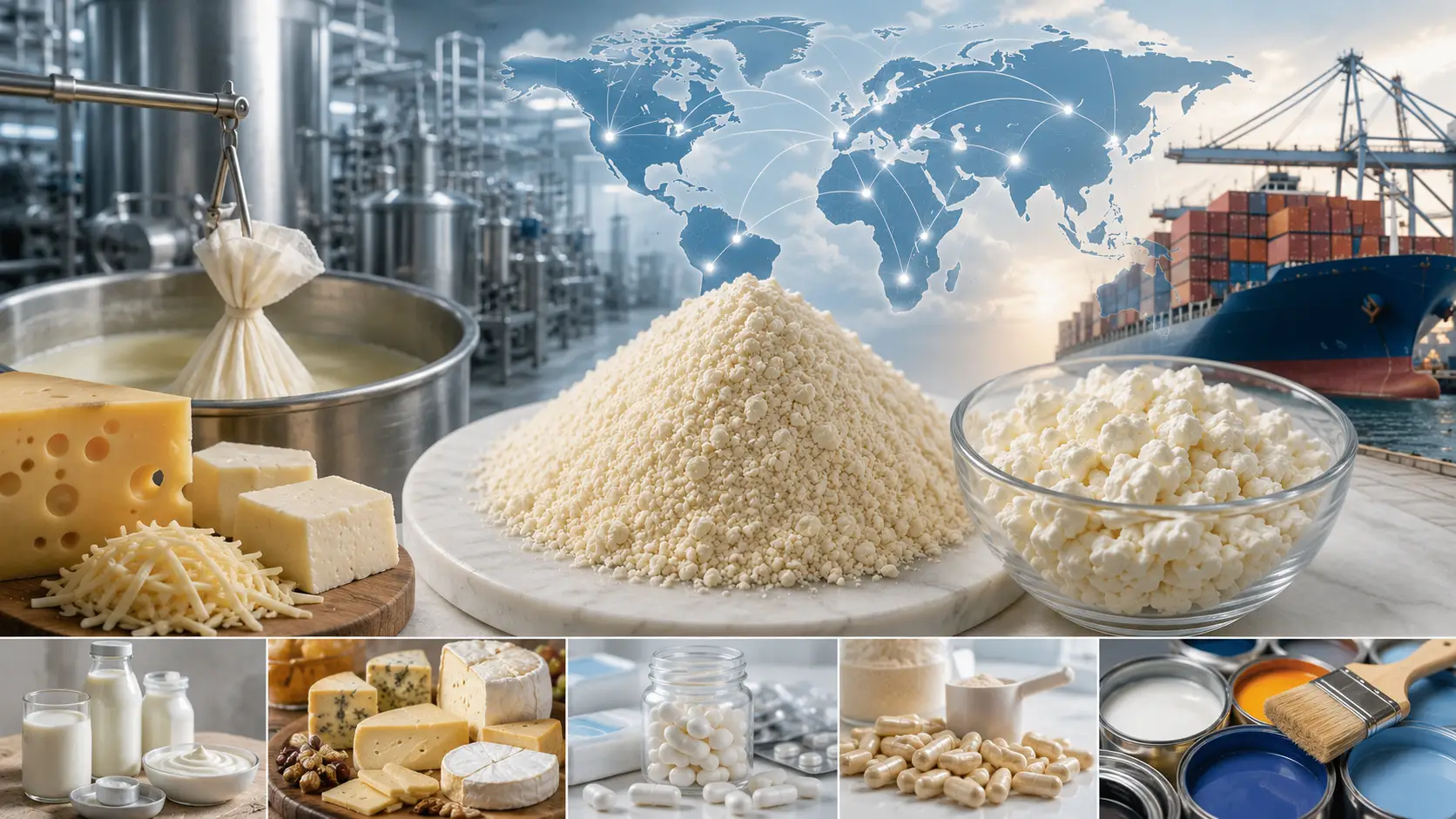
Rennet casein is typically supplied as a dried powder, allowing manufacturers to incorporate it into formulations requiring stable storage, transportation efficiency, and consistent quality. This format supports international trade because buyers can source the ingredient in bulk quantities for industrial production.
For B2B buyers, understanding the technical properties of rennet casein is essential when comparing suppliers. Procurement teams generally evaluate protein content, microbiological specifications, production standards, documentation, and consistency of supply before establishing long-term purchasing relationships.
Key Industrial Applications Driving Rennet Casein Demand
Rennet casein demand is closely connected to the food processing industry, particularly applications where dairy proteins contribute functional performance. The ingredient is widely associated with cheese manufacturing and other processed food categories requiring milk protein functionality.
Rennet Casein in Cheese Manufacturing
One of the major industrial applications of rennet casein is cheese production. Manufacturers use casein-based ingredients because casein represents the primary protein fraction responsible for cheese structure formation. The functional behavior of casein influences texture, moisture retention, and product characteristics.
Technical resources from the International Dairy Federation highlight the importance of milk proteins in dairy processing systems and cheese production technologies. Dairy manufacturers consider protein functionality a key factor when developing consistent cheese products at commercial scale.
Beyond traditional cheese applications, rennet casein can also support processed cheese formulations where manufacturers require controlled melting behavior, texture development, and protein enrichment. These characteristics make it relevant for large-scale food producers.
The growing demand for convenient dairy products, processed foods, and protein-focused nutrition products continues to influence industrial interest in dairy protein ingredients. Buyers increasingly seek suppliers capable of providing consistent quality and reliable international logistics.
Market Trends and Growth Factors Influencing Rennet Casein Buyers
The rennet casein market is influenced by broader trends in dairy consumption, protein ingredient demand, food processing innovation, and international ingredient sourcing. Manufacturers are increasingly focused on ingredients that provide both nutritional value and functional advantages.
Growing Demand for Dairy Protein Ingredients
Consumer interest in protein-rich foods has encouraged manufacturers to expand product categories using dairy proteins. Rennet casein benefits from this trend because it provides a concentrated source of milk protein suitable for industrial food applications.
Market analysis from organizations such as Grand View Research identifies increasing demand for protein ingredients as a major factor shaping the global food ingredient sector. Dairy proteins continue to attract attention from manufacturers developing functional foods and nutritional products.
Food companies are also focusing on clean-label formulation strategies, where recognizable dairy-derived ingredients can support product positioning. This has increased interest in reliable suppliers that can provide traceable and specification-compliant ingredients.
For international buyers, market trends influence purchasing decisions related to supplier selection, inventory planning, and regional sourcing strategies. Companies often compare suppliers based on production capability, certifications, pricing stability, and export experience.
Who Buys Rennet Casein and What Procurement Teams Evaluate
Rennet casein is purchased mainly by industrial users rather than individual consumers. The largest buyer groups include dairy processors, cheese manufacturers, food ingredient distributors, and companies producing protein-based food products.
Buyer Groups and Procurement Requirements
Dairy manufacturers represent a key buyer segment because they use rennet casein as a functional ingredient in cheese and dairy processing. Food manufacturers may also purchase the ingredient for applications requiring milk protein functionality, texture improvement, or nutritional enhancement.
Ingredient distributors and international traders play an important role by connecting manufacturers with regional buyers. These companies often require dependable suppliers that can provide commercial quantities, export documentation, and consistent product specifications.
According to food ingredient industry studies published by organizations including Research and Markets, supply reliability and application suitability are important considerations influencing ingredient procurement decisions.
Before purchasing, procurement teams commonly evaluate product specifications, certifications, production origin, packaging options, minimum order quantities, and supplier reputation. A transparent sourcing platform helps buyers compare available options more efficiently.
Sourcing Considerations for Global Rennet Casein Procurement
International sourcing of rennet casein requires buyers to assess multiple factors beyond price. Quality consistency, supplier capability, regulatory compliance, and logistics performance are important elements of successful procurement strategies.
Selecting Reliable Rennet Casein Suppliers
Reliable suppliers provide detailed technical documentation, including product specifications, quality certificates, and manufacturing information. These documents help buyers confirm that the ingredient meets their production requirements.
For food manufacturers operating across different regions, supplier reliability is particularly important because interruptions in ingredient supply can affect production schedules and customer commitments. Long-term partnerships with qualified suppliers can reduce sourcing risks.
Trade platforms and B2B marketplaces support this process by improving supplier visibility and allowing buyers to identify potential sources based on product requirements. Platforms such as Tradeasia / Chemtradeasia / Tradechem Marketplace can support industrial buyers seeking connections with chemical and ingredient suppliers.
Global ingredient sourcing also requires attention to transportation conditions, import regulations, and regional food safety requirements. Buyers typically work with suppliers that demonstrate experience handling international trade requirements.
Commercial Opportunities for Rennet Casein Suppliers and Marketplace Buyers
Rennet casein represents a commercially relevant ingredient category because it connects dairy production, food manufacturing, and international ingredient distribution. Suppliers that understand application requirements can better serve manufacturers looking for dependable ingredient solutions.
Supporting B2B Market Connections
The commercial value of rennet casein is driven by its role in multiple industrial applications. Manufacturers require ingredients that support production efficiency, product consistency, and compliance with food quality standards.
For suppliers, opportunities exist through partnerships with dairy processors, food manufacturers, and regional distributors. Understanding buyer requirements allows suppliers to position their products according to technical specifications rather than competing only on price.
For buyers, marketplace platforms provide access to broader supplier networks and sourcing information. Tradeasia / Chemtradeasia / Tradechem Marketplace positioning supports businesses by connecting industrial purchasers with suppliers across international markets.
As food industries continue to prioritize reliable ingredient supply chains, transparent supplier information and efficient procurement channels become increasingly important. Companies that establish strong sourcing strategies can better respond to changing market requirements.
Conclusion: Building Reliable Rennet Casein Supply Strategies for Industry Growth
Rennet casein remains an important dairy protein ingredient for manufacturers involved in cheese production, processed foods, and functional food development. Its technical characteristics and industrial applications continue to support demand among professional buyers.
According to scientific and industry resources from organizations such as the Food and Agriculture Organization of the United Nations, dairy proteins remain essential components in food manufacturing due to their nutritional and functional properties.
For procurement teams, successful sourcing depends on evaluating supplier reliability, product specifications, regulatory documentation, and long-term supply capability. These factors help manufacturers maintain consistent production standards.
Tradeasia / Chemtradeasia / Tradechem Marketplace can serve as a B2B sourcing channel where buyers and suppliers explore opportunities within the global rennet casein supply chain. Reliable connections between manufacturers, distributors, and ingredient suppliers remain essential for supporting future industry growth.
Buyer Intent Section
Who Typically Buys Rennet Casein?
Rennet casein is mainly purchased by industrial buyers, including cheese manufacturers, dairy processors, food ingredient companies, nutrition product manufacturers, and international distributors. These buyers typically purchase in bulk quantities for integration into commercial production processes.
What Industries Use Rennet Casein?
The primary industries include dairy processing, cheese manufacturing, processed food production, nutritional ingredient manufacturing, and food ingredient distribution. Each sector evaluates rennet casein based on different technical and commercial requirements.
What Procurement Teams Evaluate Before Buying
Procurement teams commonly review protein content, food safety documentation, supplier certifications, production capacity, packaging specifications, delivery capability, and consistency between batches. Reliable documentation and supply transparency are critical for industrial purchasing decisions.
Why Buyers Compare Suppliers
Buyers compare suppliers to identify competitive pricing, stable supply availability, technical support, export capability, and product quality consistency. International sourcing decisions often require evaluating multiple suppliers before establishing long-term partnerships.
How the Product Page Supports Sourcing Decisions
A detailed rennet casein product page helps buyers understand product specifications, applications, supplier information, and commercial availability. This information supports faster evaluation and improves communication between buyers and suppliers.
Commercial Positioning
Rennet casein is commercially important because it provides dairy protein functionality for manufacturers producing cheese, processed foods, and nutritional products. Its demand is influenced by industrial applications rather than consumer purchasing behavior.
The most relevant buyer groups include dairy processors, food manufacturers, ingredient distributors, and procurement organizations seeking dependable bulk supply. Reliable sourcing is essential because ingredient quality directly affects production performance and final product consistency.
Tradeasia / Chemtradeasia / Tradechem Marketplace can support commercial connections by providing a B2B environment where buyers explore supplier options and manufacturers identify potential business opportunities. The platform approach aligns with industrial procurement needs by improving access to product information and global sourcing networks.
Sources
Leave a Comment