Introduction
Wheat starch has evolved into a strategic industrial ingredient, extending far beyond its traditional use as a food thickener. Today, it plays a critical role in sectors such as pharmaceuticals, paper, textiles, and bioplastics. As demand diversifies, the supply chain supporting wheat starch has become increasingly complex and globally interconnected. In 2026, businesses are no longer treating wheat starch as a simple commodity; instead, it is managed as a high-impact procurement category requiring careful sourcing strategies and risk mitigation.
The global wheat starch market is projected to grow significantly, potentially reaching over USD 14 billion by 2036, driven by demand for clean-label ingredients and sustainable industrial applications.
Structural Dynamics of the Global Supply Chain
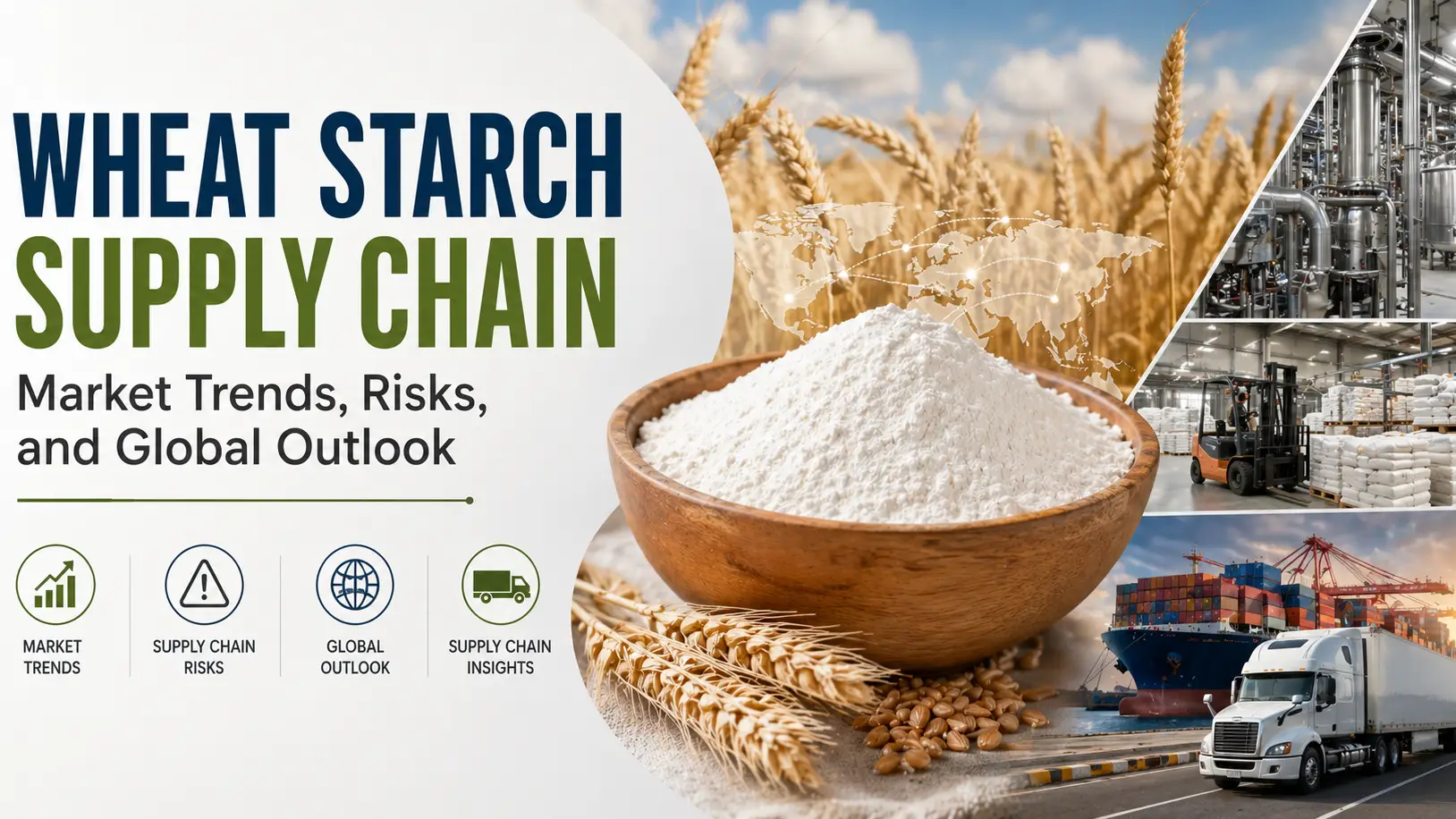
The wheat starch supply chain begins at agricultural production, where wheat availability directly impacts downstream processing. The raw material is transformed through wet milling into starch and co-products such as gluten, creating a tightly integrated value chain.
Processing hubs are typically located near major wheat-producing regions in North America, Europe, and Asia-Pacific. These regions benefit from established infrastructure and advanced processing technologies, allowing manufacturers to scale production efficiently. At the same time, logistics networks—covering bulk shipping, storage, and distribution—play a critical role in ensuring consistent supply to global buyers.
Increasingly, procurement teams must monitor not only suppliers but also upstream farming conditions, regional processing capacity, and transportation bottlenecks. This interconnected structure makes the wheat starch market particularly sensitive to disruptions across multiple tiers of the supply chain.
Volatility Drivers and Risk Factors
Supply chain volatility remains one of the defining characteristics of the wheat starch market. Agricultural dependency exposes the industry to climate variability, fluctuating crop yields, and changing land-use patterns. In addition, geopolitical tensions and trade policy shifts can disrupt export flows and create uncertainty in global markets.
Raw material price fluctuations are another key challenge. Wheat price instability directly affects starch production costs, often compressing margins for manufacturers. Reports indicate that up to 44% of supply volatility in the sector is linked to wheat price fluctuations, highlighting the importance of strategic sourcing.
Moreover, regulatory pressures are intensifying. Buyers increasingly demand traceability, quality assurance, and compliance with food safety and environmental standards. This adds complexity to supplier selection and requires greater transparency throughout the supply chain.
Pricing, Trade Flows, and Future Outlook
Pricing in the wheat starch market is shaped by a combination of supply-demand dynamics, freight costs, and global trade flows. Recent trends show price recovery following periods of surplus, driven by tightening wheat supply and rising demand across industries.
On the demand side, the food and beverage sector remains dominant, accounting for over 40% of total consumption. However, industrial applications—particularly in biodegradable materials and adhesives—are expanding rapidly, creating new growth avenues.
Global trade patterns are also shifting. Asia-Pacific continues to lead consumption growth, while Europe remains a major production hub. As sustainability becomes a priority, companies are investing in greener processing technologies and exploring alternative sourcing strategies to reduce environmental impact.
Looking ahead, digitalization and procurement intelligence tools are expected to play a central role in enhancing supply chain resilience. Businesses that adopt data-driven sourcing models will be better positioned to navigate volatility and secure long-term supply stability.
Conclusion
The wheat starch supply chain is undergoing a significant transformation, shaped by evolving demand patterns, supply-side risks, and increasing regulatory scrutiny. For industrial buyers, success in this market depends on moving beyond transactional purchasing toward strategic, intelligence-led sourcing.
As companies seek reliable partners to navigate this complexity, Tradeasia International stands out as a global solution provider with strong distribution networks and market expertise in starch derivatives. By offering consistent quality, competitive sourcing, and supply chain transparency, Tradeasia supports businesses in achieving stable and efficient procurement outcomes.
Sources:
Leave a Comment