Introduction
The global wheatgrass market in 2026 is undergoing a transformation driven by rising demand for plant-based nutrition, functional foods, and organic supplements. With the wheatgrass products market projected to exceed USD 274 million in 2026 and grow steadily at over 7% CAGR, supply chain efficiency has become a decisive competitive factor.
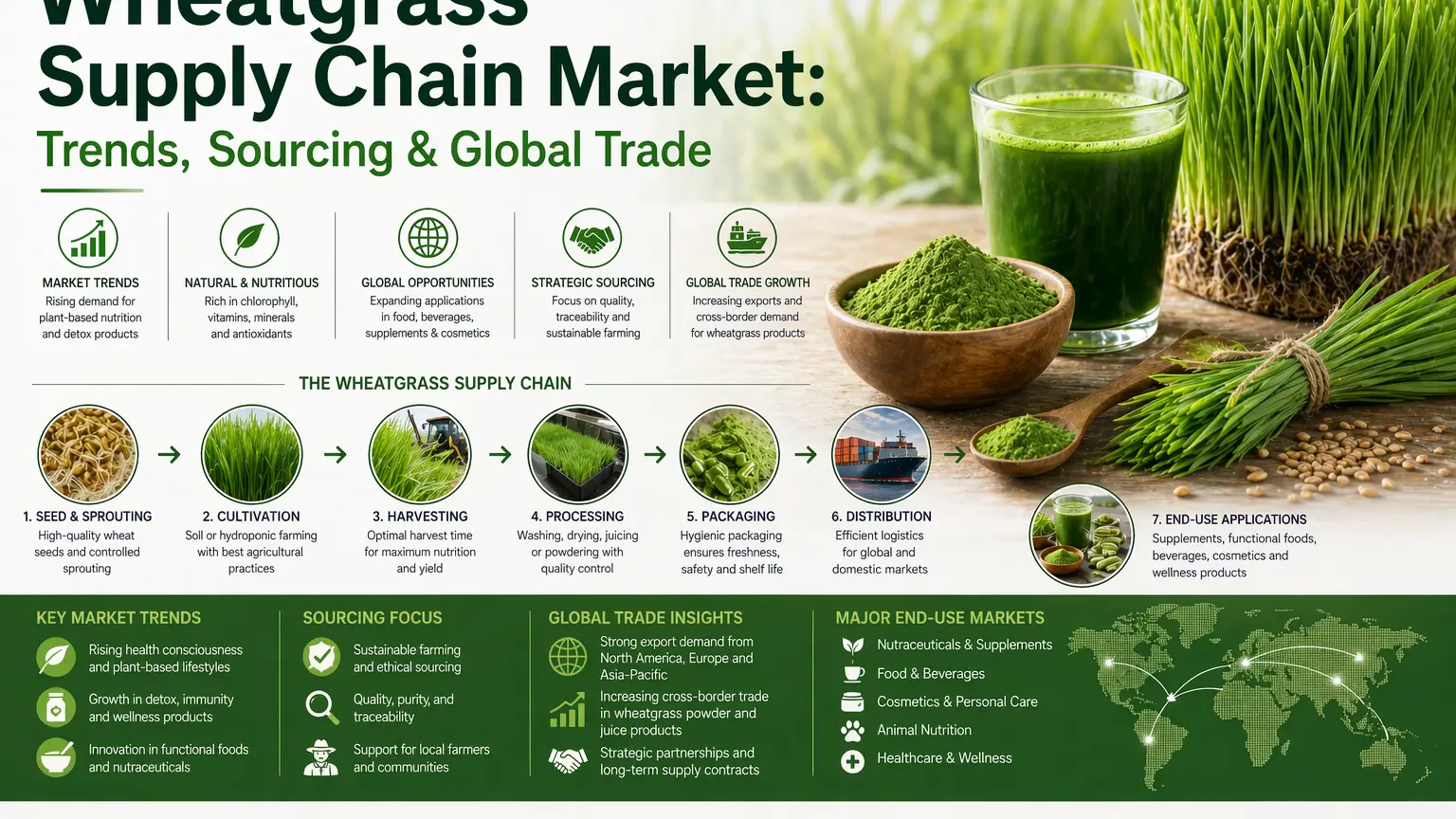
Beyond simple cultivation and processing, today’s wheatgrass supply chain spans multiple continents, integrates advanced processing technologies, and responds to evolving regulatory and consumer expectations. For B2B stakeholders, understanding this interconnected ecosystem is critical for securing supply, maintaining quality, and scaling globally.
Upstream Cultivation and Raw Material Sourcing
Wheatgrass supply chains begin with agricultural production concentrated in regions such as India, China, and North America, where climate conditions favor rapid growth cycles. These regions provide the bulk of fresh wheatgrass used in powder, juice, and supplement manufacturing.
A defining trend in 2026 is the shift toward certified organic farming. Buyers increasingly demand traceable, pesticide-free inputs, pushing growers to comply with stringent organic standards. While this enhances product value, it also introduces longer lead times and higher production costs.
Vertical integration is emerging as a strategic response, with manufacturers investing directly in farming operations to secure consistent supply and reduce volatility.
Processing, Value Addition, and Quality Control
Processing represents a critical value-creation stage in the wheatgrass supply chain. Fresh wheatgrass must be rapidly dehydrated or processed into juice concentrates to preserve its nutrient profile, including chlorophyll, vitamins, and antioxidants.
Technological advancements in drying and cold-processing techniques have significantly improved shelf life and product stability. This is particularly important as wheatgrass transitions from niche health stores to mainstream retail and e-commerce platforms.
Quality control has also become more stringent. International buyers now expect standardized certifications such as HACCP, ISO, and organic labeling, making compliance a key barrier to entry for smaller suppliers.
Global Distribution Networks and Trade Flows
The wheatgrass supply chain in 2026 is increasingly globalized, with raw materials sourced in Asia, processed in multiple regions, and distributed worldwide. Europe and North America remain dominant consumption hubs, while Asia-Pacific is the fastest-growing production and export region.
Cross-border trade is facilitated by expanding distribution channels, including omnichannel retail strategies that combine offline and online sales. Additionally, the packaged wheatgrass segment—valued at over USD 2.5 billion in 2024—is scaling rapidly due to demand for convenient, ready-to-consume formats.
This globalization increases efficiency but also exposes supply chains to logistical bottlenecks, tariffs, and regulatory differences across markets.
Supply Chain Risks and Digital Transformation
Supply chain resilience has become a central concern in the wheatgrass industry. Climate variability, geopolitical tensions, and post-pandemic disruptions have highlighted vulnerabilities in sourcing and logistics.
To mitigate risks, companies are adopting digital tools such as blockchain for traceability and AI-driven demand forecasting. These technologies enhance transparency, reduce fraud, and improve inventory management—key advantages in a market where product authenticity and freshness are critical.
Sustainability is another emerging priority. From eco-friendly packaging to carbon-conscious logistics, companies are reconfiguring supply chains to align with environmental standards and consumer expectations.
Conclusion
The wheatgrass supply chain market in 2026 reflects a broader shift toward integrated, transparent, and resilient global networks. From organic cultivation to advanced processing and digital logistics, each stage is evolving to meet the demands of a health-conscious and sustainability-driven market.
For businesses navigating this dynamic environment, partnering with experienced global suppliers can streamline sourcing and ensure compliance. Companies like Tradeasia International are increasingly positioned as strategic partners, offering reliable access to raw materials, efficient logistics solutions, and deep expertise across international supply chains—helping stakeholders stay competitive in a rapidly expanding wheatgrass market.
Sources
Leave a Comment