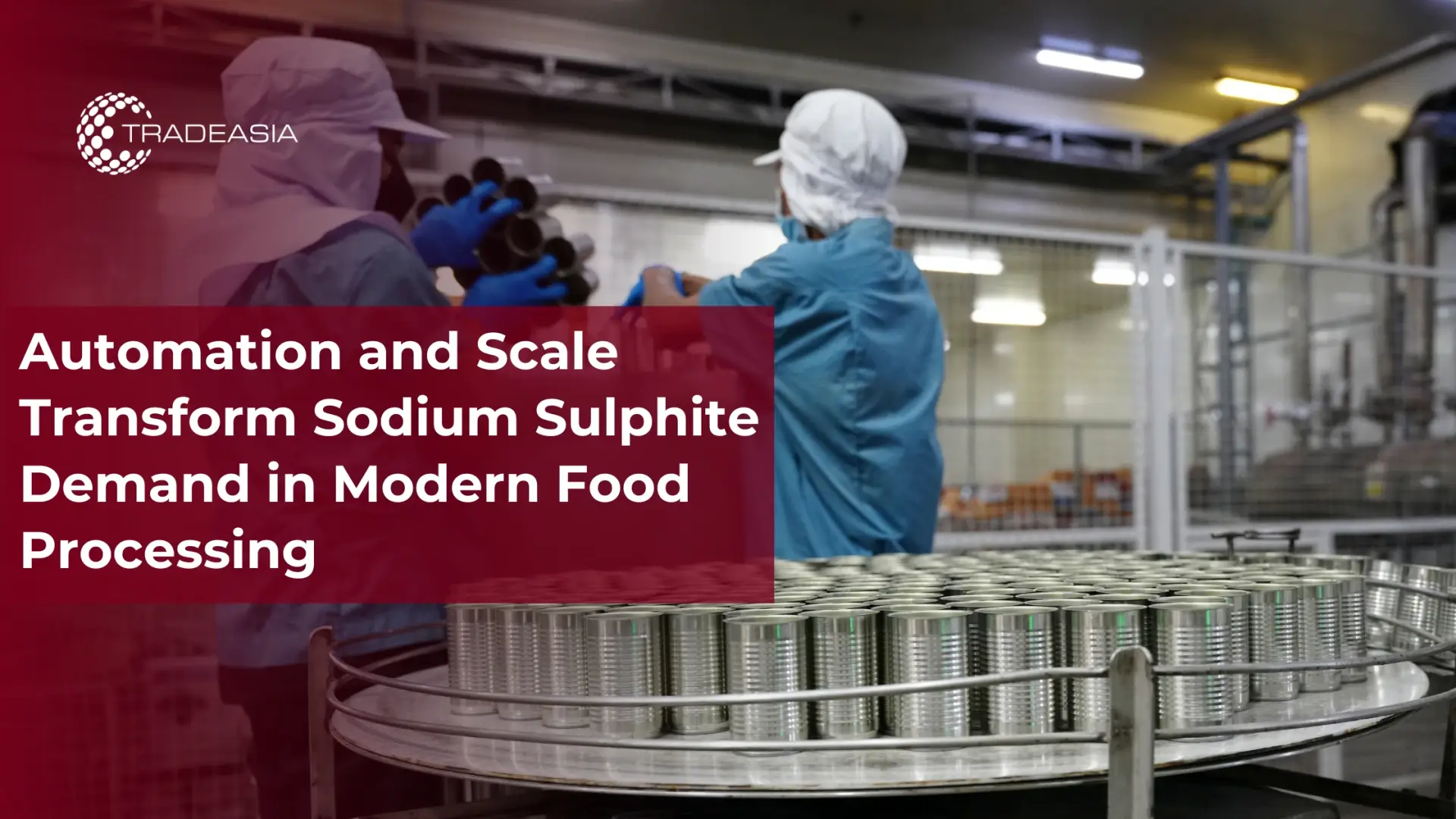
Rising production scale and automation in food manufacturing are increasing demand for consistent, high-performance antioxidant solutions such as sodium sulphite.
Food processing operations globally are undergoing rapid transformation as manufacturers invest in automation, centralized production, and high-throughput processing lines. This shift is driven by rising labor costs, tighter food safety requirements, and growing demand from modern retail and export markets. As production volumes scale up, processors are placing greater emphasis on ingredient consistency and reliability—reinforcing the role of established antioxidants like sodium sulphite.
Automation Raises the Importance of Ingredient Consistency
Highly automated food processing lines operate within narrow tolerance limits, where minor formulation variability can result in significant quality deviations or production downtime. In this environment, antioxidants must deliver predictable performance batch after batch.
Sodium sulphite continues to be valued for its reliable oxygen-scavenging properties, helping prevent oxidation-related discoloration, flavor degradation, and nutrient loss during processing. Its consistent reactivity and ease of dosing make it suitable for continuous production systems, where manual intervention is minimized.
Large-Scale Processing Expands Antioxidant Demand
As food manufacturers consolidate production into fewer, larger facilities, ingredient volumes increase correspondingly. Applications such as starch processing, sugar refining, seafood handling, and beverage production rely on antioxidants to maintain product stability across extended processing and storage periods.
In these high-volume environments, sodium sulphite offers a cost-effective solution that scales efficiently without requiring complex formulation adjustments. This advantage is particularly important in emerging markets, where food processors are expanding capacity to supply both domestic consumption and export channels.
Quality Control and Shelf Stability Drive Usage
Automation is closely linked with stricter quality control protocols. Processors supplying multinational brands or export markets must meet uniform quality specifications across large batches and extended production runs.
Sodium sulphite supports these requirements by limiting oxidative reactions that can lead to color shifts, off-flavors, and reduced shelf life. Its role as a processing aid helps maintain consistency from raw material intake through final packaging, aligning well with automated quality assurance systems.
Cost Efficiency Supports Continued Adoption
Despite growing interest in alternative antioxidants, cost efficiency remains a decisive factor for high-volume processors. Many alternatives involve higher raw material costs, formulation complexity, or reduced compatibility with existing processing infrastructure.
Sodium sulphite provides a balance of performance and affordability, allowing manufacturers to manage input costs while maintaining product quality. For automated plants operating on tight margins, this balance limits rapid substitution and supports sustained demand.
Outlook to 2030: Steady Growth Linked to Processing Modernization
Looking toward 2030, demand for sodium sulphite in food processing is expected to grow at a moderate but steady pace, closely tied to continued automation and capacity expansion. Growth will be most pronounced in Asia-Pacific, the Middle East, and Africa, where food manufacturing investments are accelerating to meet urban population growth.
While regulatory oversight and clean-label considerations may influence application scope, sodium sulphite is expected to remain an important antioxidant and processing aid in large-scale food operations. Its proven performance, compatibility with automated systems, and cost efficiency position it as a reliable solution in an increasingly industrialized food supply chain.
Overall, as food processing moves toward greater scale and automation, consistent antioxidant solutions such as sodium sulphite are likely to retain a critical role in ensuring quality, efficiency, and supply stability through 2030.
Leave a Comment