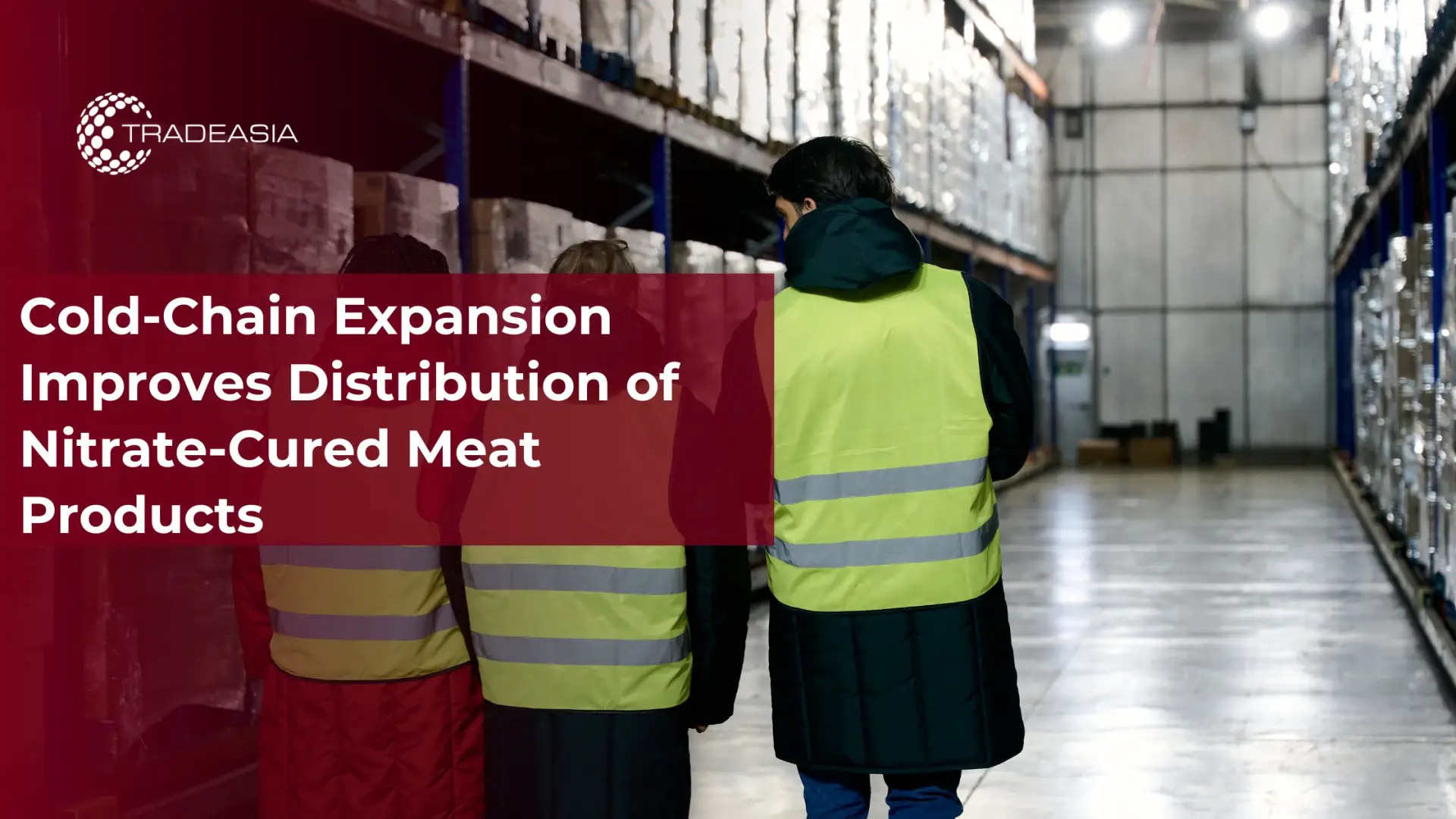
As global cold-chain infrastructure continues to expand, the distribution landscape for nitrate-cured meat products is undergoing a structural shift. Improved access to refrigerated storage, temperature-controlled transportation, and modern retail refrigeration is enabling meat processors to distribute cured products more widely and consistently. This development is indirectly supporting sustained demand for food-grade potassium nitrate, a traditional curing agent used in specific meat processing applications.
While potassium nitrate plays a more limited role compared to nitrites in modern high-speed meat processing, it remains relevant for slow-curing, fermented, and traditional meat products. The expansion of cold-chain systems enhances the viability of these products across longer distances and broader markets, particularly in emerging economies where infrastructure constraints previously limited distribution.
Cold-Chain Investment Accelerates Processed Meat Market Growth
Significant investment in cold-chain logistics has been recorded across Asia, the Middle East, and parts of Africa over the past decade. Governments and private-sector players are expanding refrigerated warehouses, cold storage hubs, and reefer transport fleets to support food security and reduce post-harvest losses. According to FAO estimates, inadequate cold-chain infrastructure remains one of the leading causes of food loss in developing regions, particularly for animal protein products.
As cold-chain capacity improves, processed and cured meat products can move beyond local consumption and enter regional or national distribution networks. This shift increases the importance of stable curing systems, including nitrate-based formulations, that help maintain product quality during extended storage and transportation cycles.
Potassium Nitrate Supports Stability in Slow-Cured Meat Applications
Potassium nitrate continues to be used in specific cured meat products where gradual nitrate-to-nitrite conversion is required. These include dry-cured sausages, fermented meats, and traditional regional products that rely on longer curing times rather than rapid chemical reactions.
Cold-chain infrastructure plays a complementary role in these applications. While potassium nitrate contributes to color stability and microbial control during curing, refrigeration ensures that finished products remain safe and consistent throughout storage and distribution. The combination of controlled temperature and nitrate-based curing reduces spoilage risks, particularly in climates where ambient temperatures are high.
Wider Distribution Strengthens Demand in Emerging Markets
Improved cold-chain coverage allows nitrate-cured meat products to reach modern retail formats such as supermarkets, hypermarkets, and export-oriented distributors. In Southeast Asia, the Middle East, and North Africa, the expansion of chilled and frozen food sections in retail outlets has supported rising consumption of packaged meat products, including cured and processed varieties.
Markets such as Indonesia, Vietnam, Saudi Arabia, Egypt, and the Philippines are seeing steady growth in refrigerated meat sales as urbanization and income levels rise. In these markets, potassium nitrate remains part of the formulation toolkit for processors producing traditional or specialty cured meats, particularly where cost efficiency and formulation familiarity are prioritized.
Supply Chain Reliability Reinforces Ingredient Trade Flows
As meat processors scale up production and distribution, the need for reliable food-grade additives becomes more pronounced. Potassium nitrate is widely traded internationally, with China and India serving as major global suppliers. Many emerging markets rely on imports to meet food-grade demand due to limited domestic chemical production capacity.
Cold-chain expansion indirectly supports these trade flows by enabling consistent production volumes and reducing the risk of product recalls or spoilage-related losses. This stability encourages processors to maintain established curing systems, supporting steady import demand for potassium nitrate through distributors and global traders.
Regulatory Compliance and Food Safety Alignment
Food safety authorities in most markets regulate potassium nitrate usage under strict maximum limits, often aligned with Codex Alimentarius guidelines. Cold-chain improvements help processors maintain compliance by reducing temperature abuse risks that could otherwise compromise food safety.
For regulators and manufacturers alike, the combination of controlled cold-chain logistics and regulated nitrate usage provides a predictable and manageable framework for producing safe cured meat products. This regulatory clarity supports continued, compliant use of potassium nitrate in approved food applications.
Outlook: Infrastructure-Led Stability Through 2030
Looking ahead, continued investment in cold-chain infrastructure is expected to support stable growth in the processed meat sector, particularly in emerging markets. While potassium nitrate remains a niche ingredient within the broader curing agent market, its role in traditional and slow-cured meat products is likely to persist.
As distribution networks expand and retail refrigeration becomes more widespread, nitrate-cured meat products will gain broader market access. This dynamic positions cold-chain development as a key structural factor sustaining long-term food-grade potassium nitrate demand.
Leave a Comment