Introduction: Cumin Beyond a Culinary Spice
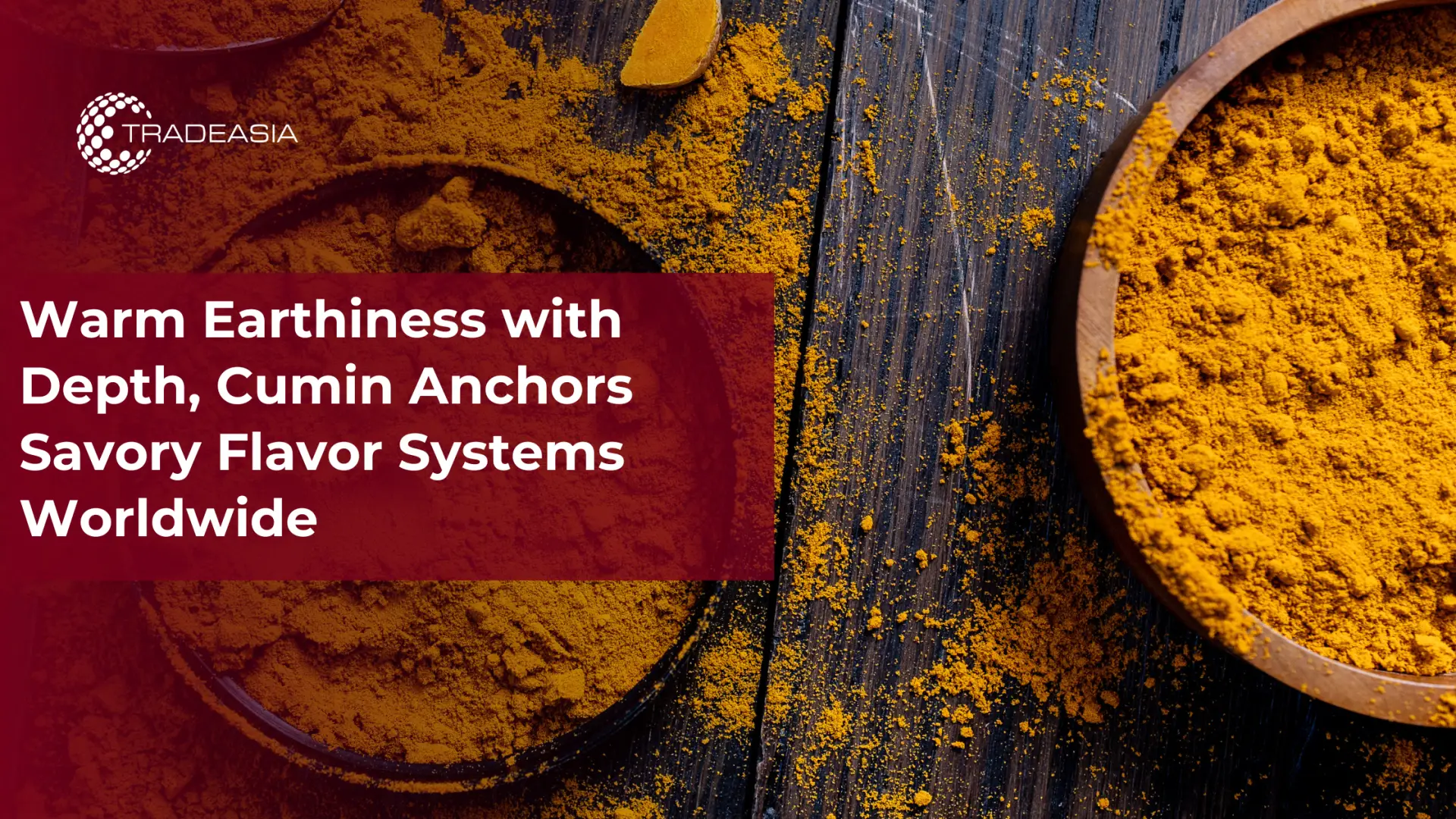
Cumin occupies a fundamentally different position from many other spices in the global food ingredient ecosystem. While spices such as paprika, turmeric, or chili often function as visual enhancers or trend-driven flavor additions, cumin operates at a deeper structural level. Its warm, earthy, and slightly bitter character forms the backbone of savory flavor systems across diverse cuisines and industrial formulations. This role places cumin not as a discretionary ingredient, but as a functional necessity in both traditional cooking and large-scale food manufacturing.
The continued relevance of cumin stems from its ability to deliver depth, continuity, and balance. It anchors flavor profiles, enabling complexity without overwhelming the palate. As food systems become increasingly industrialized and standardized, cumin’s importance grows rather than diminishes, reinforcing its status as a strategic ingredient rather than a culinary accent.
The Structural Role of Cumin in Global Savory Flavor Architecture
From a flavor science perspective, cumin provides mid-to-base notes that stabilize savory formulations. Its volatile oils interact synergistically with fats, proteins, and umami components, creating a rounded and persistent flavor experience. This makes cumin especially valuable in formulations subjected to heat processing, freezing, reheating, and long shelf-life storage, where many aromatic spices tend to degrade or lose impact.
In complex seasoning systems, cumin acts as a bridge between aromatic top notes such as coriander or garlic and heavier base ingredients like yeast extracts or meat-derived flavors. Removing cumin from such systems often results in a hollow or unbalanced taste, underscoring its irreplaceable function. This structural importance explains why cumin remains embedded across food categories regardless of shifting consumer preferences or dietary trends.
Global Market Landscape and Consumption Patterns
The global cumin market is characterized by steady, structurally driven growth rather than cyclical demand spikes. Consumption is spread across household use, foodservice, and industrial food production, with the latter increasingly dominating volume demand. As of the mid-2020s, global cumin consumption continues to expand in line with processed food output, particularly in emerging economies.
Unlike premium spices that depend on discretionary spending, cumin demand is tightly linked to population growth, urbanization, and the scaling of standardized savory foods. This linkage provides the market with a high degree of demand resilience, even during periods of economic uncertainty. As a result, cumin maintains a relatively predictable demand curve compared to many other spice commodities.
Demand Expansion Driven by Industrial Food Systems
The most significant driver of cumin demand today is the expansion of industrial food systems. Growth in ready meals, instant noodles, frozen foods, savory snacks, and seasoning blends has created sustained, high-volume demand for cumin as a core flavor component. These products rely on cumin not for novelty, but for flavor stability, authenticity, and consumer familiarity.
As manufacturers seek to replicate traditional taste profiles at scale, cumin becomes essential for maintaining cultural flavor integrity. This is particularly evident in ethnic and fusion food categories, where cumin signals authenticity and depth. The result is a form of embedded demand that grows automatically as production volumes increase, independent of consumer-level marketing trends.
Cumin in Processed Foods and Formulated Products
In processed food applications, cumin performs both sensory and functional roles. It enhances perceived richness, improves flavor persistence, and helps mask undesirable off-notes in proteins and plant-based ingredients. This has made cumin increasingly relevant in alternative protein formulations, where achieving savory depth remains a key technical challenge.
Cumin’s stability under thermal processing further strengthens its industrial value. Unlike delicate herbs, cumin retains much of its character through cooking, extrusion, and retort processes. This reliability makes it a preferred ingredient for formulators seeking consistency across large production runs and extended shelf lives.
Regional Consumption Dynamics and Trade Flows
Asia-Pacific dominates global cumin consumption, driven by India’s extensive domestic use and the rapid growth of food manufacturing across Southeast Asia. In these markets, cumin is both a traditional household staple and an industrial input, creating layered demand that reinforces market stability.
In the Middle East and North Africa, cumin remains central to meat preparations, spice blends, and traditional foods that are increasingly produced in industrial formats. Meanwhile, Europe and North America represent growing demand centers where cumin consumption is tied to ethnic foods, ready-to-eat meals, and plant-based products. These regions rely heavily on imports, strengthening international trade flows and reinforcing cumin’s position as a globally traded commodity.
Supply Concentration, Agricultural Constraints, and Risk Factors
Global cumin supply is highly concentrated, with India accounting for the majority of production and exports. This concentration introduces structural risks, including weather dependency, crop yield variability, and domestic policy interventions. Cumin cultivation is sensitive to rainfall patterns and temperature conditions, making supply vulnerable to climate variability.
Because global demand remains consistently strong, even modest supply disruptions can have outsized impacts on pricing and availability. This dynamic elevates the importance of supply chain management, inventory planning, and origin diversification for industrial buyers and traders alike.
Price Behavior and Medium-Term Market Volatility
Cumin prices exhibit moderate volatility driven primarily by supply-side factors rather than demand fluctuations. While long-term pricing trends reflect rising agricultural and logistics costs, short-term price movements are influenced by harvest outcomes, stock levels, and speculative behavior in producing regions.
Through 2030, cumin prices are expected to remain structurally supported by steady demand, with periodic volatility linked to climatic and geopolitical developments. For buyers, this reinforces the importance of long-term sourcing strategies over spot-market dependence.
Quality Expectations and Industrial Procurement Standards
As cumin becomes increasingly integrated into industrial food production, quality expectations continue to rise. Buyers now prioritize consistency in aroma, oil content, cleanliness, and food safety compliance. Traceability and proper post-harvest handling are critical, particularly for manufacturers supplying export markets with strict regulatory requirements.
The growing preference for processed forms such as cleaned, ground, or sterilized cumin further reflects the industrialization of spice procurement. These trends favor suppliers with strong quality control systems and technical understanding of food manufacturing needs.
Strategic Market Outlook Through 2030
Looking ahead, cumin’s role in global food systems is expected to strengthen rather than diminish. Growth in processed savory foods, continued urbanization, and the expansion of alternative protein categories all support sustained demand. Unlike trend-driven ingredients, cumin benefits from structural integration into flavor systems, ensuring long-term relevance.
For stakeholders across the value chain, cumin represents a stable yet strategically important commodity, where supply reliability and quality consistency increasingly define competitive advantage.
Conclusion
Cumin’s enduring value lies in its ability to anchor savory flavor systems with warmth, depth, and balance. As global food production continues to scale, cumin remains an indispensable ingredient that supports flavor authenticity, formulation stability, and consumer acceptance across markets. Its demand is not driven by trends, but by necessity, positioning cumin as a foundational component of the modern food industry through 2030 and beyond.
For food manufacturers, seasoning producers, and distributors seeking reliable cumin sourcing with consistent quality and market insight, partnering with an experienced global supplier is essential to navigating supply concentration and price volatility. Tradeasia International supports industrial buyers with dependable cumin supply, quality assurance, and procurement solutions tailored to diverse food applications.
To discuss your cumin requirements or explore sourcing options, visit www.foodadditivesasia.com or contact our team at food@chemtradeasia.com.
Leave a Comment