Introduction: A Structural Shift in the Global White Pepper Trade
The global white pepper trade is undergoing a fundamental transformation as food safety standards increasingly dictate how, where, and by whom this essential spice is traded. Once regarded primarily as an agricultural commodity with price-driven dynamics, white pepper is now subject to rigorous regulatory frameworks that elevate compliance to the same level of importance as supply availability and cost competitiveness.
Over the past several years, food safety authorities across major importing regions have intensified scrutiny of spice imports, citing persistent risks related to pesticide residues, microbiological contamination, and inadequate traceability. White pepper, due to its unique post-harvest processing methods and origin concentration in tropical regions, has become a focal point of this regulatory shift.
This tightening regulatory environment is not a temporary response to isolated incidents but reflects a structural recalibration of global food safety governance. For exporters, importers, and processors, understanding how food safety standards reshape white pepper trade requirements is now essential for maintaining market access and operational continuity.
Why White Pepper Is Under Heightened Regulatory Attention
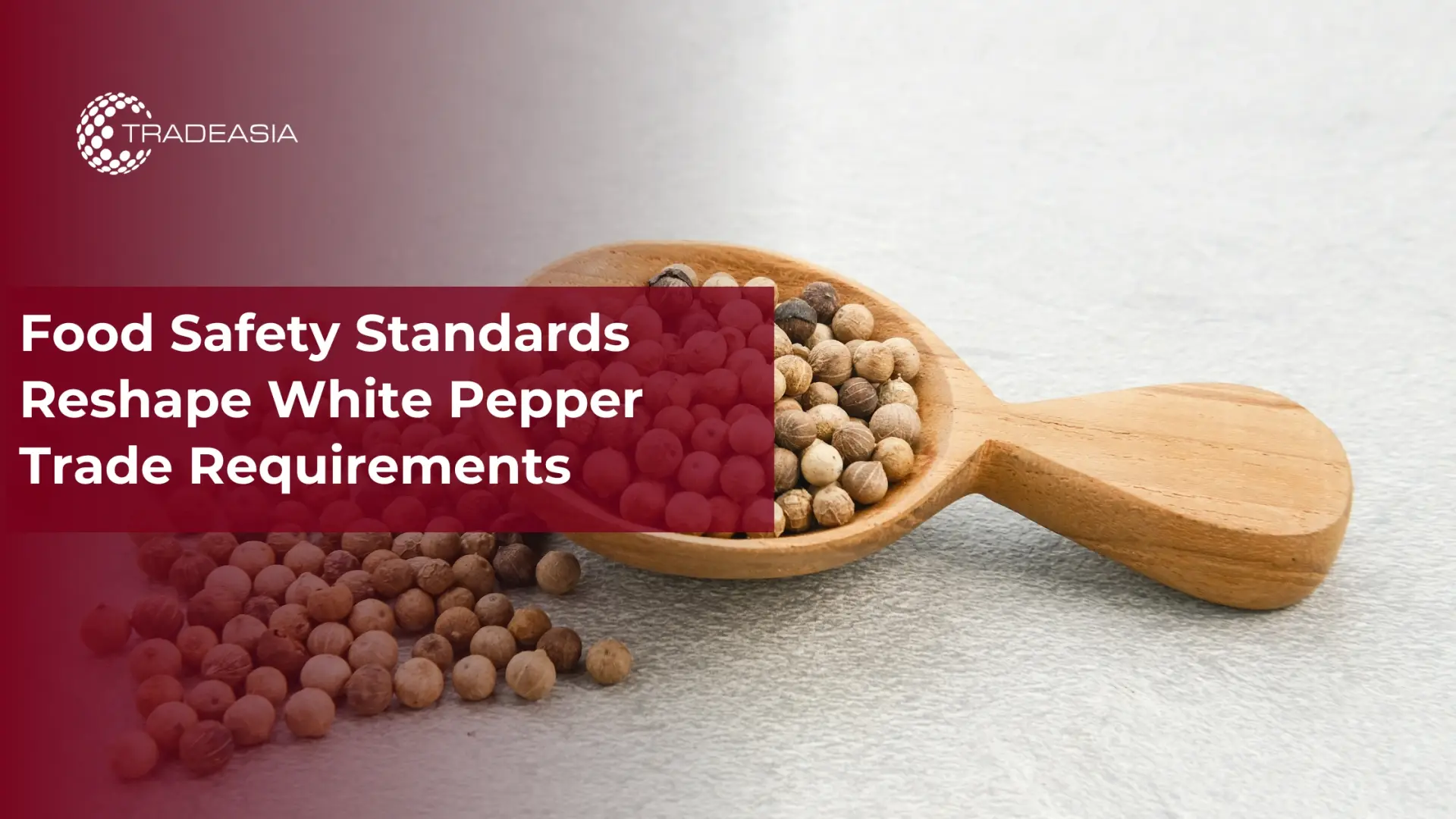
White pepper differs from black pepper not only in appearance but also in processing. The production process typically involves soaking ripe pepper berries in water to remove the outer pericarp, followed by drying. While this method produces the desired sensory profile, it also increases exposure to microbiological contamination if sanitation controls are insufficient.
Food safety authorities have repeatedly identified spices as high-risk commodities. According to monitoring data from customs authorities and food safety agencies, spices frequently rank among the top categories for import alerts related to salmonella, mold toxins, and chemical residues. White pepper is disproportionately represented due to its fermentation-like soaking process and the prevalence of smallholder farming systems with limited oversight.
Additionally, pesticide management remains a challenge. Pepper cultivation often involves multiple pesticide applications to manage pests and diseases in humid climates. Inconsistent adherence to pre-harvest intervals and the use of non-approved substances have contributed to residue findings that exceed importing countries’ limits.
As a result, white pepper is no longer evaluated solely on visual quality or aroma but on an expanding matrix of safety and compliance parameters.
European Union: Maximum Residue Limits and Reinforced Border Inspections
The European Union remains the most stringent regulatory environment for white pepper imports. Under EU food safety law, imported spices must comply with harmonized Maximum Residue Limits (MRLs) and microbiological safety requirements that often exceed Codex standards.
In recent regulatory updates, the EU has reduced allowable limits for several pesticide residues commonly associated with pepper cultivation. Some substances have been reclassified under hazard-based criteria, effectively lowering tolerance thresholds to near-detection levels. This has increased the likelihood of non-compliance even for shipments previously considered acceptable.
Border inspection data shows a marked increase in physical checks and laboratory testing for white pepper consignments entering EU ports. Enhanced monitoring programs require repeated testing from specific origins when non-compliance patterns are identified. Once an origin or exporter is flagged, inspection frequencies can rise sharply, increasing clearance times and logistical costs.
EU importers are now expected to provide detailed dossiers for each shipment, including analytical reports from accredited laboratories, evidence of good agricultural practices, and full traceability records. Failure to comply often results in shipment rejection, re-export, or destruction, with financial losses borne by importers and exporters alike.
United States: FSMA, Preventive Controls, and Importer Accountability
In the United States, the regulatory framework governing white pepper imports is shaped by the Food Safety Modernization Act (FSMA). Unlike traditional compliance systems, FSMA places legal responsibility on importers to verify that foreign suppliers meet US food safety standards.
Under the Foreign Supplier Verification Program (FSVP), US importers must conduct risk-based assessments of their suppliers, maintain verification records, and implement corrective actions when deficiencies are identified. For white pepper exporters, this has translated into increased audit requests, documentation requirements, and processing validations.
US authorities emphasize preventive controls, including validated microbial reduction steps such as steam sterilization. White pepper shipments lacking evidence of effective pathogen control measures face delays, intensified inspections, or import refusal.
Industry data suggests that US buyers are increasingly consolidating their supplier base, favoring exporters with robust compliance systems and long-term reliability. Price competitiveness alone is no longer sufficient to secure or maintain access to the US market.
East Asia: Japan, South Korea, and China Tighten Import Compliance
East Asian markets are playing an increasingly influential role in shaping white pepper trade requirements. Japan, in particular, enforces some of the world’s strictest food safety standards, with MRLs that can be more restrictive than both Codex and EU limits.
Japanese authorities apply rigorous import testing regimes, especially for spices with a history of non-compliance. White pepper shipments are frequently subject to chemical and microbiological testing, and importers must provide comprehensive documentation detailing origin, processing, and quality control measures.
South Korea has similarly strengthened inspection protocols, aligning more closely with international best practices. Importers are required to demonstrate supplier compliance, and shipments failing safety checks face swift regulatory action.
China’s role is more complex. As both a major producer and importer of spices, China has reinforced domestic food safety enforcement while tightening controls on imported agricultural products. Imported white pepper entering China is now subject to enhanced documentation and inspection requirements, reflecting broader efforts to improve food safety credibility and consumer confidence.
ASEAN and Origin Countries: Compliance Gaps and Export Adjustments
Most of the world’s white pepper supply originates from Southeast Asia and South Asia, particularly Vietnam, Indonesia, India, and Sri Lanka. While these countries possess favorable agro-climatic conditions and established production capacity, compliance with evolving food safety standards presents ongoing challenges.
Vietnam, the world’s largest pepper exporter, has made significant investments in processing infrastructure, including steam sterilization facilities and controlled drying systems. Government initiatives and industry associations have promoted compliance awareness, enabling Vietnamese exporters to maintain access to regulated markets.
Indonesia faces a more fragmented production landscape dominated by smallholder farmers. Traceability and standardized pesticide management remain difficult to implement at scale. As a result, exporters increasingly centralize processing and quality control to meet importer requirements.
India and Sri Lanka, though smaller exporters, are positioning themselves as quality-oriented origins by emphasizing compliance, certification, and niche market positioning. These strategies aim to offset higher production costs through access to premium markets.
Traceability, Documentation, and the Rising Cost of Compliance
Traceability has emerged as a non-negotiable trade requirement rather than a value-added feature. Importers now expect exporters to provide farm-level sourcing data, processing records, batch identification, and documented quality controls.
Implementing traceability systems requires investment in data management, training, and process standardization. For exporters, these costs are increasingly reflected in pricing structures. However, failure to invest in traceability carries greater risks, including loss of market access and reputational damage.
Documentation requirements have also expanded. Exporters must now routinely supply certificates of analysis, sanitation records, supplier declarations, and compliance statements tailored to specific markets. Administrative burdens have increased, reshaping the cost structure of white pepper exports.
Trade Flow Realignment and Market Segmentation
As food safety standards diverge across regions, global white pepper trade flows are becoming more segmented. Highly regulated markets such as the EU, US, and Japan increasingly source from a limited pool of compliant exporters, while less regulated markets absorb product that may not meet the strictest standards.
This segmentation has pricing implications. Compliant white pepper commands a premium due to higher processing, testing, and documentation costs. Conversely, lower-grade material faces restricted market access and increased price volatility.
Trade data indicates a gradual reallocation of supply, with compliant exporters strengthening positions in premium markets while others focus on regional or price-sensitive destinations.
Implications for Exporters, Importers, and Global Supply Chains
For exporters, food safety compliance has become a strategic imperative rather than an operational detail. Investments in processing, testing, and documentation are now essential for long-term market participation.
Importers face increased responsibility under regulatory frameworks, particularly in the US and EU. Supplier selection increasingly prioritizes risk management and compliance history over short-term price advantages.
Global supply chains are adapting by shortening supplier lists, strengthening contractual requirements, and increasing transparency. These changes aim to mitigate regulatory risk but also contribute to higher transaction costs across the value chain.
Conclusion: Food Safety as the New Trade Gatekeeper
Food safety standards are no longer peripheral considerations in the global white pepper trade. They have become decisive structural forces that influence sourcing strategies, trade routes, pricing tiers, and long-term supplier relationships. As regulatory scrutiny intensifies across major importing markets—particularly in the European Union, the United States, and East Asia—white pepper is increasingly traded not just as an agricultural commodity, but as a regulated food ingredient whose value is defined by compliance credibility as much as by origin and quality.
For exporters, adapting to this environment requires sustained investment in traceability systems, validated processing controls, and documentation discipline. For importers and food manufacturers, supplier selection now hinges on regulatory resilience and risk mitigation rather than short-term cost advantages. In this context, food safety functions as the new trade gatekeeper, determining which actors can participate in premium, stable markets and which are pushed toward higher-risk, lower-margin channels.
As global food systems continue to prioritize safety, transparency, and accountability, navigating these regulatory complexities demands informed sourcing decisions and reliable technical support. For companies seeking deeper insight into compliant sourcing, regulatory alignment, and secure supply of food ingredients—including spices such as white pepper—industry collaboration and informed partnerships remain critical.
To explore sourcing strategies, regulatory considerations, and market developments across food additives and ingredients, visit www.foodadditivesasia.com or reach out directly at food@chemtradeasia.com for further discussion and tailored insights.
Leave a Comment