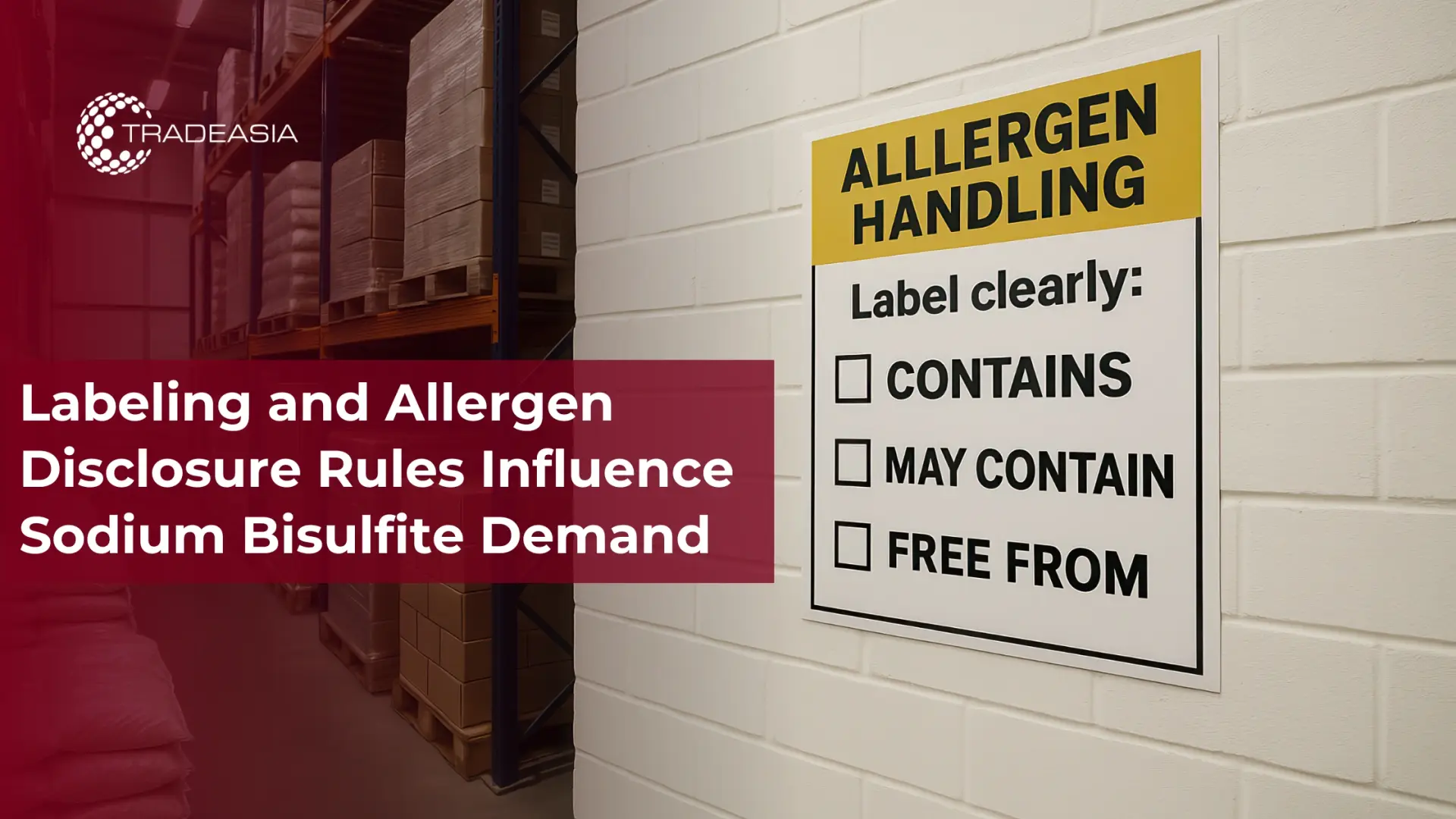
Labeling and allergen disclosure requirements are playing an increasingly influential role in shaping sodium bisulfite demand across the global food industry. As regulators tighten transparency rules around sulfite usage, food manufacturers are adjusting formulation strategies, product positioning, and target markets—directly impacting consumption patterns of sodium bisulfite in food processing.
Sodium bisulfite, widely used as an anti-browning agent and preservative, remains legally permitted in many food applications. However, mandatory labeling requirements for sulfites are changing how and where the ingredient is used, particularly in consumer-facing packaged foods.
Sulfite Labeling Rules Drive Greater Formulation Scrutiny
Sulfites, including sodium bisulfite, are recognized as potential allergens that may trigger adverse reactions in sensitive individuals. As a result, many regulatory authorities require explicit disclosure when sulfite levels exceed defined thresholds.
In the United States, the FDA mandates sulfite declaration on food labels when concentrations reach 10 parts per million (ppm) or higher. Similar requirements exist in the European Union, where sulfites must be declared as allergens under EU food labeling regulations. These rules apply across a wide range of food categories, including seafood, dried fruits, processed vegetables, and beverages.
The obligation to disclose sulfite content has increased formulation scrutiny among food manufacturers, particularly those supplying mass retail and export markets where labeling compliance is closely monitored.
Impact on Product Positioning and Market Segmentation
Mandatory sulfite labeling influences not only formulation decisions but also marketing strategies. Products containing declared sulfites may face reduced appeal among health-conscious consumers, especially in premium or clean-label segments.
As a result, some manufacturers have limited sodium bisulfite usage in consumer-branded products while maintaining its application in foodservice, industrial, or bulk processing channels where labeling sensitivity is lower. This segmentation effect is reshaping demand patterns rather than eliminating sodium bisulfite consumption altogether.
In price-sensitive markets and B2B applications—such as frozen seafood, fresh-cut produce for foodservice, and industrial food ingredients—sodium bisulfite remains widely used due to its effectiveness and cost efficiency.
Seafood Processing Remains a Core Application
Despite labeling constraints, seafood processing continues to anchor global sodium bisulfite demand. The compound is widely used to prevent melanosis (black spot formation) in shrimp and crustaceans, a quality issue that directly affects product value and export acceptance.
In many seafood-exporting countries across Asia and Latin America, sodium bisulfite treatment is considered an industry standard. While exporters must comply with destination-market labeling and residue requirements, the functional necessity of sulfite treatment sustains its use.
Labeling rules have therefore led to stricter dosage control and improved process monitoring, rather than outright substitution, in the seafood sector.
Regulatory Alignment Shapes International Trade
International trade in sulfite-treated foods is heavily influenced by regulatory alignment between exporting and importing countries. Codex Alimentarius recognizes the use of sulfites in specific food applications under defined maximum limits, providing a reference point for national regulations.
Countries whose food safety frameworks align with Codex, FDA, or EU standards offer clearer compliance pathways for exporters. In contrast, markets with stricter consumer labeling expectations may see slower growth in sulfite-containing retail products.
For food exporters, understanding and managing sulfite labeling requirements has become a key component of market access strategy, affecting ingredient sourcing decisions and documentation practices.
Cost and Performance Continue to Support Industrial Demand
From a cost-performance perspective, sodium bisulfite remains difficult to replace in many applications. Alternative anti-browning or preservative systems often come with higher costs, shorter effectiveness windows, or operational complexity.
In industrial food processing environments—where efficiency, yield protection, and visual quality are critical—sodium bisulfite continues to offer strong value. Labeling requirements, while impactful, have not eliminated its role in these segments.
This dynamic has resulted in stable baseline demand, even as growth in consumer-facing packaged foods becomes more selective.
Outlook: Compliance Shapes, Not Eliminates, Demand
Looking ahead, sodium bisulfite demand is expected to remain stable, shaped by compliance requirements rather than displaced by them. Labeling and allergen disclosure rules will continue to influence how the ingredient is used, pushing manufacturers toward more precise dosing, targeted applications, and clearer documentation.
As global food safety standards emphasize transparency alongside functionality, sodium bisulfite is likely to retain its role in essential processing applications—particularly in seafood and industrial food systems—while experiencing more cautious use in premium retail products.
Leave a Comment