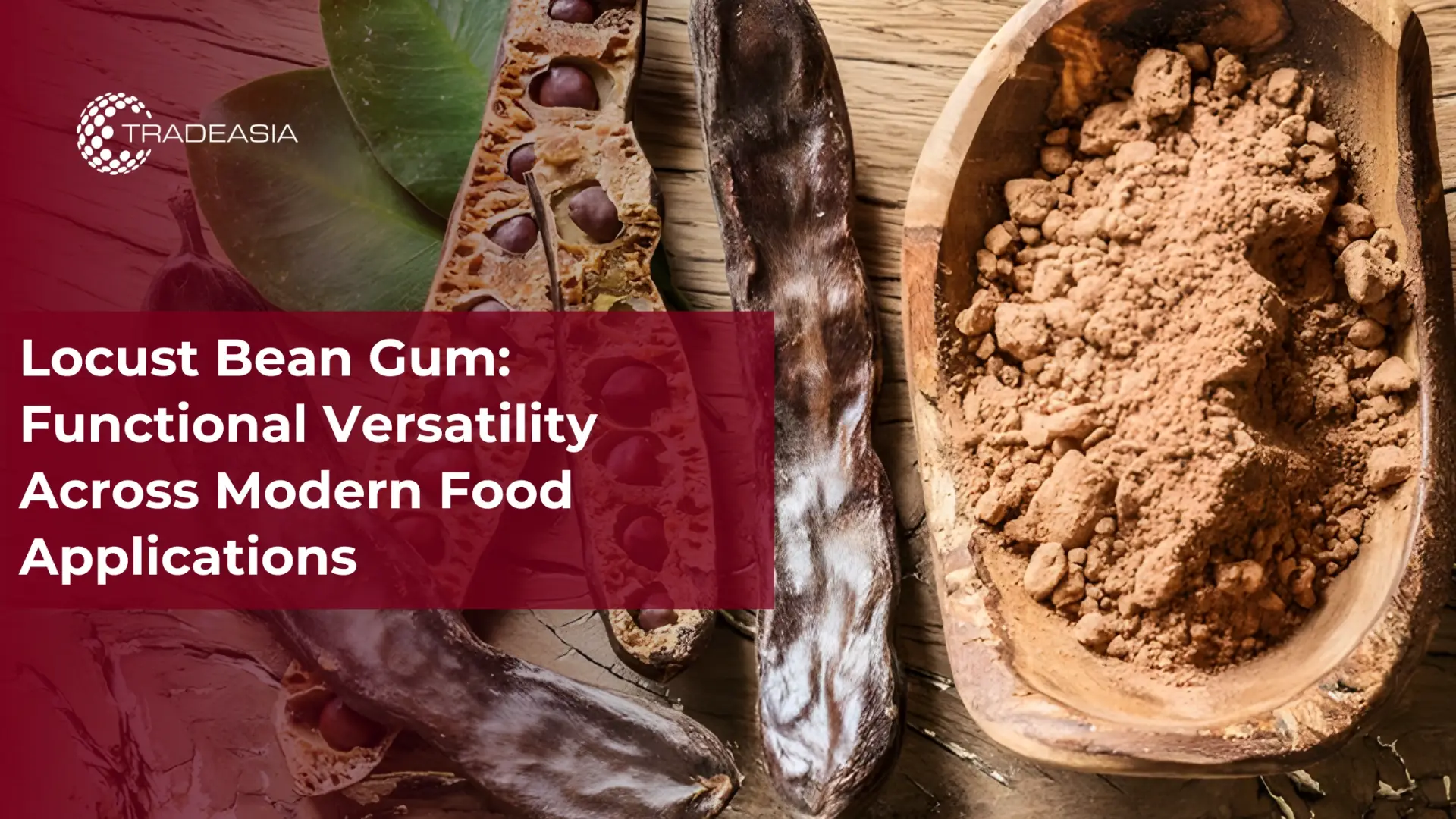
Locust Bean Gum (LBG), also known as carob gum, is a natural hydrocolloid extracted from the seeds of the carob tree (Ceratonia siliqua). Widely used in the food industry, LBG is valued for its multifunctional role as a thickener, stabilizer, water binder, and texture enhancer. Its ability to interact synergistically with other hydrocolloids has made it a foundational ingredient in a broad range of food formulations.
Core Functional Properties in Food Systems
One of the primary functions of locust bean gum is viscosity enhancement. When hydrated, LBG forms a smooth, stable solution that increases thickness without imparting gumminess or off-flavors. This makes it particularly suitable for products where clean mouthfeel and natural texture are essential.
LBG also acts as an effective stabilizer by controlling water mobility within food matrices. It reduces syneresis (water separation) and helps maintain uniform distribution of solids, fats, and proteins during processing, storage, and temperature fluctuations. Unlike some starch-based thickeners, locust bean gum provides stability across a wide pH range and performs well under moderate heat treatment.
A key technical advantage of LBG is its strong synergistic interaction with other hydrocolloids—especially carrageenan, xanthan gum, and agar. These interactions significantly enhance gel strength, elasticity, and thermal stability, allowing formulators to achieve desired textures at lower total gum usage.
Applications in Dairy and Frozen Desserts
Locust bean gum is extensively used in dairy products such as ice cream, yogurt, cream cheese, and flavored milk drinks. In ice cream, LBG plays a critical role in controlling ice crystal growth, improving freeze-thaw stability, and delivering a smooth, creamy mouthfeel throughout shelf life.
In yogurt and fermented dairy, LBG helps stabilize protein networks, preventing whey separation while maintaining a natural texture. Its compatibility with milk proteins makes it particularly effective in both full-fat and reduced-fat formulations, where texture compensation is often required.
Role in Bakery and Confectionery Products
In bakery applications, locust bean gum contributes to moisture retention and crumb softness, helping extend shelf life in cakes, muffins, and gluten-free baked goods. Its water-binding properties slow staling and improve overall eating quality, especially in formulations with reduced fat or sugar.
In confectionery products such as jellies, gummies, and chewy candies, LBG is commonly used in combination with agar or carrageenan to create elastic gels with controlled bite and clarity. This synergy allows manufacturers to fine-tune texture profiles for premium confectionery products.
Use in Sauces, Dressings, and Processed Foods
LBG is widely applied in sauces, dressings, gravies, and soups where stable viscosity and resistance to phase separation are required. It provides shear-thinning behavior, meaning products remain thick at rest but flow easily during pouring or pumping—an important characteristic for both consumer experience and industrial processing.
In processed foods and ready meals, locust bean gum supports texture stability during heating, cooling, and reheating cycles. It helps maintain consistent product quality in frozen and chilled applications, particularly when combined with other stabilizers in complex formulations.
Relevance in Clean-Label and Plant-Based Formulations
As a naturally derived ingredient with a long history of safe use, locust bean gum aligns well with clean-label and plant-based product development. It is often favored over modified starches or synthetic stabilizers in formulations targeting health-conscious consumers.
In plant-based dairy alternatives and meat analogs, LBG contributes to body, creaminess, and moisture retention, helping replicate the texture of traditional animal-based products. Its neutral taste profile ensures that it enhances functionality without interfering with flavor systems.
Outlook: Continued Importance in Texture Engineering
As food manufacturers continue to innovate across dairy, plant-based, frozen, and convenience food categories, locust bean gum is expected to remain a key tool for texture engineering. Its versatility, compatibility with other hydrocolloids, and proven performance across diverse applications make it a reliable choice for both traditional and emerging food systems.
With increasing emphasis on texture quality, shelf-life stability, and clean-label positioning, locust bean gum will continue to play an essential role in modern food formulation strategies.
Leave a Comment