Market Context: A Highly Concentrated Raw Material Base
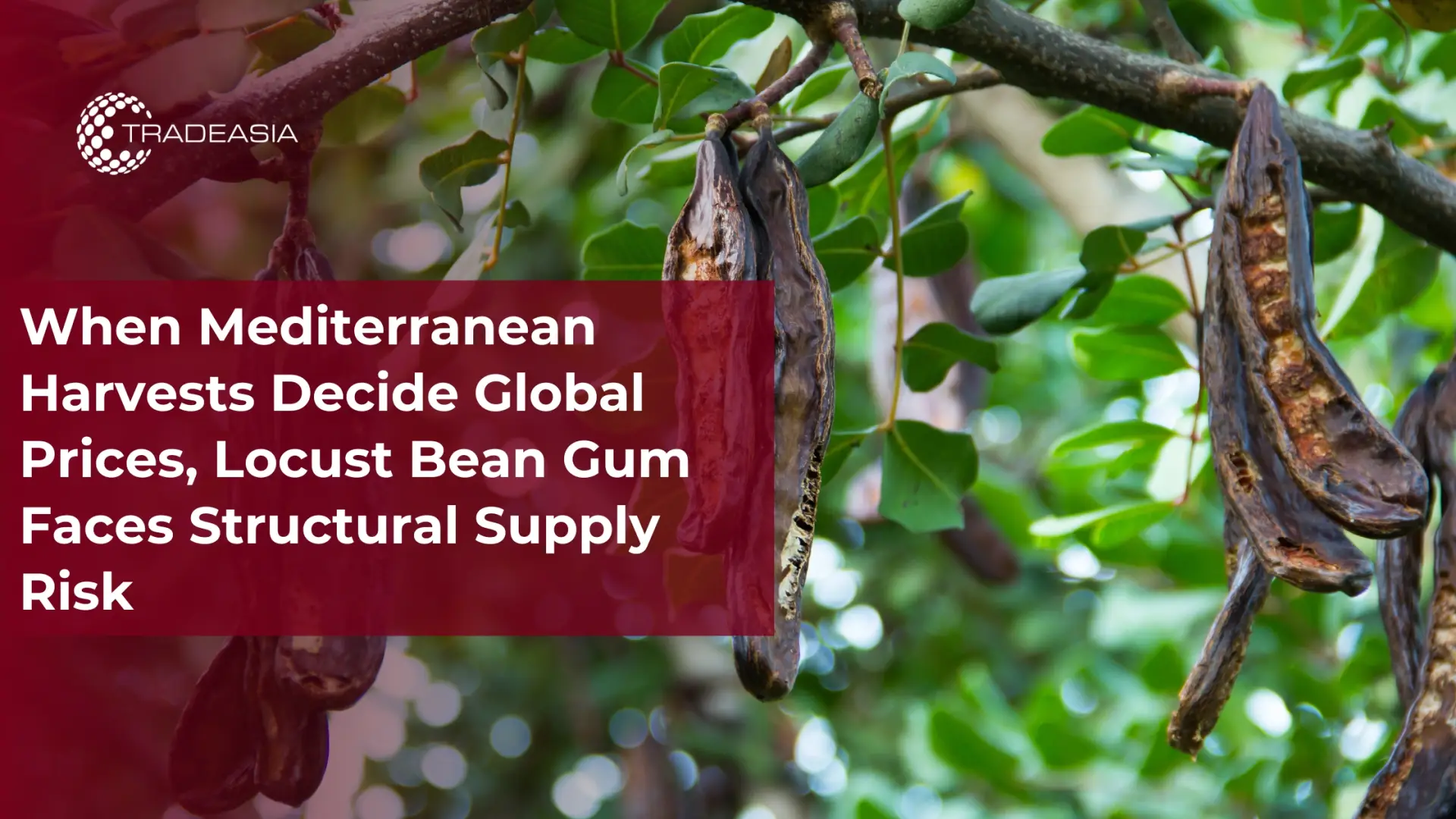
Locust bean gum (LBG) is derived from the endosperm of carob seeds, and its global supply chain is structurally concentrated in a limited geographic area. The majority of commercial carob production originates from Mediterranean countries such as Spain, Portugal, Italy, Morocco, and parts of Greece and North Africa. Unlike many hydrocolloids that rely on widely cultivated crops, carob trees grow slowly, require specific climatic conditions, and are largely dependent on traditional agricultural cycles. This high level of geographic concentration means that global LBG availability is directly tied to the success of a relatively narrow harvesting region, leaving the market inherently exposed to regional disruptions.
Climate Sensitivity and Weather-Driven Supply Volatility
Carob trees are resilient but not immune to climate stress. Irregular rainfall, prolonged droughts, heatwaves, and shifting seasonal patterns increasingly affect Mediterranean agriculture. In years of poor flowering or reduced pod yields, the volume of carob seeds available for processing declines sharply. Because locust bean gum production cannot be rapidly scaled up in response to shortages—carob trees take years to mature—short-term supply gaps are difficult to offset. As a result, weather variability translates quickly into raw material tightness, leading to sudden price increases and allocation challenges for downstream processors.
Processing Constraints Amplify Market Tightness
Beyond agricultural factors, LBG production involves specialized processing to separate, mill, and refine the galactomannan component from carob seeds. Processing capacity is relatively fixed and concentrated near growing regions, which limits flexibility during periods of high demand or low harvest volumes. When raw material availability drops, processors often prioritize long-standing customers or higher-margin applications, further intensifying supply pressure across the broader market. This dynamic reinforces price sensitivity and reduces spot-market availability during constrained periods.
Pricing Implications for Buyers and Long-Term Contracts
Because of these supply-side characteristics, locust bean gum pricing tends to be more volatile than synthetically produced or globally cultivated hydrocolloids. Long-term contracts, while offering security of supply, carry pricing risks when harvest conditions change unexpectedly. Buyers may face renegotiations, surcharges, or delayed deliveries in years of poor yields. Conversely, favorable harvests can temporarily stabilize prices, but the overall market remains cyclical rather than linear. This volatility makes forecasting costs challenging for food manufacturers, particularly those relying heavily on LBG for texture and stability.
Why This Matters for Procurement and Strategy
Understanding the structural supply constraints of locust bean gum is essential for effective procurement planning. Buyers who recognize the climate dependency and regional concentration of LBG are better positioned to manage risk through diversified sourcing, strategic inventory buffers, and flexible formulation strategies that allow partial substitution or synergistic gum blends. In a market where supply shocks are not anomalies but recurring realities, informed sourcing decisions become a competitive advantage rather than a defensive measure.
Key Takeaway
Locust bean gum’s value lies in its natural origin and functional performance, but these same attributes tie it closely to agricultural uncertainty. As climate variability continues to influence Mediterranean harvests, supply concentration will remain a defining factor shaping price volatility in the global LBG market—making supply-chain awareness as critical as formulation expertise.
Sources
Leave a Comment