Introduction
In the intensifying "Chicken Wars" of the global plant-based sector, the battleground has decisively shifted. For the first decade of the alternative protein boom, R&D teams were singularly obsessed with flavor chemistry—masking the persistent "beany" off-notes of soy isolates and replicating the savory, umami-rich profile of roasted poultry. Today, however, flavor is largely a solved variable. The new, and far more difficult, frontier is texture.
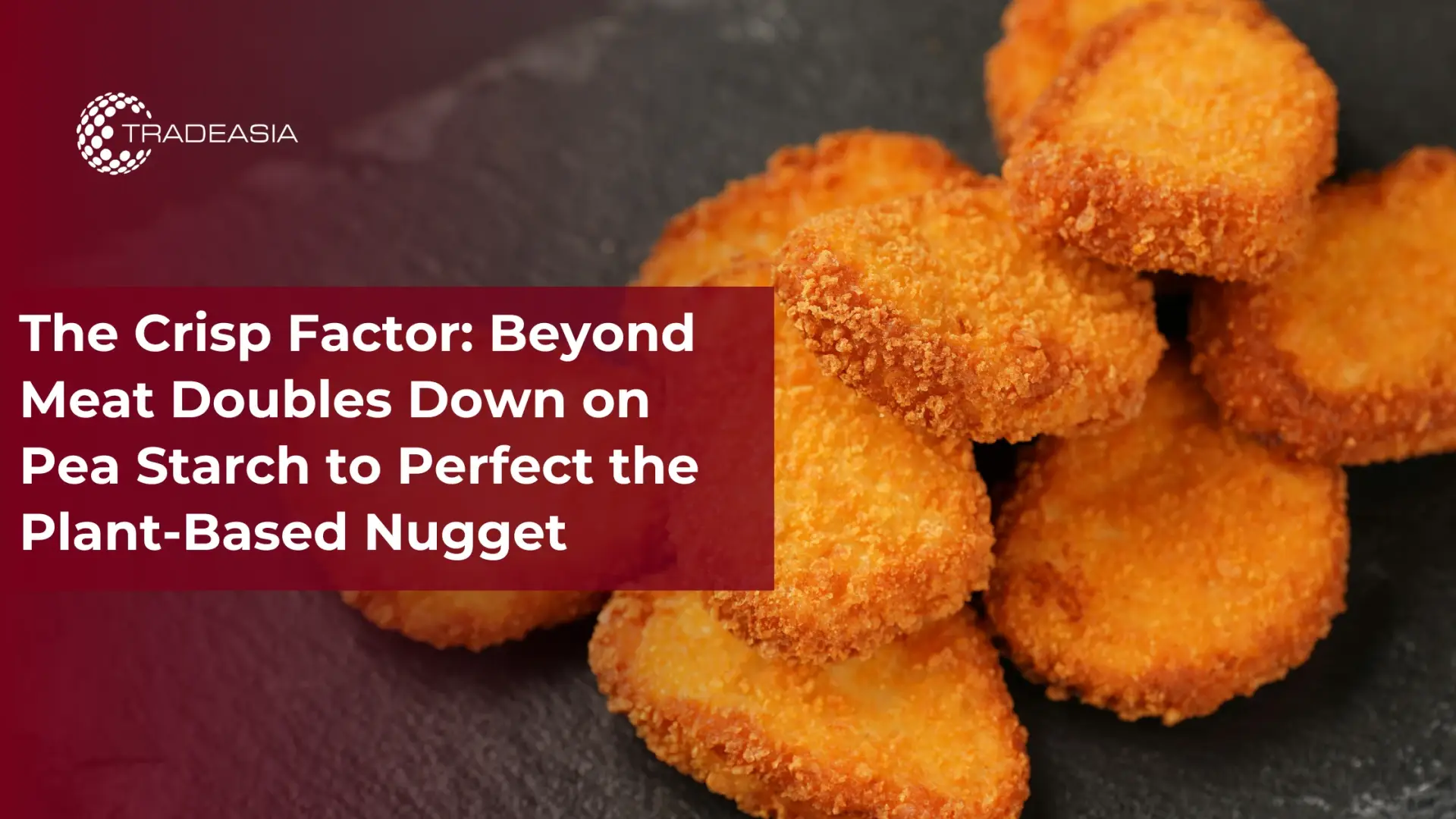
Early iterations of vegan nuggets and patties were frequently criticized by flexitarian consumers for two fatal flaws: a "mushy," unstructured interior that lacked the fibrous resistance of muscle meat, and a breading system that sloughed off or turned soggy moments after leaving the fryer. These textural failures created an "uncanny valley" effect—products that tasted like chicken but felt like highly processed mash. In a strategic reformulation move, category leaders like Beyond Meat are significantly increasing the inclusion rates of Native Pea Starch in their breaded poultry analogues. This shift marks a sophisticated departure from the industry standard of using cheap commodity corn starch or wheat flour as binders. By leveraging the specific rheological properties of pulse starches, manufacturers are aiming to engineer a "meatier" bite and a shattering crispiness that rivals the gold standard of conventional fast-food chicken. This white paper explores the granular mechanics, functional benefits, and supply chain economics driving this pea starch revolution.
The Amylose Advantage: Creating the "Glassy" Shell
The primary driver for this reformulation is the superior adhesion and crisping capability of pea starch compared to commodity corn, wheat, or tapioca starches. To understand why pea starch is superior, one must look at the molecular architecture of the granule, specifically the amylose-to-amylopectin ratio. Standard corn starch contains roughly 25-28% amylose, while tapioca contains significantly less (15-18%). Pea starch, however, boasts a uniquely high amylose content, typically ranging between 35% and 40%.
Amylose is the linear polymer of glucose responsible for gel strength, film formation, and crispness. When a nugget coated in pea starch hits hot oil (typically 175°C - 190°C), the starch granules gelatinize. However, because of the high amylose content, this gelatinized starch undergoes rapid and intense Retrogradation (recrystallization) the moment it begins to cool.
-
The "Glass" Effect: Unlike the branched amylopectin chains in corn or tapioca, which hold onto water and remain soft, the linear amylose chains in pea starch re-align into tight, crystalline bundles. This rapid setting forms a continuous, semi-crystalline network—essentially a "glass-like" barrier—on the surface of the nugget.
-
Heat Lamp Stability: This structure creates an exceptionally hard, hydrophobic exterior. Crucially for the Quick Service Restaurant (QSR) sector, this crunch maintains its integrity even after sitting under a heat lamp for 20 minutes. It resists the ambient humidity and internal steam migration that turns corn-based batters soggy, preserving the "hard snap" that consumers associate with premium processed chicken.
Oil Absorption and The "Grease Barrier"
A secondary, but equally critical, benefit of this high-amylose film is Oil Absorption Control. In deep-frying, oil typically enters the food as water leaves (a mechanism known as the vacuum effect). Because pea starch forms such a dense, rapid-setting film upon contact with heat, it creates a physical barrier that limits oil uptake.
Comparative tests have shown that batters formulated with high-amylose pea starch can reduce total fat absorption by 15% to 20% compared to wheat-based batters. This allows manufacturers to improve the nutritional profile of the nugget—lowering the caloric density and saturated fat content—without compromising the indulgent mouthfeel. The result is a cleaner, less greasy finger feel that appeals to health-conscious consumers.
The Interface Challenge: Solving "Blow-Off"
In deep-fried applications, the interface between the protein core (substrate) and the breading system is the most common point of failure. This phenomenon, known as "Blow-Off," occurs when water vapor migrating from the hot "meat" creates steam pockets that push the coating away from the surface. This leaves the consumer holding a piece of naked protein while the breading falls back into the dipping sauce.
Pea starch addresses this through superior Film-Forming Properties. Due to its high amylose linearity, pea starch forms a tight, cohesive film that bonds aggressively to the hydrophilic protein substrate. It acts as a sealant. When used in the "predust" layer (the first coating applied to the moist patty), pea starch absorbs surface moisture to become a tacky glue. This prevents the batter from sliding off during the violent turbulence of industrial frying. By creating a unified matrix between the core and the crust, manufacturers can ensure that the breading fractures with the nugget, rather than peeling off in a single sheet—a critical quality metric for consumer acceptance.
Fixing the "Mush Factor" in the Meat Matrix
Beyond the breading, the increased use of native pea starch within the meat matrix itself addresses the "mush factor" that plagues many plant-based proteins. Most vegan nuggets rely on Texturized Vegetable Protein (TVP). While TVP provides fibrous structure, it acts like a sponge, absorbing water and oil. Without a strong binder, the hydrated TVP tends to fall apart in the mouth, creating a soft, pasty mouthfeel that lacks the resistance of real chicken muscle.
By incorporating native pea starch into the binding matrix, formulators create a secondary internal structure.
-
Gel Strength: Pea starch has a relatively high gelatinization temperature and forms a strong, cuttable gel upon cooling (much firmer than corn or tapioca gels).
-
The "Knack" Effect: When the nugget is cooked, this internal starch gel reinforces the protein fibers, creating a firm resistance to the tooth. This is known in the meat industry as "bite," "snap," or "knack." This rheological synergy allows the nugget to fracture like a solid piece of muscle meat rather than squishing like a paste. It provides the "chew" that signals to the brain that the product is substantial and high-quality.
Freeze-Thaw Stability and Distribution
Another technical advantage of pea starch is its resilience in the frozen supply chain. Unlike tapioca or waxy corn starches, which can suffer from Syneresis (water weeping) after freeze-thaw cycles, the retrograded amylose structure of pea starch is incredibly stable.
Once the pea starch gel has set during the initial pre-cooking or blanching phase, it resists breakdown even when subjected to temperature fluctuations during transport. This ensures that the nuggets do not become icy or release free water inside the packaging, preventing the formation of freezer burn and ensuring that the texture remains consistent from the factory to the consumer's oven.
The Single-Source Synergy
Using pea starch alongside pea protein allows for a "Single-Source" ingredient story. In older formulations, a manufacturer might use soy protein for the meat, corn starch for binding, and wheat flour for breading. This creates a complex allergen profile and a cluttered label. By utilizing pea protein isolate for the structure and pea starch for the texture, brands can simplify their supply chain. This eliminates the need for functional additives like methylcellulose in some applications or reduces the reliance on wheat gluten, aligning with the growing consumer demand for allergen-friendly (soy-free, gluten-free) and non-GMO formulations.
Clean Labeling in an Ultra-Processed Era
This reformulation also serves a critical defensive strategy against the growing criticism that plant-based meats are "ultra-processed." Consumers are increasingly wary of ingredients that sound chemical. By replacing chemically modified food starches (often listed with scary E-numbers like E1412 or vague descriptions like "Modified Corn Starch") with Native Pea Starch, brands can clean up their ingredient decks.
Because native pea starch naturally possesses the high-heat stability and shear resistance that usually requires chemical modification to achieve in corn starch, it performs like a modified starch while labeling like a natural one. Since the primary protein source is already yellow peas, adding pea starch allows the label to appear less cluttered and more chemically consistent. This "whole crop" utilization approach appeals to the clean-label consumer who wants ingredients they recognize.
Supply Chain Circularity
Finally, the economics of pea starch are becoming increasingly favorable due to the booming demand for pea protein.
-
The Coproduct Factor: Manufacturing pea protein isolate generates a massive amount of starch as a byproduct (roughly 60% of the pea is starch). Historically, this starch was sold off cheaply for animal feed or vermicelli noodles.
-
Upcycling Value: As companies like Beyond Meat scale their protein production, they have access to vast quantities of this starch. Utilizing this coproduct in the nuggets creates a closed-loop efficiency. It turns a waste stream into a functional value-add, helping to stabilize production costs in a volatile market. It is a rare instance where the "premium" functional ingredient is also the most economically logical choice for the protein manufacturer.
Conclusion
The shift toward Native Pea Starch in plant-based nuggets is more than a recipe tweak; it is a maturation of the category. The industry is moving past the "novelty phase," where consumers would accept subpar textures for the sake of sustainability. In the current market, the product must perform.
Pea starch provides the engineering solution to the texture problem. Its high amylose content delivers the "shattering" crispiness required for the exterior, its oil-barrier properties create a healthier and less greasy profile, and its strong gelling properties provide the "muscle-like" bite required for the interior. By solving the physics of the "crunch" and the "chew" simultaneously, pea starch is enabling plant-based brands to finally compete with the conventional nugget on its own turf.
Partner for Textural Excellence
At Food Additives Asia, we recognize that superior texture is the defining competitive advantage in the plant-based sector. Whether you are addressing coating adhesion challenges, looking to reduce oil absorption, or seeking to optimize the rheology of your protein matrix, our portfolio of high-amylose Native Pea Starch is engineered to meet rigorous industrial standards.
Secure your competitive edge. We invite you to examine our technical specifications and discuss your formulation requirements with our dedicated support team. Visit our website to access our product catalog and submit your commercial inquiry today.
Explore Our Pea Starch Solutions & Inquire at foodadditivesasia.com
Leave a Comment