Understanding the Role of Potassium Nitrate in Food Processing and Curing
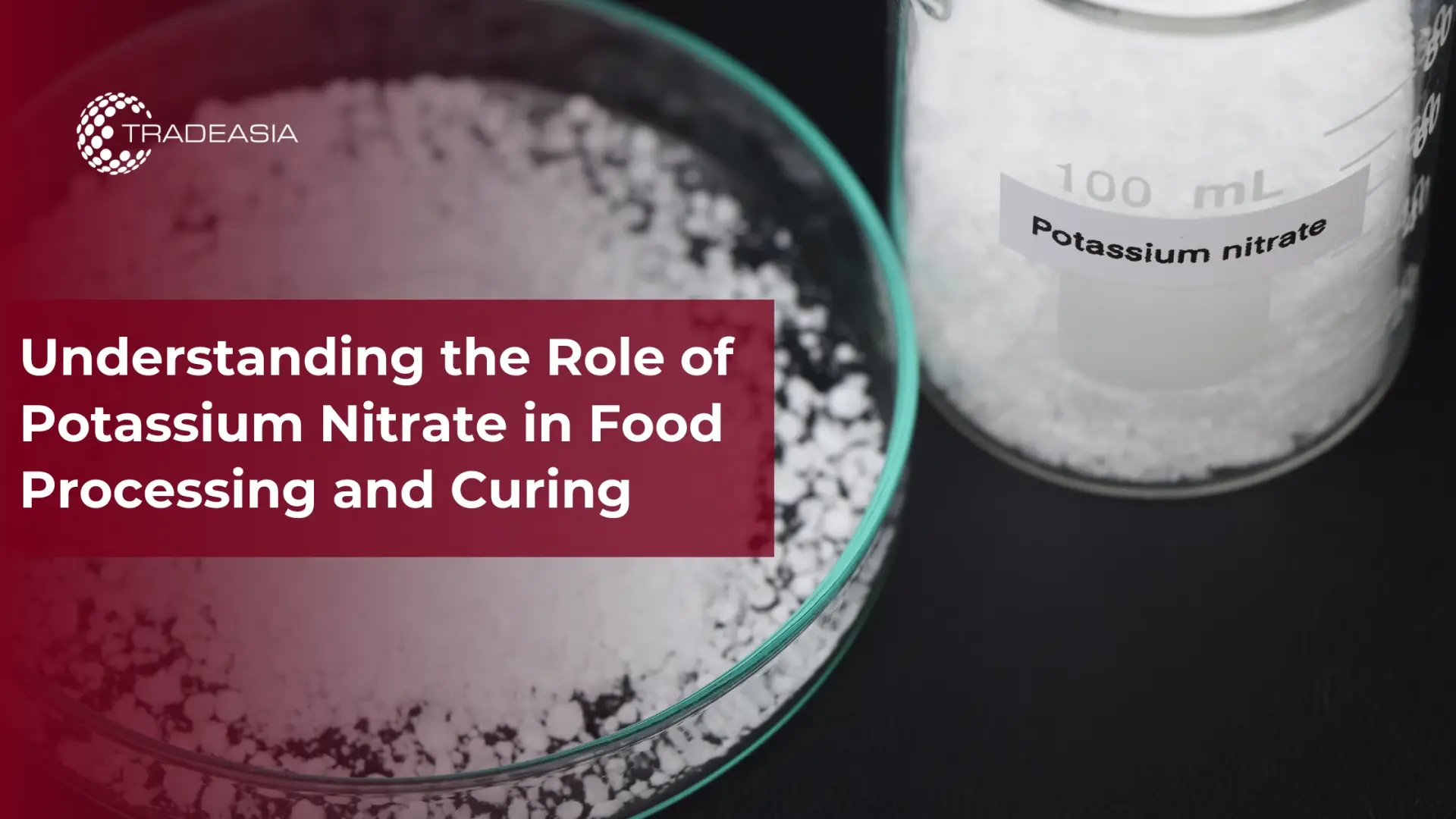
Table of Content
- What Is Potassium Nitrate — And Why It Matters
- How Potassium Nitrate Works: Mechanisms in Curing & Preservation
- Common Applications
- Why Potassium Nitrate Use Is Regulated and Sometimes Limited
- The Bottom Line
What Is Potassium Nitrate — And Why It Matters
Potassium Nitrate (KNO₃), historically known as “saltpeter,” is a crystalline salt composed of potassium and nitrate ions. In food processing, it has long been used as a curing agent — especially in traditional and dry-cured meat products, some fish products, and certain cheeses. As a source of nitrate (NO₃⁻), potassium nitrate serves as a “reservoir” that under appropriate conditions can gradually convert to nitrite (NO₂⁻), the active substance that delivers many of the desired preservation, color, and safety effects in cured foods.
How Potassium Nitrate Works: Mechanisms in Curing & Preservation
-
Slow-acting nitrate reservoir: When KNO₃ is added to meat (or fish/cheese), its nitrate content does not immediately cure the product. Instead, over time — often aided by naturally occurring bacteria — the nitrate is reduced to nitrite. This gradual conversion is especially useful for long-ripened or traditionally dry-cured products (e.g. salami, dry-cured ham), where slow, controlled curing ensures deeper penetration and uniformity.
-
Color development and stability: The nitrite, produced from the nitrate, is then chemically converted (through nitric oxide, NO) to bind with meat pigments (myoglobin), forming stable nitrosomyoglobin or nitroso-heme pigments. These compounds give cured meats their characteristic pink or reddish color — a color that remains stable even after cooking or prolonged storage.
-
Antimicrobial and preservation effect: Nitrite (derived from nitrate) acts to suppress or inhibit growth of certain pathogenic or spoilage microbes — especially anaerobic bacteria such as Clostridium botulinum — reducing the risk of foodborne illness and extending shelf life. This remains one of the most important food-safety benefits of nitrate/nitrite curing.
-
Flavor and rancidity control: Beyond safety and color, curing with nitrate/nitrite also helps develop the characteristic “cured meat” flavors and helps stabilize lipids (fats) against oxidation — which reduces rancidity or off-flavors over time. Because potassium nitrate acts as a slow-release nitrate source, it supports gradual flavor development over extended curing or aging periods.
Common Applications
Potassium nitrate’s use remains relevant mainly in the following areas:
-
Dry-cured meats and charcuterie: Products like salami, dry sausages, dry-cured hams, and other long-aged meats often rely on nitrate (via potassium nitrate or sodium nitrate) as part of their traditional curing salt mixture.
-
Cured fish or seafood products (in some jurisdictions): In certain fish products, nitrate/nitrite salts may be used to preserve, stabilize color, and reduce microbial spoilage.
-
Cheese and aged dairy products: In some traditional cheese-making processes, nitrates (including from potassium nitrate) can be used to prevent undesirable microbial activity during ripening — though usage depends heavily on regulation and local food-safety standards.
-
Artisanal and heritage-style foods: Small-scale or artisanal producers often continue to use potassium nitrate for its slow-acting, traditional curing properties — especially where long curing/aging, flavor depth, and authentic methods are valued.
Why Potassium Nitrate Use Is Regulated and Sometimes Limited
While potassium nitrate offers many benefits in food processing, its use is closely regulated — and for good reason:
-
Because nitrate itself is not active: the real “curing effect” comes from nitrite, which must be generated — a process depending on microbial activity and environmental conditions. That makes outcomes more variable and harder to control compared with using nitrite salts directly.
-
Potential for harmful byproducts: Under some conditions (especially high-temperature cooking), nitrites/nitrates in cured foods can lead to the formation of nitrosamines, which are compounds associated with increased health risk. For that reason many regulatory bodies limit the amount of nitrate/nitrite that may be added or may remain (residual) in final products.
-
Slow and inconsistent curing: Because conversion from nitrate → nitrite (→ nitric oxide → pigment) depends on microbial reduction and diffusion, curing takes longer and results may be uneven — especially in large cuts of meat or products with low microbial activity.
-
Changing consumer preferences and “clean-label” trends: Some modern consumers avoid foods cured with synthetic nitrates/nitrites (or labeled “with nitrates/nitrites”), pushing producers to find alternative methods or limit additive use.
The Bottom Line
Potassium nitrate remains a valuable, historically proven, multifunctional food additive for curing, preserving, and stabilizing meat, fish, and some dairy products — especially in contexts where long curing or aging, stable color, flavor depth, and extended shelf life matter. Its role as a slow-release nitrate source allows traditional curing methods to remain viable.
However — because its effectiveness depends on microbial conversion, and because of safety/regulatory concerns around nitrite/nitrate residues and byproducts — its use must be carefully controlled, transparently labeled, and complemented with good manufacturing practices. For many modern, fast-turnover processed meats, direct nitrite salts or other preservation methods may be preferred; but for artisanal, long-aged, or heritage-style products, potassium nitrate retains relevance.
Source
Leave a Comment