In the highly engineered landscape of modern confectionery, ingredients are rarely selected for a single property. However, Xylitol (E967) stands apart as a multi-functional powerhouse. While often categorized simply as a "sugar alcohol," Xylitol serves as the structural backbone, the sensory engine, and the active pharmaceutical ingredient (API) of the sugar-free gum and mint category.
For food technologists and brand strategists, understanding Xylitol requires looking beyond its sweetness. It is the unique convergence of its thermodynamics (cooling), crystallization kinetics (crunch), and biological mechanism (anti-microbial) that makes it indispensable. This report provides a deep dive into why Xylitol remains the "Gold Standard" for premium confectionery, exploring the science that allows it to bridge the gap between indulgence and functional oral care.
Thermodynamics: The "Negative Heat" Sensory Engine
The immediate consumer appeal of a breath mint or chewing gum is defined by "freshness." While menthol provides the aromatic cue for fresh breath, Xylitol provides the physical sensation. This is driven by thermodynamics.
Xylitol possesses an exceptionally high negative heat of solution (-36.5 cal/g). This physical property means that when crystalline Xylitol dissolves in saliva, it requires energy to break its crystal lattice. It draws this thermal energy directly from the surrounding environment—the tongue and oral tissue—causing a rapid, measurable drop in temperature.
This endothermic reaction is nearly double that of Sorbitol and four times that of Mannitol. In formulation, this acts as a "Freshness Accelerator." When combined with peppermint or spearmint oils, Xylitol potentiates the cooling effect, creating a sensory spike that consumers associate with efficacy and cleanliness. Without Xylitol, mint flavors can perceive as "warm" or flat, diminishing the psychological perception of breath freshening.
Structural Engineering: The "Dragee" Crunch Factor
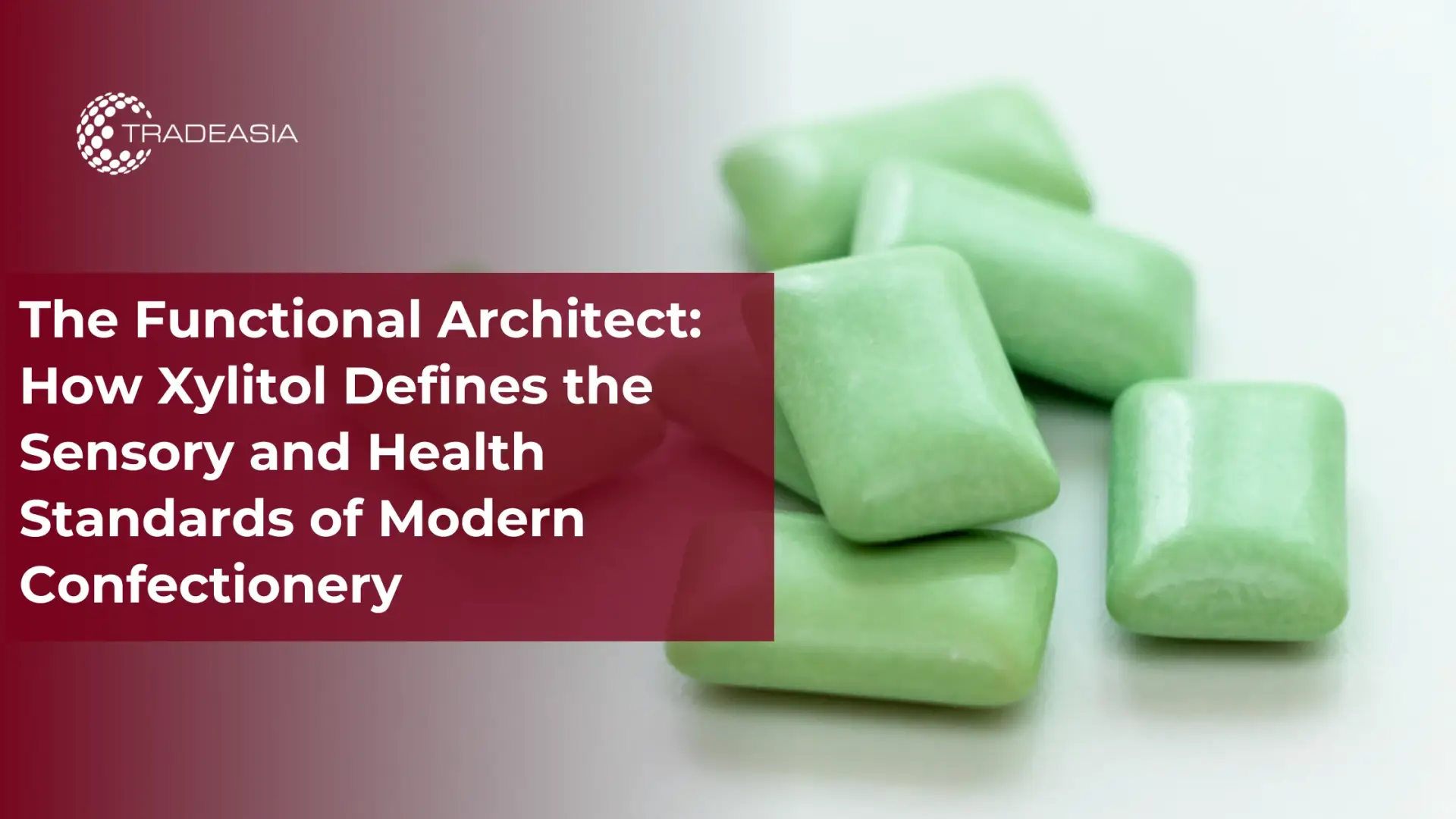
Beyond taste, texture is a primary driver of consumer preference, particularly in the chewing gum category. The modern gum experience is defined by the "Dragee" format—a soft gum center encapsulated by a hard, brittle shell. Xylitol is the unrivaled material for this application due to its rapid and specific crystallization kinetics.
During the industrial panning process, layers of supersaturated Xylitol syrup are applied to gum cores. Unlike Maltitol or Isomalt, which can form amorphous or softer coatings, Xylitol crystallizes into a distinct, rigid orthorhombic lattice structure. This unique crystal habit creates a shell that is significantly harder and more brittle than other polyols.
This structural integrity delivers the signature audible "snap" or crunch when the consumer bites into the gum. This textural contrast—the shattering of the hard shell revealing the soft center—is a critical sensory milestone. Furthermore, Xylitol’s high solubility ensures this shell dissolves rapidly after shattering, delivering an immediate release of sweetness and cooling that masks the initial bitterness of the gum base rubber, ensuring a smooth transition to the chewing phase.
Flavor Synergy: Modulating High-Intensity Sweeteners
While Xylitol is roughly isoweet to sucrose (100% sweetness), cost and digestive tolerance often limit its use as the sole sweetener in mass-market products. Instead, it is frequently paired with High-Intensity Sweeteners (HIS) like Sucralose, Aspartame, or Acesulfame-K. In these hybrid systems, Xylitol acts as a vital Taste Modulator.
Synthetic sweeteners are notorious for their "temporal defects"—they often have a delayed onset or a lingering, metallic aftertaste. Xylitol fills these sensory gaps. Its rapid dissolution provides an immediate burst of sugar-like sweetness that hits the palate before the synthetic sweeteners activate. This "front-loading" of sweetness masks the metallic off-notes of the synthetics. By bridging the gap between the initial crunch and the long-lasting flavor duration of the HIS, Xylitol creates a rounded, full-bodied profile that mimics full-sugar confectionery, allowing manufacturers to reduce total sweetener costs without sacrificing quality.
Mechanism of Action: From Confectionery to Oral Care
The most strategic value of Xylitol lies in its conversion of confectionery from a "passive" treat into an "active" oral care supplement. Unlike other polyols which are merely "tooth-friendly" (i.e., they do not cause cavities), Xylitol actively fights them.
The mechanism is specific to Streptococcus mutans, the primary cariogenic bacteria in the human mouth. These bacteria thrive by fermenting carbohydrates (sugars) into lactic acid, which demineralizes tooth enamel. S. mutans recognizes Xylitol as a food source and actively transports it into the cell. However, because Xylitol is a five-carbon polyol (pentitol) rather than a six-carbon sugar (hexose), the bacteria cannot metabolize it.
This leads to a "lethal synthesis" cycle:
- Energy Depletion: The bacteria expend energy absorbing Xylitol but gain no energy from it, essentially starving themselves.
- Adhesion Inhibition: Xylitol modifies the expression of surface proteins on the bacteria, reducing their ability to adhere to teeth (plaque formation).
- Remineralization: By stimulating saliva flow (via the cooling effect and sweetness) and reducing acid production, Xylitol raises the pH of the mouth, fostering an environment where calcium and phosphate can remineralize enamel.
This biological activity allows brands to use powerful, regulatory-approved claims such as "Reduces the Risk of Tooth Decay," justifying a premium price point and positioning the product in the "Functional Wellness" aisle rather than the candy aisle.
Sources
Leave a Comment